If you have searched for "red light therapy vs laser lipo," you have probably noticed that the two phrases get used as if they mean the same thing. They do not. "Laser lipo" is a label that covers two very different things: a surgical procedure that uses a laser inside the fat layer, and non-invasive devices that shine low-level light through the skin. Red light body contouring belongs to the second group. Knowing which one a clinic is actually talking about is the single most useful thing you can do before you spend money.
I see this confusion often with people in Bowie and across Prince George's County, Maryland. This post explains what each option involves, what the research does and does not show, how recovery compares, and how to decide which conversation to have first. It is educational, not a recommendation to choose one over the other.
Two Meanings of "Laser Lipo"
Laser-assisted liposuction (often sold under names such as SmartLipo) is a surgical procedure. A surgeon makes small incisions, places a laser fiber under the skin to liquefy fat, and removes it through a thin tube. It is done under tumescent anesthesia, meaning a large volume of numbing fluid is infused into the area. A Dermatology Times report on a plastic surgeon's series of more than 200 cases describes it as laser plus traditional liposuction, performed under tumescent rather than general anesthesia.
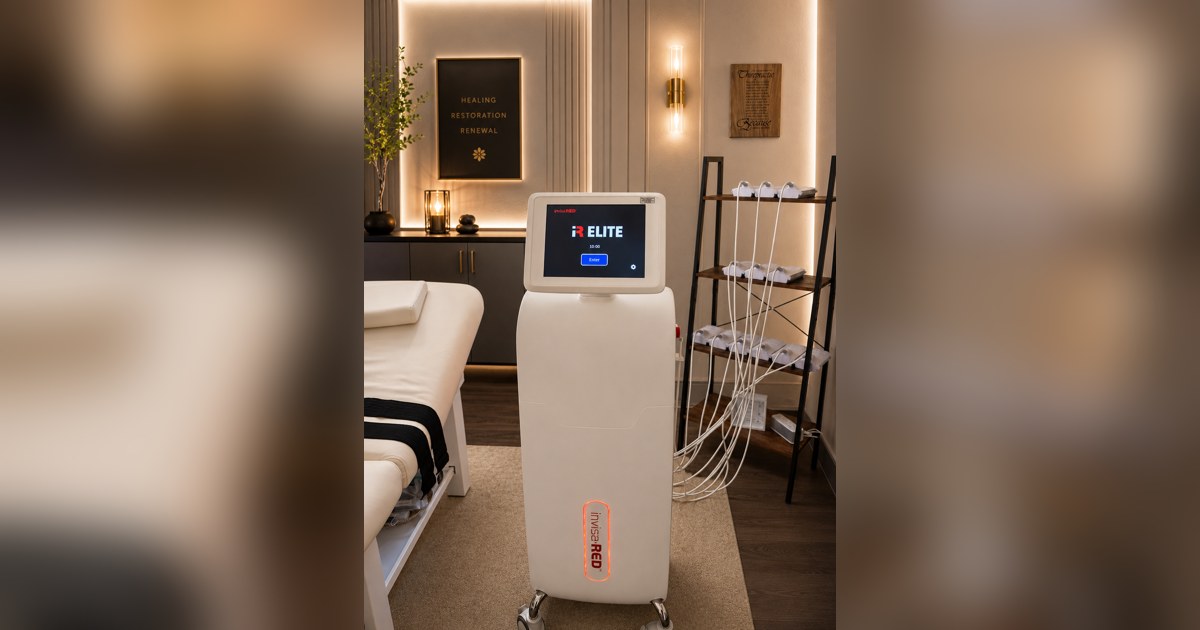
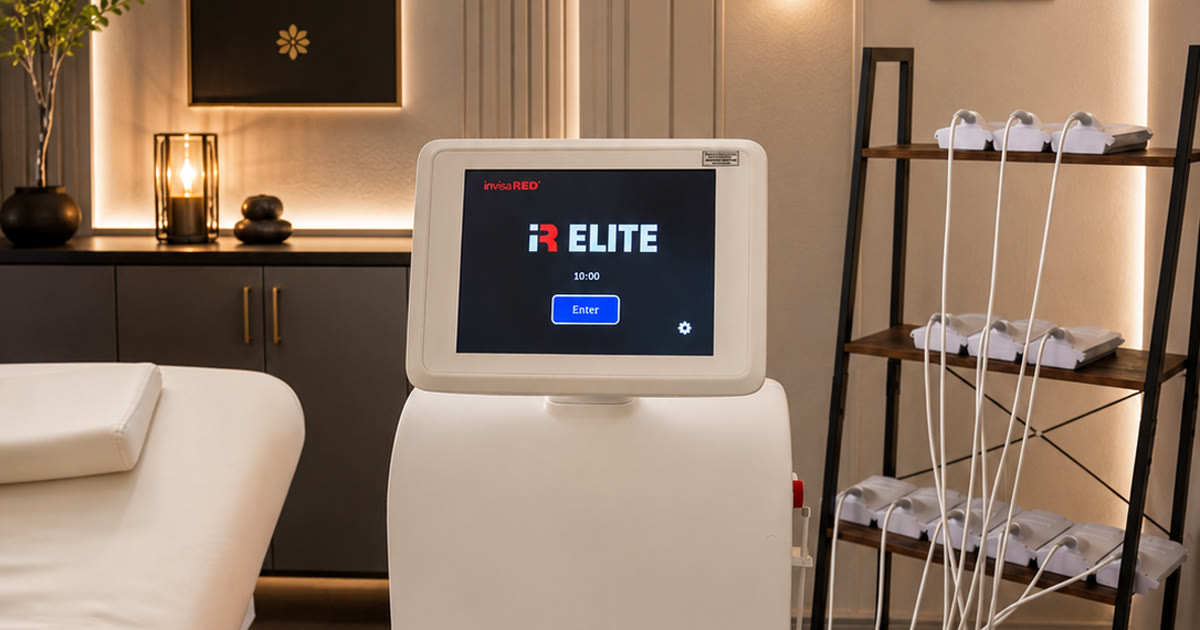
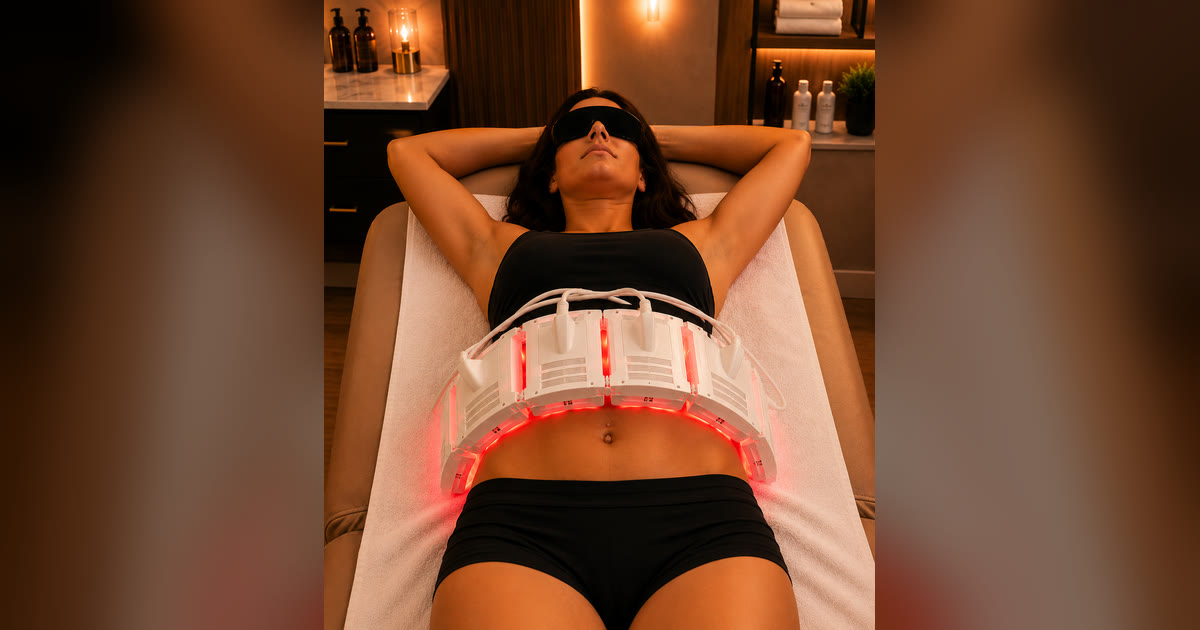
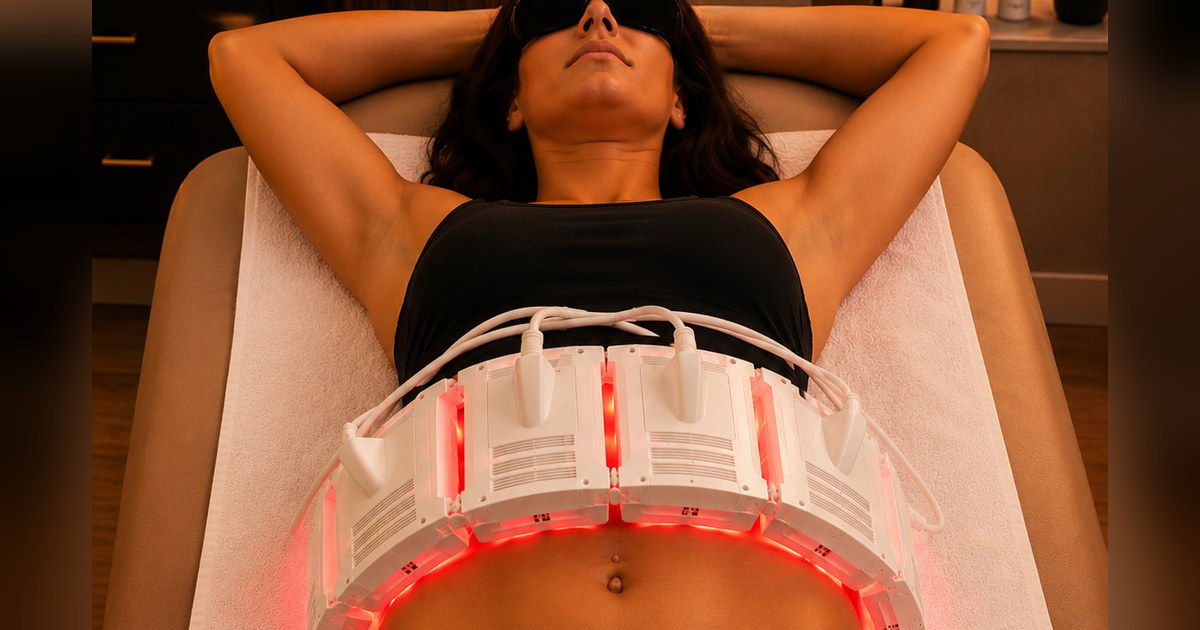
Low-level laser therapy (LLLT) for body contouring is not surgery. Pads or scanning heads deliver red light, typically around 635 nm, through the skin while you lie comfortably. There is no incision, no anesthesia and no tube. This is the category that InvisaRED red light body contouring falls into, and it is the category the "cold laser" and "laser lipo" marketing in storefront ads usually means. If you want the mechanism in plain language, our post on how red light body contouring works walks through it.
The practical takeaway: when someone says "laser lipo," ask one question first. "Is there an incision?" The answer tells you which of two very different experiences you are comparing.
Side-by-Side: Red Light Body Contouring vs Laser-Assisted Liposuction
| Red light body contouring (InvisaRED) | Laser-assisted liposuction | |
|---|---|---|
| Approach | Non-invasive, light through the skin | Surgical, incisions and a laser fiber |
| Anesthesia | None | Tumescent local anesthesia |
| Typical visit | About an hour, then back to your day | Procedure day plus recovery |
| Recovery | Nothing to recover from at our office | Soreness, swelling, bruising, often a compression garment |
| Where it fits | Smaller circumference goals, ongoing sessions | Larger, more defined fat-removal goals, decided with a surgeon |
| Who performs it | Ask the clinic about training | A surgeon |
Neither column is "better" in the abstract. They answer different questions, and the right one depends on how much change you want, how much recovery you are willing to take on, and your health history.
What Recovery Looks Like
Recovery is where the two options feel most different.
For liposuction, the American Society of Plastic Surgeons describes recovery as outpatient for most people, with many returning to work after about two weeks and some needing more time with a physical job. Soreness typically declines substantially over the first one to two weeks. Compression garments are worn to help control swelling, and swelling "can take months to completely subside." Light exercise often resumes around four weeks, and restrictions usually lift around six weeks. That ASPS article is about liposuction generally, not laser-assisted liposuction specifically.
The laser-assisted version is marketed as having a shorter recovery. In the Dermatology Times report, one surgeon said about half of her patients returned to work after two days, compared with roughly six days for traditional liposuction. That is a single practice's series reported at a conference, not a controlled comparison, so treat it as one data point.
Red light body contouring has no surgical recovery. Most people are in and out in about an hour and carry on with their day. What it asks of you is time across a series of visits, not time off.
What the Research Shows for Each
Red light (low-level laser) body contouring
The evidence is smaller and more modest than the marketing implies, and I would rather tell you that than oversell it.
In a randomized, sham-controlled trial in Obesity Surgery, Caruso-Davis and colleagues treated the waist twice weekly for four weeks. The laser group's waist circumference went down by about 0.8 cm while the control group's went up by about 1.4 cm, a difference of roughly 2 cm between groups, with weight staying within about 1.5 kg in both. It was a small study of 40 people.
A separate six-week protocol in the Journal of Clinical and Aesthetic Dermatology reported a combined 5.4 inches across the waist, hips, thighs and upper abdomen in 54 adults, with no adverse events reported. Three honest caveats: it was open-label (no sham group), it was funded by the device maker, and it used a different manufacturer's red light scanner, not InvisaRED. Weight and BMI changes were statistically significant but judged not clinically meaningful by the authors. We unpack that paper in our post on how many sessions people typically need. Individual results may vary.
The takeaway: red light contouring is designed to support modest circumference changes across a series of sessions. It is not a replacement for surgery's ability to remove a large volume of fat in one procedure.
Laser-assisted liposuction
This is a real surgical option with a longer history, and it is a conversation for a board-certified surgeon, not a chiropractor. Here is what I can say responsibly from the literature I reviewed.
A review in the Journal of Drugs in Dermatology by Tierney, Kouba and Hanke examined the safety of tumescent and laser-assisted liposuction. Its abstract reports that tumescent liposuction, pooled across more than 100,000 treated areas, had no serious complications of the kinds it lists, and it notes that liposuction under general anesthesia carries risks such as deep vein thrombosis, pulmonary embolus, organ perforation, infection and bleeding. The page I could access did not give laser-specific safety numbers, so I will not claim any.
The Dermatology Times report included a surgeon's perspective that laser assistance helped skin tightening and listed limits: she advised against using the laser above the jawline, noted the area around the navel is harder to treat, and said patients with a BMI over 30 were not suitable candidates in her practice. Those are one surgeon's views, not universal rules.
If surgery is on your mind, ask a surgeon for their own complication rates, their credentials, and photographs of results on patients with your body type.
Who Tends to Look at Each Option
These are general patterns, not rules, and a proper consultation always comes first.
People who often explore red light body contouring want a non-invasive option with no downtime, have a few stubborn areas such as the waist, hips, thighs or arms, can commit to a series of visits, and want to support what they are already doing with nutrition and movement. It is not designed as a weight loss device. For more on that distinction, see body contouring vs weight loss.
People who often discuss surgery with a surgeon have larger or more defined fat-removal goals, are comfortable with anesthesia, a recovery period and the surgical risks, and want a more dramatic change faster.
Some people do both at different points in time. There is no rule that says you have to pick one forever.
How Red Light Compares With Other Non-Surgical Options
If you are weighing non-surgical choices, red light is one of several. We compare it directly with freezing-based fat reduction in InvisaRED vs CoolSculpting and with muscle-stimulation devices in InvisaRED vs Emsculpt. If safety is your first question, start with is red light body contouring safe. And if you want a picture of the first visit, read what to expect at your first InvisaRED session. Our weight loss and body contouring page and full list of services cover how we put a plan together.
Questions to Ask Any Clinic Before You Book
Whether it is a surgeon or a med spa, these questions protect you:
- Is there an incision, anesthesia or sedation? This tells you whether it is surgery.
- What device is used, and is it FDA-cleared for body contouring? Ask for the device name.
- What does the evidence say about this specific device? Trials of one brand do not automatically apply to another.
- How are results measured? Tape measurements taken the same way each visit are far more honest than "you look slimmer."
- What is the full cost, and what happens if I stop partway through a series?
- Who performs the treatment and what is their training?
A clinic that welcomes these questions is usually a clinic you can trust.
Body Contouring in Bowie, MD
Total Wellness Chiropractic is at 6000 Laurel Bowie Road, Suite 202, in Bowie, serving patients from across Prince George's County, including Crofton, Mitchellville, Upper Marlboro, Largo, Lanham, Glenn Dale and Laurel. If you are looking for body contouring near you without surgery, we offer InvisaRED red light body contouring as a non-invasive option, and we will tell you plainly if your goals sound like a question for a surgeon instead.
Frequently Asked Questions
Is red light therapy the same as laser lipo?
No. "Laser lipo" can refer to laser-assisted liposuction, which is surgical, or to non-invasive low-level laser devices, which are not. Red light body contouring like InvisaRED is in the non-invasive group.
Does red light body contouring work as well as liposuction?
They are not equivalent. Liposuction physically removes fat and can change shape more dramatically in a single procedure. Red light body contouring is designed to support smaller circumference changes across a series of sessions with no recovery. Individual results may vary.
Is laser lipo painful?
For the surgical version, you are numbed with tumescent anesthesia during the procedure, and soreness afterward is common, typically easing over one to two weeks according to the ASPS. In the six-week trial above, no adverse events were reported; ask us what to expect at your own visit.
How long do results last?
Any contouring approach works best when paired with steady nutrition and movement, because weight gain can change your measurements again. In one trial, some of the inch loss was partly regained after treatment ended, which is why we measure at every visit and plan realistically.
Is red light body contouring safe?
The trials we cite reported no or minimal adverse events, and we screen every patient first. People who are pregnant, have active cancer, take photosensitizing medications or have an implanted cardiac device should talk with their physician before starting. See our safety post.
How much does InvisaRED cost to try in Bowie, MD?
The InvisaRED offer is $59 first session. We confirm exactly what the visit includes when you book. Individual results may vary.
Should I see a surgeon or try red light first?
That depends on your goals and health history. If you want a non-invasive starting point with no downtime, a red light consultation is a low-commitment way to get measurements and a straight answer. If your goals are large, a surgical consultation is worth having too.
Ready to Talk It Through?
Your first InvisaRED session is $59. Bring your questions, and we will take baseline measurements and walk through whether this approach fits your goals.
Book online at wherethehealingbegins.com or call (301) 352-3454.
Total Wellness Chiropractic · 6000 Laurel Bowie Road, Suite 202, Bowie, MD 20715 · (301) 352-3454 — serving Bowie and Prince George's County.
This article is for educational purposes only and is not medical advice. InvisaRED is a non-invasive red light body contouring system used at Total Wellness Chiropractic as part of our weight loss and body contouring program. It is not intended to diagnose, treat, cure, or prevent any disease. Laser-assisted liposuction is a surgical procedure that should be discussed with a board-certified surgeon. The clinical trials cited studied 635 nm low-level laser devices from other manufacturers. Individual results may vary. Talk with your physician before beginning any new program, particularly if you are pregnant, have a history of cancer, take photosensitizing medications, or have an implanted medical device.