You have been consistent. Your jeans fit differently, your belt is on a new notch, and then you step on the scale and it has not budged. If you are losing inches but not pounds, you are not imagining things, and you are not doing it wrong. A scale reports one number, total body weight, and that number cannot tell you where the change is happening. Your tape measure can.
I talk with people about this every week in Bowie and across Prince George's County, Maryland. This post explains why measurements and body weight so often move on different schedules, what the research on red light body contouring does and does not show about weight, and how to track your progress in a way that does not leave you discouraged. It is educational, not a promise of any particular result.
Why Losing Inches but Not Pounds Is So Common
A scale is a blunt instrument. It adds up bone, muscle, organs, fat, food in your digestive tract and every ounce of water in your body. If one of those goes down while another goes up, the total can stay put even though your shape is changing.
Fat takes up more room than muscle
A pound of fat is bulkier than a pound of muscle. Two people can both weigh 150 pounds and look very different because of how much muscle and body fat they carry. Healthline's overview of losing inches but not weight makes the same point: most scales do not distinguish between fat and muscle. If you have started walking, lifting or otherwise moving more, you may be adding a little lean tissue while your waist gets smaller. That is called body recomposition, and the scale alone will never show it.
Water moves the scale more than you expect
Day-to-day weight is heavily influenced by fluid. Henry Ford Health notes that water retention or loss is the most common reason weight fluctuates, and that an average adult can see a swing of roughly 2 to 8 pounds over a few days. Salty or processed foods, the menstrual cycle, stress, hot weather and some medications can all shift it. Those swings are large enough to completely hide a few ounces of real change.
Plateaus, sleep and stress are real
Metabolism and appetite are not static. Poor sleep and high stress are associated with changes in the hormones that influence hunger, which can make a steady routine harder to keep. This is one reason a single weigh-in on a single morning can be misleading.
Why the Waist Is Worth Measuring
Measurements are not just about appearance. The National Heart, Lung, and Blood Institute notes that a waist measurement above 40 inches in men or 35 inches in women is considered an unhealthy level of abdominal fat, and it is used alongside BMI when clinicians look at health risk. Waist circumference reflects where weight is carried, which a scale does not.
That does not mean any one number defines you. It means a shrinking waist is meaningful information in its own right, even when body weight is flat. If your waist is trending down, that is worth paying attention to, and worth discussing with your physician.
What the Research Shows About Red Light and Inches
Low-level laser (red light) body contouring has been studied mostly with circumference as the outcome, not scale weight, and that matters for this exact question.
In a double-blind, randomized, placebo-controlled study in Lasers in Surgery and Medicine, Jackson and colleagues enrolled 67 adults with a BMI between 25 and 30. Participants received either a 635 nm laser or a sham treatment three times a week for two weeks, aimed at the waist, hips and thighs. The treatment group's combined circumference fell by about 3.5 inches, compared with roughly 0.7 inches in the control group, a difference the authors reported as statistically significant. The abstract as published reports circumference outcomes and does not report a body weight result.
That is the honest summary: the research that exists measured inches. It is a small, short study using another manufacturer's device, so it does not tell us what any individual will experience with InvisaRED. But it fits what many people notice when they track the right things. Inches are the metric these systems were designed around, and the scale is not.
You can read more about how the technology works in our post on how red light body contouring works, and about the difference between these two goals in body contouring vs weight loss.
Five Reasons Your Scale May Not Be Telling the Full Story
- You are building or preserving muscle. Added activity can offset fat changes on the scale.
- You are holding extra fluid. Sodium, hormones, long days on your feet and certain medications all contribute.
- You weighed at a different time. Morning versus evening, before versus after a meal, can differ by several pounds.
- You are looking at one data point. A single reading says little. A multi-week trend says a lot.
- Your goal and your metric do not match. If your goal is a smaller waist, body weight is an indirect way to measure it.
How to Track Progress Honestly
If the scale is not giving you the whole picture, build a simple system that does. This is what I suggest to people who start with us:
- Take baseline measurements on day one. Waist, hips, thighs and upper abdomen, measured at the same landmarks each time. We do this at your first visit.
- Re-measure on a fixed schedule, such as every two weeks, at the same time of day, with the same tape, not wrapped tighter or looser from one session to the next.
- Use the scale as a trend, not a verdict. Henry Ford Health suggests weighing at the same time on the same day each week and watching the direction over several weeks rather than reacting to a single reading.
- Take photos in the same lighting and pose. Mirrors and clothing change from day to day, but photos taken the same way are comparable.
- Note non-scale signs. How your clothes fit, how you feel climbing stairs, how your energy is. These count.
- If weighing makes you anxious, step away from it. Healthline points out that if self-weighing leads to discouragement or obsessive behavior, tracking by other methods is a reasonable choice.
If you want to go deeper on the topic of tracking, our post on how many red light body contouring sessions covers what a full series typically looks like.
What We Do at Total Wellness to Support Your Goals
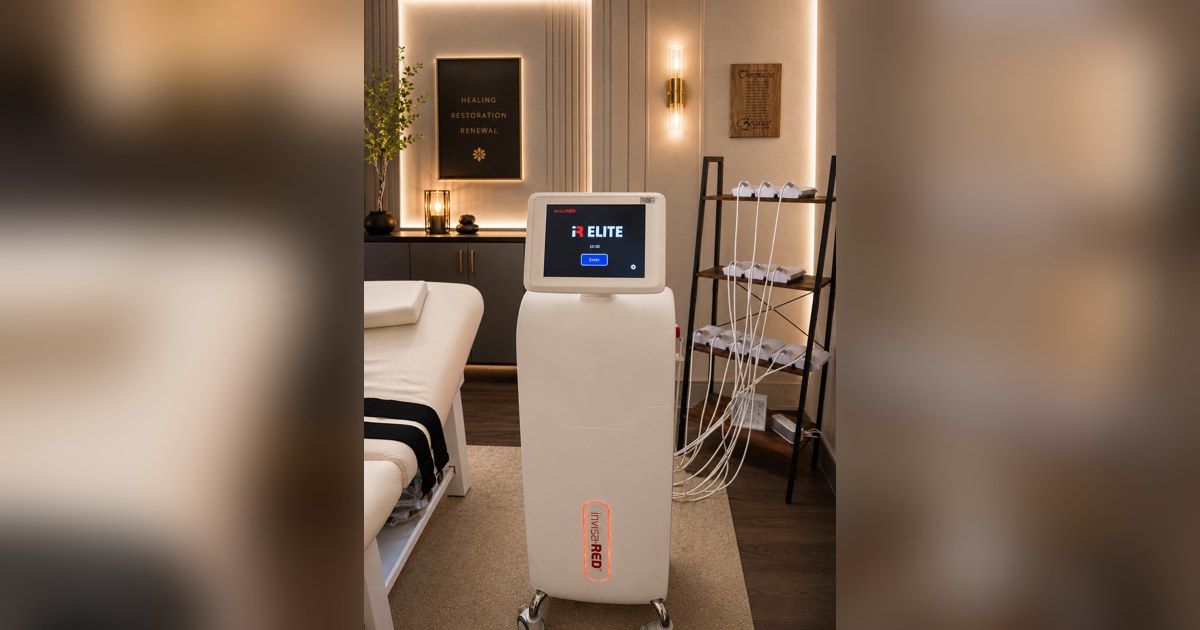
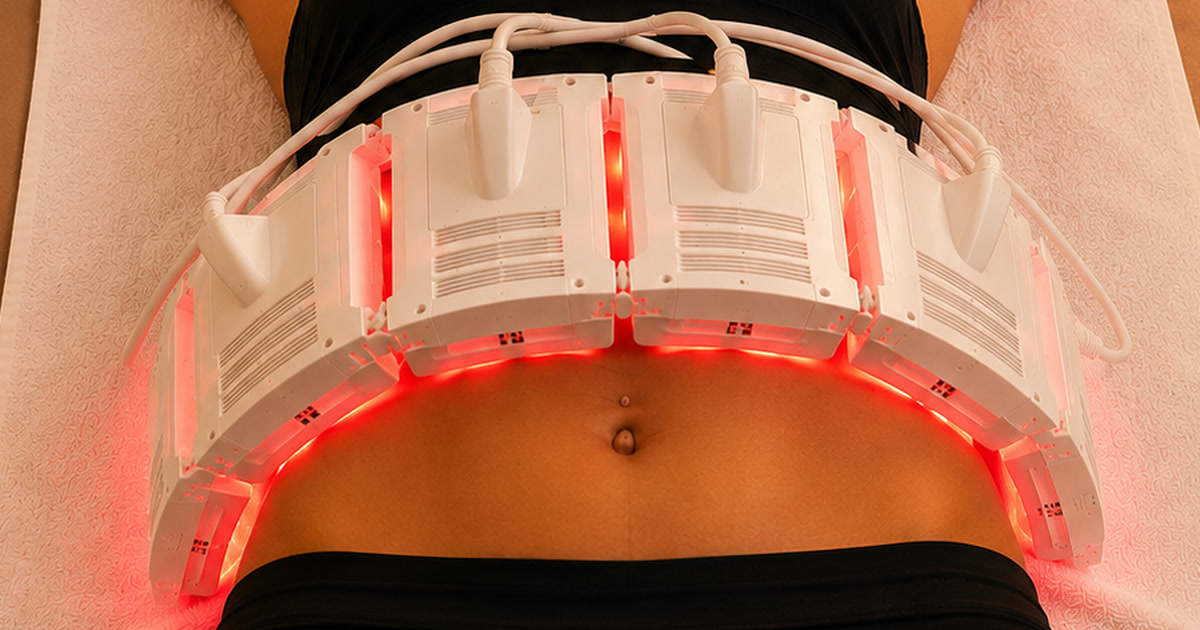
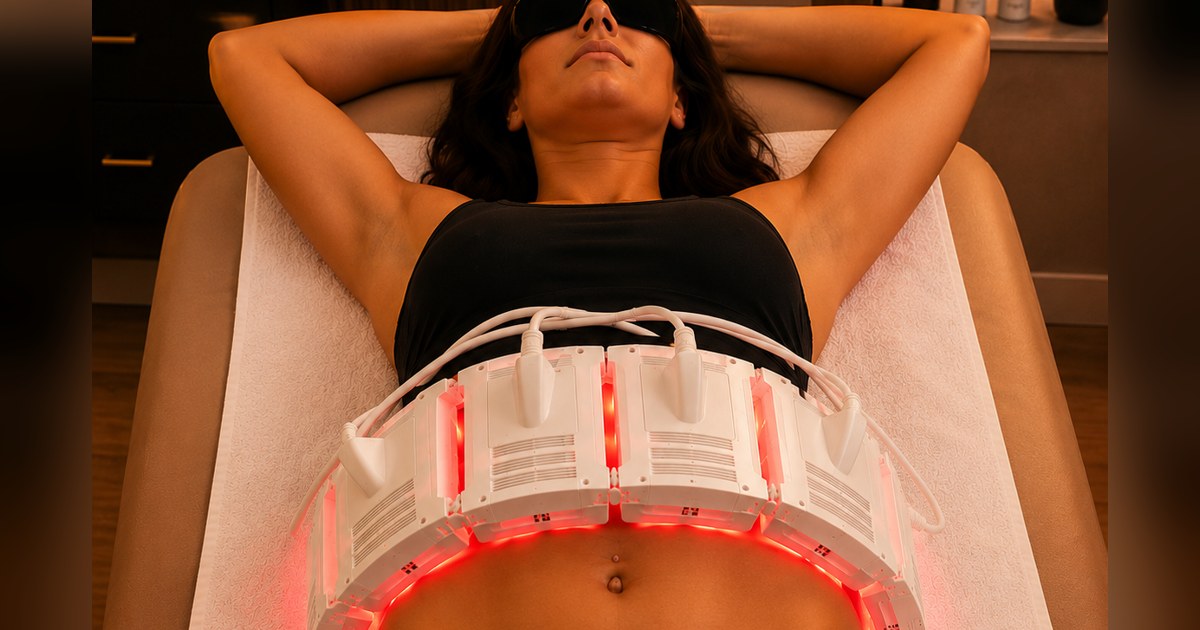
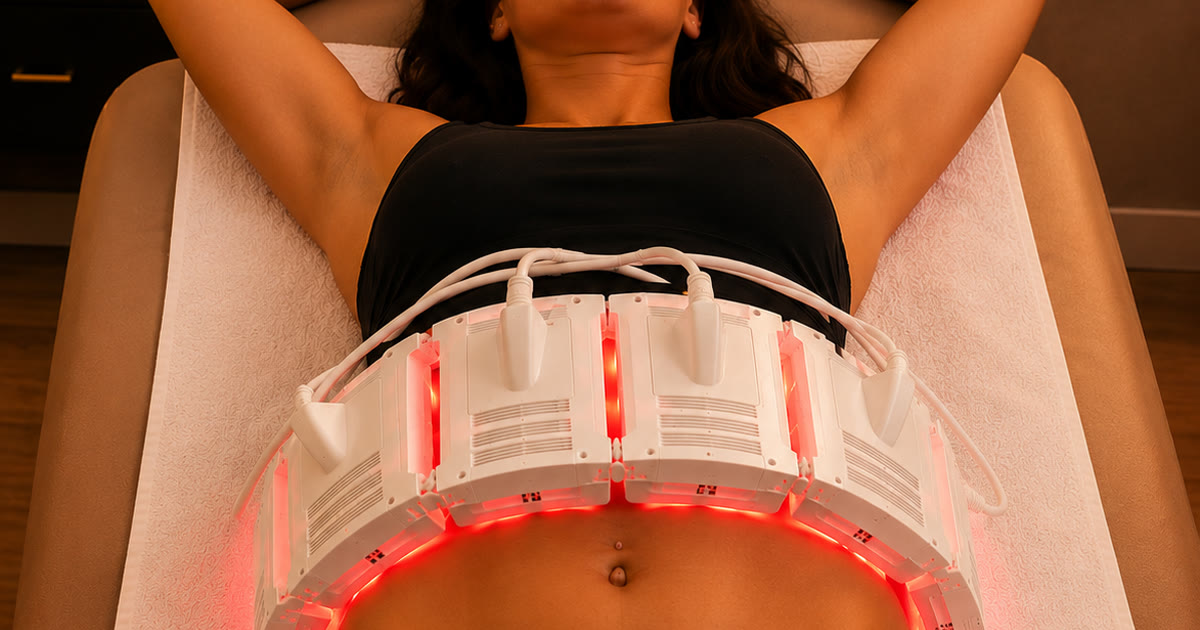
InvisaRED is a non-invasive red light body contouring system we use as part of our weight loss and body contouring program. Sessions are about 20 minutes. You lie comfortably while the pads rest against the areas being targeted, with no incisions, no downtime and no anesthesia.
At your first visit we take baseline measurements so that you and I are looking at the same numbers. From there we talk about what is realistic for you, how movement, hydration and nutrition fit in, and how to space sessions. We cannot predict what your body will do, and we do not promise specific pounds or inches lost. Individual results may vary. What we can do is give you an honest way to see what is changing.
It is also worth saying: if you have a medical reason your weight is not changing, such as a thyroid condition, a medication effect, or swelling that is new for you, that is a conversation for your physician, not a body contouring session. Sudden or unexplained weight changes should always be checked.
Body Contouring in Bowie, MD
Total Wellness Chiropractic is at 6000 Laurel Bowie Road, Suite 202, in Bowie, and we welcome people from Mitchellville, Upper Marlboro, Crofton, Laurel, Greenbelt and the rest of Prince George's County. If you are comparing non-surgical options near you, our guide to body contouring in Bowie, MD breaks down what to ask any clinic before you book. You can also browse all of our services.
Frequently Asked Questions
Why am I losing inches but not pounds?
The scale measures everything in your body together: fat, muscle, bone and water. Fat takes up more space than muscle, and daily fluid shifts can be several pounds, so your measurements and your weight can move on different timelines. Tracking both is the most reliable approach.
Is it normal for the scale not to change while my clothes fit better?
Yes, it is very common. Looser clothing is one of the most useful non-scale signs because it reflects shape rather than total weight. Pair it with a tape measure for an objective record.
How often should I measure myself?
Every one to two weeks is plenty for most people. Measure at the same landmarks, at the same time of day, and record the numbers so you can look at the trend.
Does red light body contouring help with weight loss?
The published research on low-level laser body contouring has focused on changes in circumference, not body weight. It is designed to support body contouring, meaning inches in targeted areas. Overall weight depends on many factors, including nutrition, activity, sleep and medical history. Individual results may vary.
How much does InvisaRED cost to try in Bowie, MD?
Your first session is $59. It includes a conversation about your goals and baseline measurements so you have a starting point to compare against.
Should I talk to my doctor if my weight will not change at all?
If your weight is unchanged despite consistent effort, or if it changes suddenly without explanation, check in with your physician. Thyroid function, medications, hormones and other factors can all play a role.
Ready to See What Is Actually Changing?
InvisaRED starts with a $59 first session. Bring your questions and we will take baseline measurements, walk through what to expect, and give you a simple way to track the things that matter. Individual results may vary.
Book online at wherethehealingbegins.com or call (301) 352-3454.
Total Wellness Chiropractic · 6000 Laurel Bowie Road, Suite 202, Bowie, MD 20715 · (301) 352-3454 — serving Bowie and Prince George's County.
This article is for educational purposes only and is not medical advice. InvisaRED is a non-invasive red light body contouring system used at Total Wellness Chiropractic as part of our weight loss and body contouring program. It is not intended to diagnose, treat, cure, or prevent any disease. The clinical study cited evaluated a 635 nm low-level laser device from another manufacturer. Individual results may vary. Talk with your physician before beginning any new program, particularly if you are pregnant, have a history of cancer, take photosensitizing medications, or have an implanted medical device.