If a friend says she "lost four inches" and another says he "lost twenty pounds," they are describing two different events. Yet the two phrases get used as if they mean the same thing, and that confusion is where a lot of disappointment in this category starts. Body contouring vs weight loss is not a contest between two versions of the same goal. They are different goals, measured with different tools, and they respond to different things.
I hear this question often from people in Bowie and across Prince George's County, Maryland. Someone steps on the scale, sees no movement, and decides nothing is working. Someone else books a body contouring session hoping it will do what a nutrition plan does. Neither is a bad instinct. Both are working from a blurry definition. This post clears it up, using the published research, and says plainly where the research is thin.
Body Contouring vs Weight Loss: The Core Difference
Weight loss is a change in total body mass. The scale captures it. It includes fat, but also water, muscle, glycogen and everything else you are made of. It is driven mainly by what you eat, how you move, how you sleep and your medical situation.
Body contouring is about shape. It is measured with a tape, with photographs and with how clothes fit. A contouring service aims at the circumference of a specific area, such as the waist, hips or thighs, rather than at the total number on the scale.
The International Society of Aesthetic Plastic Surgery draws the same line. In their explainer, weight change alters the size of existing fat cells, while contouring approaches aim to reduce fat cells in a localized area. They also state that these procedures are "not meant for extreme weight loss" and that results are better for people already near their target weight.
That last point is easy to skim past, and it matters. Contouring is a finishing tool, not a starting tool.
Why the Tape and the Scale Can Disagree
You can see the gap between the two measurements in the research on low-level laser, the technology family red light body contouring belongs to.
In a randomized trial published in Obesity Surgery, Caruso-Davis and colleagues enrolled 40 healthy adults with a BMI under 30 and treated the waist twice weekly for four weeks. The analysis included only participants whose weight stayed within 1.5 kg during the study. On the tape, waist girth was about 0.78 cm smaller in the laser group and about 1.35 cm larger in the control group, a between-group difference of roughly 2 cm. Because the analysis was limited to people whose weight stayed within that narrow band, the scale could not explain the difference.
In other words, the researchers analyzed people whose scale had barely changed, and still measured a difference in circumference. That is the clearest illustration of why the two measurements are not interchangeable.
The six-week trial published in the Journal of Clinical and Aesthetic Dermatology tells a similar story: its authors reported combined circumference reductions with weight change that was not clinically meaningful. We cover that trial in more detail in our post on how many red light body contouring sessions people need.
Two honest caveats belong here. First, both studies were small. Second, the JCAD trial used a device from a single manufacturer and was manufacturer-funded; neither study tested the InvisaRED system itself. Individual results may vary.
A fair counterpoint
Not every study agrees that the scale stays put. A randomized pilot from Mayo Clinic, Croghan and colleagues in Lasers in Medical Science, randomized 60 adults with a BMI of 25 to 29.9 to the same 12 treatments on three different schedules. The twice-weekly group had the largest waist reduction (about 2 inches at week 6), and a small drop in BMI and fat mass was also reported in that group. But the authors describe the study as a small, open-label pilot, and the differences between schedules were not statistically significant. I would not read it as proof of weight loss. I would read it as a reminder that the evidence is still developing and that the answer may depend on the person and the protocol.
Why You Cannot "Spot Reduce" With Exercise, and Why That Matters Here
Many people reasonably assume the solution to a stubborn midsection is more core work. A small randomized trial tested exactly that. Vispute and colleagues assigned 24 healthy, sedentary adults to either a control group or a six-week abdominal exercise program (five days per week). The exercise group improved its muscular endurance, but abdominal exercise alone did not significantly change body weight, body fat percentage, abdominal circumference or skinfold measurements.
That does not make core training pointless. Strong abdominal muscles matter for your spine and for how you move, which is where chiropractic care and exercise guidance overlap. It simply means that doing crunches is not a reliable way to shrink the fat layer over those muscles. This is one reason people look to contouring services in the first place.
Does Waist Size Matter for Health, or Just Appearance?
Waist measurement has a health conversation attached to it, and it is worth handling carefully so we do not overpromise.
The National Institutes of Health reported on a Circulation analysis of more than 44,000 women from the Nurses' Health Study followed for 16 years. Women with a waist of 35 inches or more were about twice as likely to die of heart disease as women with a waist under 28 inches, regardless of BMI. This was an observational study. It shows that abdominal fat, as reflected by waist size, is associated with risk. It does not show that shrinking your waist with any contouring technology changes that risk. No study I am aware of has tested that for red light body contouring, and we do not make that claim.
What I will say is this: if your goal is metabolic health, that is a conversation for you and your medical doctor, and it is built on nutrition, movement, sleep and medical care. Red light body contouring is a body contouring support service for circumference. It is not a health intervention for weight, blood sugar, blood pressure or any condition.
Which Goal Are You Actually Chasing?
Here is how I walk people through it. Be honest with yourself about which column describes you.
| If your main goal is... | The right starting point is... |
|---|---|
| A lower number on the scale | A nutrition and activity plan, guided by your doctor |
| Improving blood sugar, blood pressure or other health markers | Your physician, with lifestyle support |
| A smaller waist, hip or thigh measurement while already near your goal weight | Body contouring support, alongside healthy habits |
| Both | Sequence matters: the weight work usually comes first, contouring second |
If you are carrying a significant amount of weight and hoping contouring will replace the foundation, I would rather say so up front than take your money. The $59 first session exists partly so we can have that conversation with real measurements in hand.
Why Contouring After Weight Loss Often Makes More Sense
This is the sequence the ISAPS article points toward: closer to your goal weight, better results. If your weight is still moving, your measurements will move too, and it becomes difficult to tell what the contouring did and what the diet did.
A cleaner way to look at it is that body weight changes the baseline, and contouring works on the stubborn area that remains once the baseline has settled. Tracking helps in both directions. Measure at the same spots, at the same time of day, with the same tape, and take the same photos in the same light. That is how you avoid fooling yourself in either direction. We cover how to do this in our guide to what to expect at your first InvisaRED session.
What Red Light Body Contouring Is, and What It Is Not
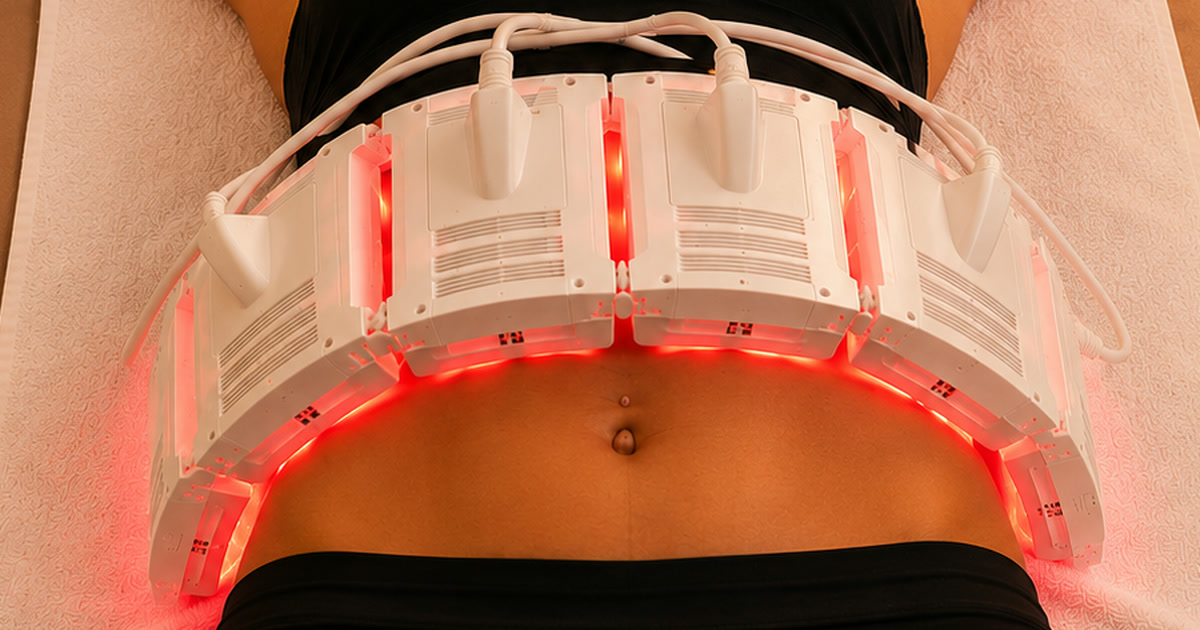
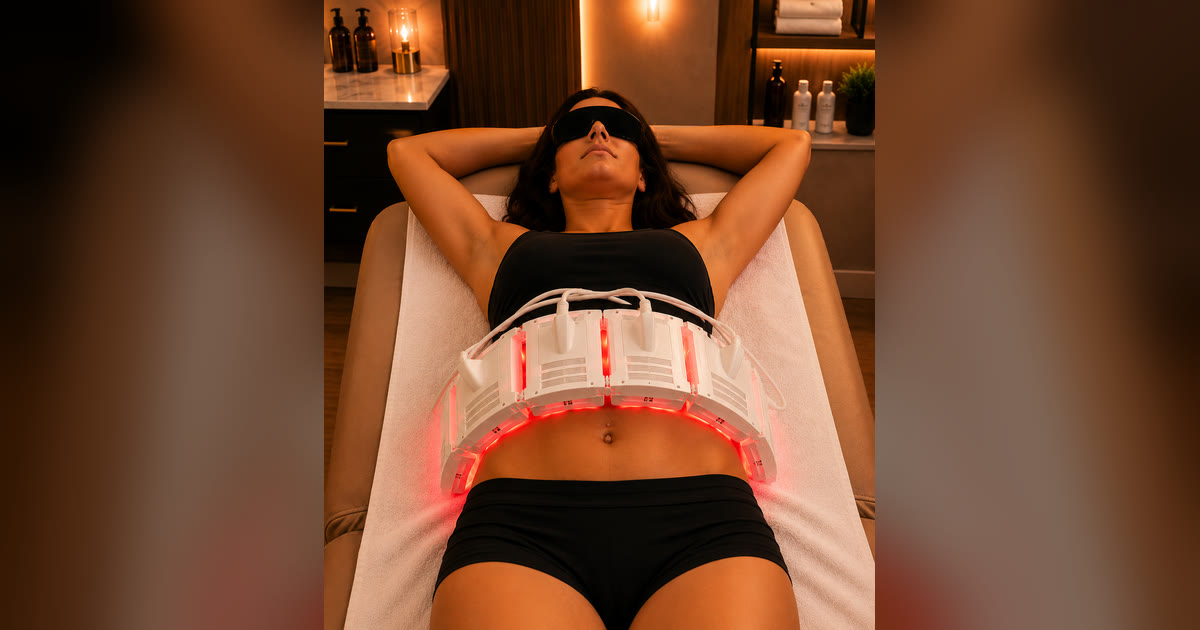
If you are new to the technology, our post on how red light body contouring works walks through the mechanism. The short version: low-level light is applied through pads to a targeted area, in a series of sessions, with the aim of supporting circumference reduction in that area.
What it is not:
- It is not a weight loss program. The scale may not move, and that is expected.
- It is not a substitute for nutrition, movement or medical care.
- It does not have unlimited evidence behind it. The trials are small to moderate, several were manufacturer-funded, and some noted partial regain after treatment ended.
- It does not guarantee a result. Individual results may vary.
For more on the evidence for and against, see our post on whether red light body contouring is safe, and the comparison of options in InvisaRED vs CoolSculpting.
Body Contouring in Bowie, MD: What a First Visit Looks Like
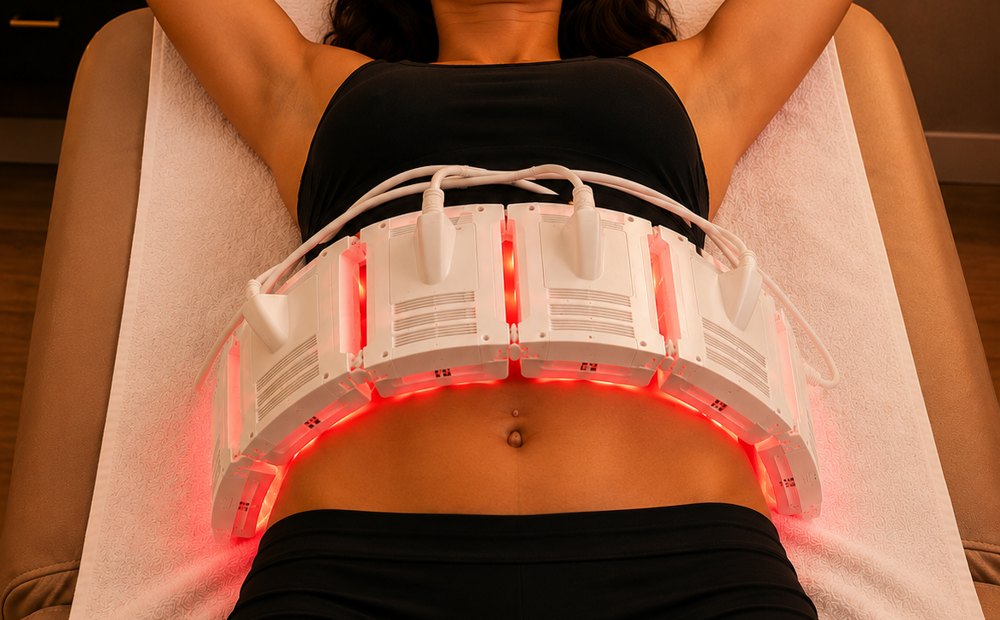
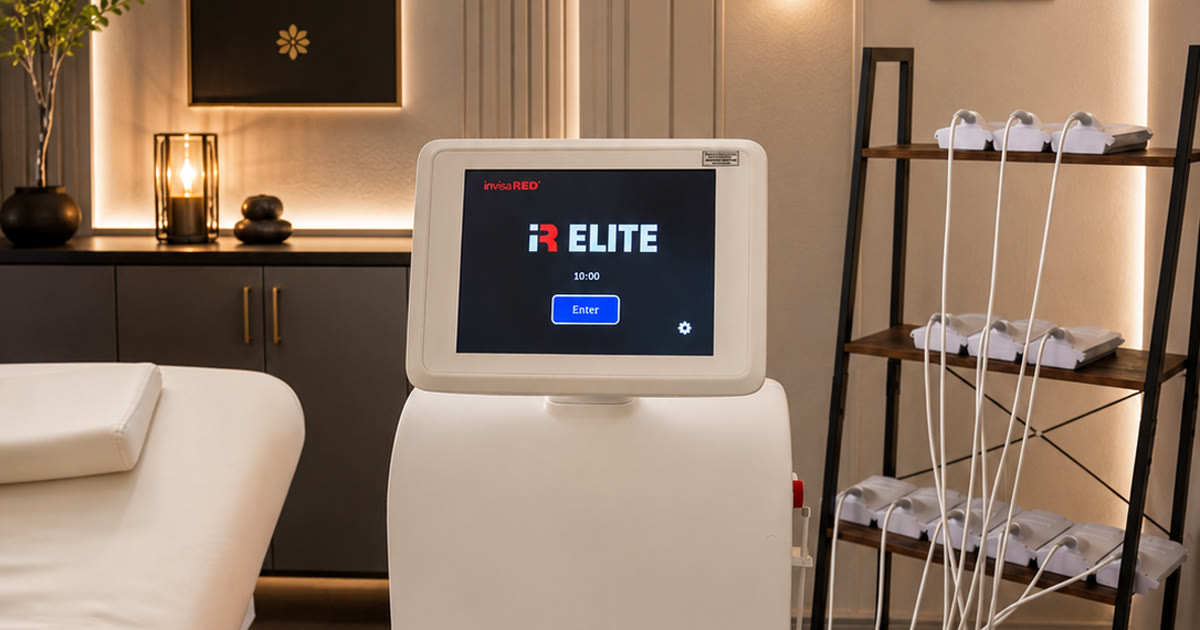
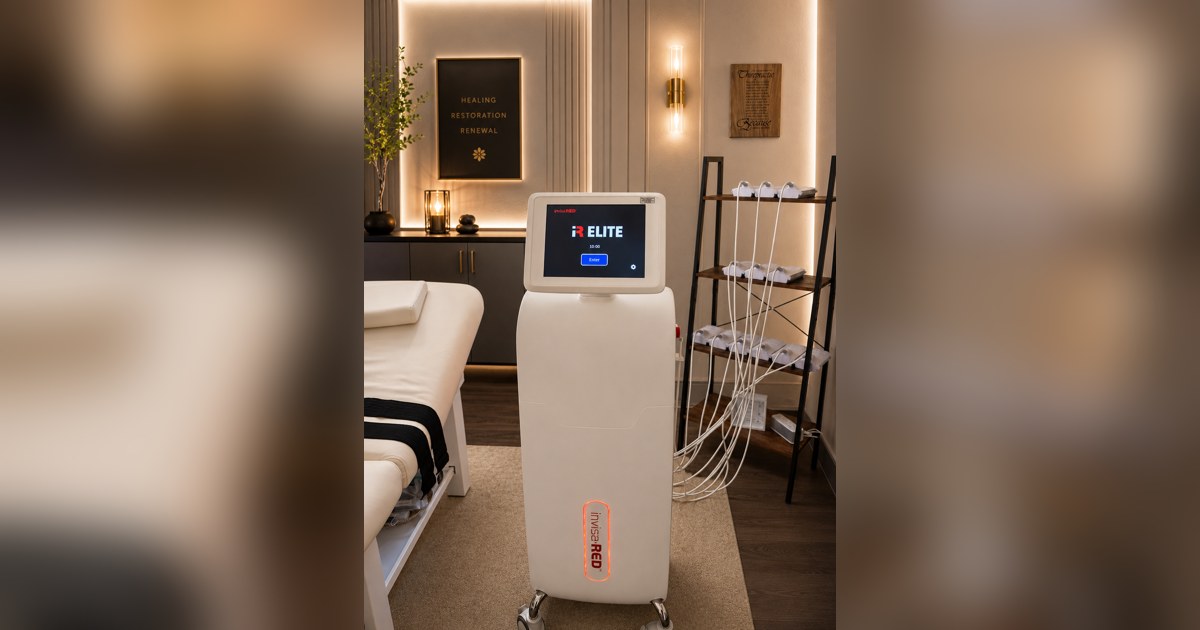
At Total Wellness Chiropractic, the first InvisaRED visit starts with screening and baseline measurements, not a sales pitch. We ask about your goals, your medical history and anything that could make the service a poor fit. Then we take measurements you can compare against later.
InvisaRED is $59 first session, which includes your screening, baseline measurements and a full treatment. Individual results may vary.
Our office is at 6000 Laurel Bowie Road in Bowie, in the heart of Prince George's County, an easy drive for people coming from Crofton, Mitchellville, Glenn Dale, Upper Marlboro, Lanham and Largo. You can see everything we offer on our services page, the InvisaRED service page and our conditions page. If you are also dealing with back, neck or joint discomfort, our StemWave page explains the acoustic wave service we offer for that.
Frequently Asked Questions
What is the difference between body contouring and weight loss?
Weight loss is a change in total body mass, measured on a scale. Body contouring focuses on the shape and circumference of a specific area, measured with a tape and photographs. You can change one without the other.
Can I lose inches without losing weight?
In published low-level laser studies, circumference changes were measured in people whose weight stayed roughly stable. See the Caruso-Davis trial above. That said, the trials are small, and individual results may vary.
Is red light body contouring a weight loss treatment?
No. It is body contouring support aimed at circumference, not scale weight. It is not a treatment for obesity or any medical condition.
Should I lose weight first, or start body contouring first?
For most people, building the nutrition and activity foundation first makes sense, because contouring results are described as better closer to goal weight and because it is hard to measure what contouring did while your weight is still changing. Your physician is the right person to guide any significant weight loss.
Can exercise target belly fat on its own?
A small randomized trial found that six weeks of abdominal exercise alone did not significantly change abdominal circumference or fat measures, although muscular endurance improved. Exercise still matters for health and for your spine; it just does not reliably spot reduce.
Who should not do red light body contouring?
People who are pregnant, have a history of cancer, take photosensitizing medications or have other conditions we screen for should talk with their physician first. We screen every patient before the first session. See our post on safety for detail.
How much does InvisaRED cost to try in Bowie, MD?
The InvisaRED offer is $59 first session. We confirm exactly what the visit includes when you book. Individual results may vary.
Start With a Measurement, Not a Promise
The most useful thing you can do is decide which goal you are actually pursuing, then pick the tool that fits it. If your answer is "a smaller measurement in a stubborn area while I keep up healthy habits," we are happy to talk. If your answer is "a lower number on the scale," I would point you to your doctor first.
Book online at wherethehealingbegins.com or call (301) 352-3454.
Total Wellness Chiropractic · 6000 Laurel Bowie Road, Suite 202, Bowie, MD 20715 · (301) 352-3454 — serving Bowie and Prince George's County.
This article is for educational purposes only and is not medical advice, a diagnosis, or a substitute for an individual evaluation by a qualified healthcare provider. Red light body contouring is a non-invasive aesthetic service intended to support circumference reduction. It is not a treatment for obesity or any medical condition, and it is not a substitute for medical care, nutrition or physical activity. The clinical trials cited studied low-level laser devices from other manufacturers, several were manufacturer-funded or small pilots, and none studied the InvisaRED system specifically. Individual results may vary. Discuss any new therapy with your physician, particularly if you are pregnant, have a history of cancer, take photosensitizing medications or have a medical condition that affects your skin or circulation.