It is the second question almost everybody asks, and it arrives about four seconds after the first. Does this work — and then, immediately, how many red light body contouring sessions does it take? People ask because they are pricing out a decision: how many trips across Bowie, MD, how many hours, how long before they know it was worth doing.
I would rather give you the real answer than a comfortable one. The published research does not name a single magic number, and the most recent systematic review of the field says so directly. What it does give you is more useful: the protocols that actually produced measured results, and what changed the outcome most.
How Many Red Light Body Contouring Sessions Do You Need? The Short Answer
For most people, a meaningful course of red light body contouring sessions falls somewhere between six and twelve, delivered on a fixed schedule over four to six weeks, with measurements taken every visit.
The lower end is where people with less to change tend to land; the upper end is where people with higher starting measurements land. That is not a sales structure — it tracks what the trials found when they enrolled different body types. It also comes with a caveat I will repeat on this page: individual results may vary, and no honest provider can tell you your number before measuring you.
What the Clinical Trials Actually Used
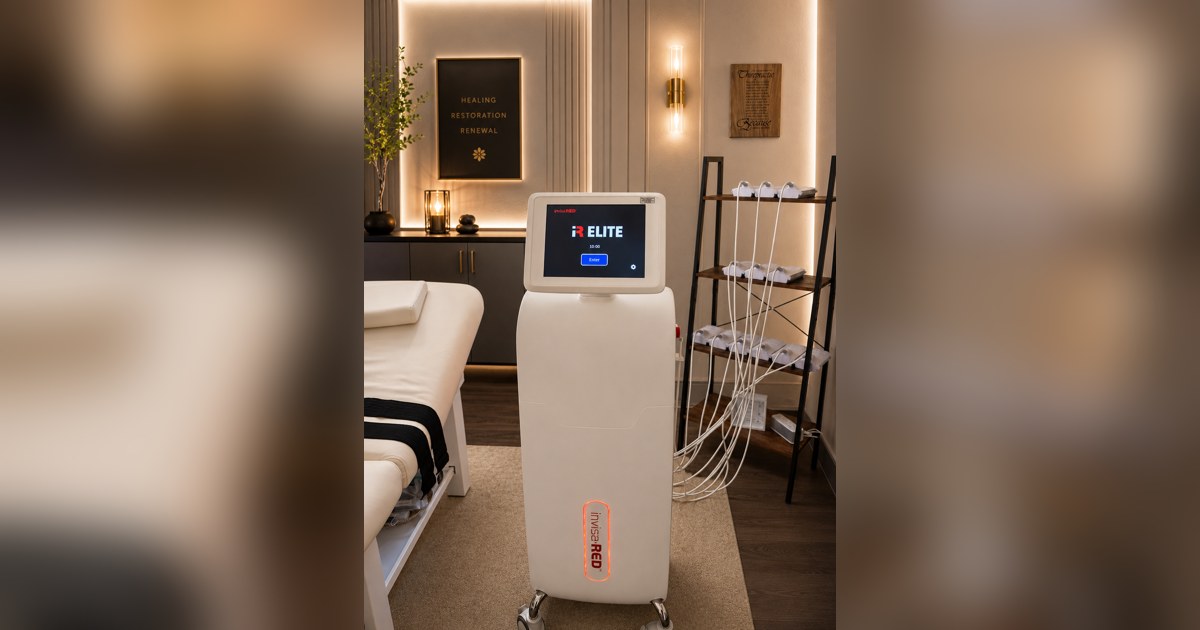
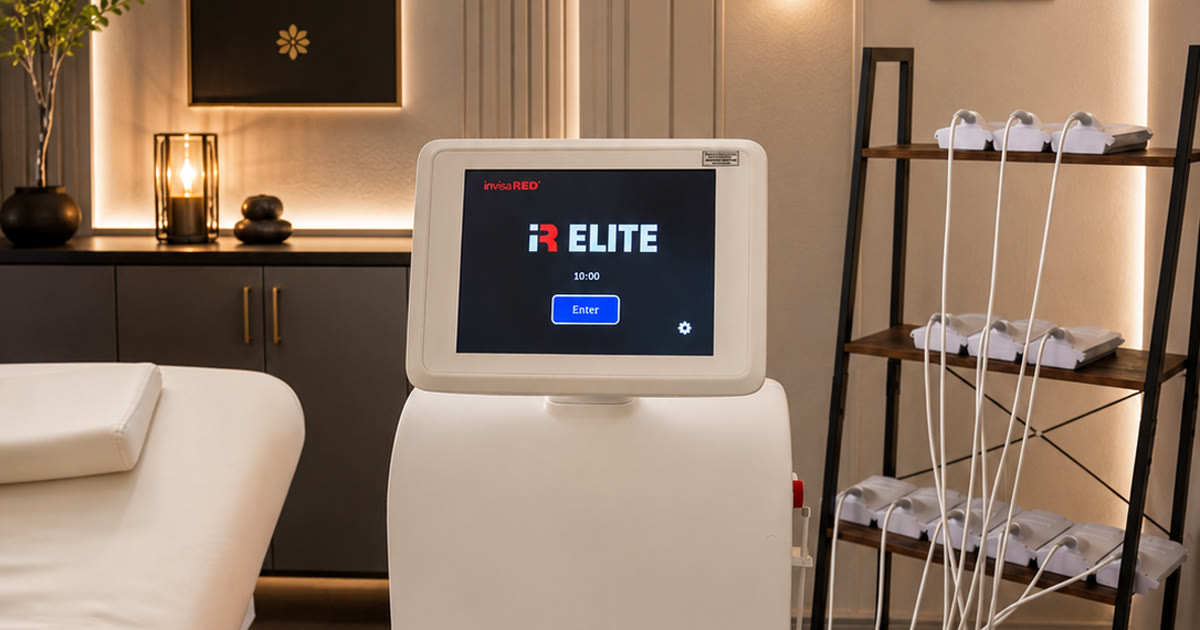
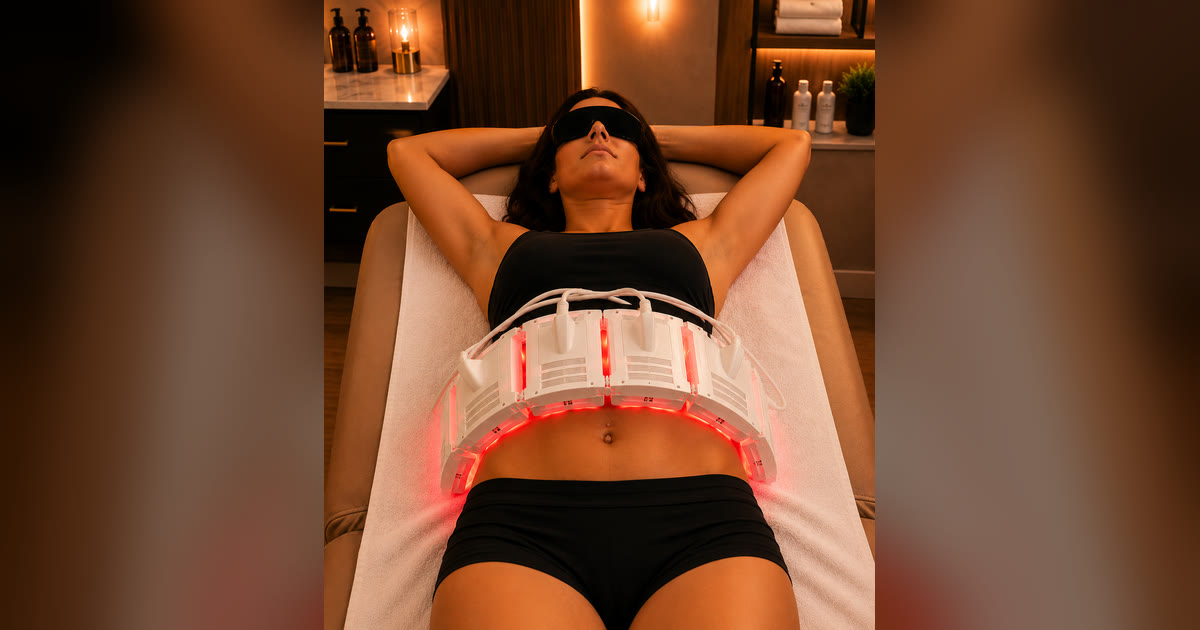
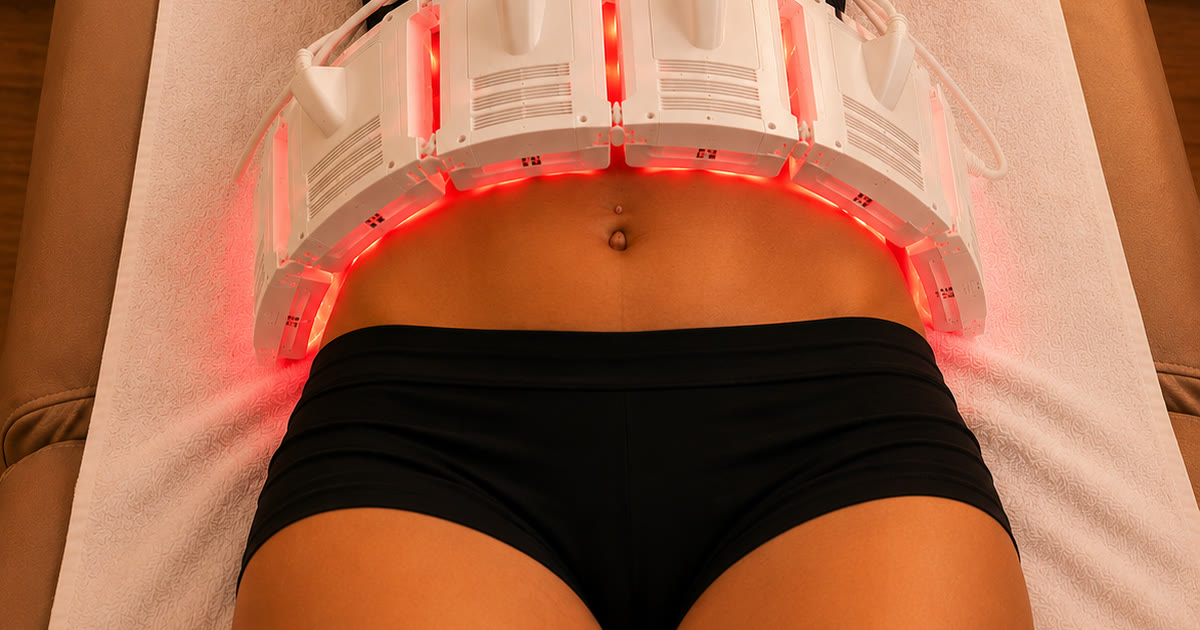
Nearly all the published circumference-reduction work in this category was done with 635 nm low-level laser devices, most of it sponsored by or affiliated with one manufacturer, Erchonia. That is worth saying plainly. It is also worth saying that these trials used overhead scanner devices, while the InvisaRED iR Elite system we use in Bowie uses flexible contact pads placed directly against the skin. The research below is the best evidence the category has, and it is genuinely useful for understanding dose and spacing — but it is not a study of our specific device, and I am not going to pretend otherwise.
Six sessions over two weeks
The trial that opened the door was a double-blind, randomized, placebo-controlled study of 67 volunteers aged 18 to 65 with a BMI between 25 and 30, published in Lasers in Surgery and Medicine in 2009. The protocol was three sessions per week for two weeks — six sessions total, and 21 of 35 participants in the laser group reached a combined three-inch reduction across waist, hips and thighs, against 2 of 32 in the sham group (Jackson et al., 2009). That became the reference protocol.
The same six sessions, spread out — and a bigger result
Then somebody asked a better question: what if you keep the session count the same and change the spacing? A six-week protocol trial in the Journal of Clinical and Aesthetic Dermatology in 2016 enrolled 54 healthy adults with a BMI of 25 to 40 and gave them one session per week for six consecutive weeks — the same six sessions, stretched across six weeks instead of two. The results:
| Measure | Result |
|---|---|
| Mean combined circumference reduction at 6 weeks | −5.4 inches (p<0.0001) |
| Participants reaching the ≥4.5-inch study threshold | 40 of 54 (72.2%) |
| Mean combined reduction at 2-week follow-up | −6.2 inches |
| Reported satisfaction (satisfied or very satisfied) | 81% |
| Adverse events | None |
| Change in body weight | −0.7 kg — statistically significant, "not clinically meaningful" |
The comparison that matters most for your scheduling question is in that paper's own head-to-head table. Looking only at waist, hips and thighs so the two protocols could be compared fairly, the six-week schedule produced a 4.9-inch mean combined reduction against 3.2 inches for the two-week schedule (p<0.005).
Same number of sessions. Different calendar. A meaningfully different result.
That comparison is not a randomized head-to-head, and the caveats belong in the same breath as the numbers: the two groups were studied at different times, the earlier group had a lower average BMI (25.7 versus 29.4), and the six-week study was small, open-label, mostly white women, and funded by the device manufacturer. Even so, it is the most useful finding in this literature for someone planning a series of appointments.
Twelve sessions when there is more to work with
A third trial gives the other end of the range. A randomized, double-blind, sham-controlled study of adults with a BMI between 30 and 40 used 30-minute sessions three times per week for four weeks — twelve sessions (Roche et al., Photomedicine and Laser Surgery, 2017; ClinicalTrials.gov NCT01821352). In that study, 20 of 28 treated participants (71.43%) reached the ≥7.2 cm combined threshold, versus 3 of 25 in the sham group (p<0.00005). The mean combined reduction was 10.52 cm in the treated group against 1.80 cm in the sham group, and no adverse events were reported.
Two things in that paragraph matter for your plan. The standard deviation on the treated-group mean was 7.59 cm — wide relative to the average, which is the statistical version of what every honest provider says out loud: some people respond considerably more than others. And the trial limited to people with higher starting measurements used twice as many sessions as the others, which is the clearest signal in the literature about how the number gets set.
What the most recent review says about "optimal"
A 2025 systematic review in Lasers in Medical Science pooled the randomized trials in this area — three RCTs, 160 participants total. It found waist circumference reduced by 2.48 cm with low-level laser therapy versus 0.635 cm in controls, and hip circumference reduced by 4.09 cm versus 0.86 cm in the two studies reporting it, with effect sizes across the trials ranging from −0.4 cm to −8.7 cm (P<0.05). Follow-up assessments two weeks after the end of treatment, in two of the studies, showed the improvements were sustained.
And then the conclusion most clinic pages leave out: the authors state that varying treatment protocols and follow-up durations make it difficult to determine optimal parameters and long-term efficacy.
That is the field saying honestly that it has not settled on a session count. Three randomized trials and 160 people is a thin evidence base, and anyone quoting you a precise, research-backed number is quoting further than the research goes.
Why the Spacing Matters as Much as the Count
Red light body contouring is not designed to destroy anything. The light is intended to influence how fat cells handle their contents, and your own body is what has to clear what gets released — through circulation, lymphatic movement and ordinary metabolism, which takes days rather than minutes.
That gives a plausible reason why six sessions across six weeks outperformed six sessions across two: the weekly version gives the body a full cycle to do its part between treatments. The mechanism is not fully settled in the literature, and any confident one-sentence explanation of it — including mine — is a working model rather than a proven one. The longer version is in how red light body contouring works.
The practical upshot is simple. Consistency beats intensity. Six sessions you actually attend, one a week, will serve you better than ten crammed into a fortnight and then abandoned. And what you do between sessions is part of the protocol, not an upsell attached to it.
What Changes the Number for You
Five things move a plan up or down the range:
- Your starting measurements. More to change means more sessions. The trials show this directly.
- How many areas you are treating. A single target area is a different plan from abdomen plus flanks plus thighs. Each area needs its own time under the pads — roughly 15 to 20 minutes per area.
- How consistently you come. A missed week is not a catastrophe, but a series full of gaps is a different intervention from the one that was studied.
- What you do between visits. Walking, hydration and steady eating habits are inside the protocol.
- What you are actually trying to change. Circumference at a specific spot is what this is designed to support. If the goal is overall weight, that belongs with our doctor-supervised weight loss support rather than the pads alone.
One thing does not belong on the list: a result promised after a single session. A tape reading taken twenty minutes after a first treatment, on a day you may have hydrated differently than usual, is noise rather than a result. The published protocols measure across weeks, and so do we.
How We Plan the Number at Total Wellness in Bowie, MD
We measure and screen first. Baseline circumference at every target area, recorded the same way each time, plus the screening list of people this is not appropriate for — that list is in is red light body contouring safe, and the rest of the first visit is in what to expect at your first InvisaRED session. Without a baseline, "how many sessions" is unanswerable and any number quoted to you is invented.
We start with a plan in the six-to-twelve range and re-measure every visit, so the plan can respond to what your tape is actually doing.
We check in around session three. If the numbers are not moving by then, I would rather have an honest conversation than keep selling you sessions — and sometimes that means a different approach, which is what InvisaRED vs CoolSculpting is for.
InvisaRED is $59 first session — consultation, baseline measurements and a full treatment in the same visit, so you can judge the experience before committing to a course. I do not quote a course price before measuring, because I would be guessing. Individual results may vary.
What Happens After the Course Ends
The trials followed people two weeks past their last session and found the reductions held — in the six-week study the combined measurement was actually lower at the two-week follow-up (−6.2 inches) than at the end of treatment (−5.4 inches).
How far that goes is two weeks. There is very little published data past that horizon, and the 2025 review names long-term efficacy as an open question, so treat anyone's claim about permanent results with the skepticism it has earned.
The unglamorous truth is that fat cells which shrink can refill. Most people who hold their results hold them with the things that hold any result — movement, sleep, what they eat — plus a lighter maintenance rhythm afterward, typically a session or two a month rather than a weekly series.
Non-Surgical Body Contouring for Bowie and Prince George's County
Because this is a series rather than a single procedure, the drive matters more than people expect when they book the first visit. Our patients come from across Bowie, Crofton, Mitchellville, Glenn Dale, Upper Marlboro, Lanham and Largo, many of them up US-301 or across on MD-450.
That geography is why we keep appointments short after the first one. A weekly session is roughly 15 to 20 minutes per area with no recovery time — a lunch-hour appointment. In Prince George's County, a short appointment is often the difference between finishing a six-session series and abandoning it.
It also fits alongside care you may already be receiving here. Some of our body contouring patients are already in the office for chiropractic care or one of the conditions we see, and stacking the two into one visit makes a series easier to finish.
Frequently Asked Questions
How many red light body contouring sessions do I need?
Most plans run six to twelve sessions over four to six weeks, with the number set by your starting measurements, how many areas you are treating and your goal. The published protocols used six sessions in trials enrolling a BMI of 25 to 40, and twelve in a trial limited to a BMI of 30 to 40. Individual results may vary.
Is it better to do sessions close together or spread out?
The evidence leans toward spread out. In the six-week trial, the same six sessions delivered once weekly produced a larger mean combined reduction (4.9 inches) than three times weekly over two weeks (3.2 inches). Those were separate study groups rather than a randomized head-to-head, so treat it as a strong hint rather than proof.
How long is each session?
Roughly 15 to 20 minutes per area under the pads. Your first visit runs about an hour because most of it is screening and measurement.
Will I see anything after the first session?
You may see a change on the tape, and I would not read much into it. Single measurements carry a lot of day-to-day noise. The trials measured weekly across six weeks for exactly that reason.
What if I am not seeing results partway through?
We will have that conversation around session three, based on your measurements rather than an impression. Not everyone responds the same way: one trial's treated group had a mean reduction of 10.52 cm with a standard deviation of 7.59 cm — a polite statistical way of saying the spread between people is wide.
Do I need maintenance sessions afterward?
Most people who want to hold their result use a lighter maintenance schedule, typically one or two sessions a month, alongside the habits that hold any result. Published follow-up data only extends two weeks past treatment, so nobody can honestly promise you a permanent outcome.
Can I do this alongside chiropractic care?
Yes, and that is how a lot of our patients fit it in. If you are already coming in weekly, adding a body contouring session to the same appointment makes a series much easier to finish.
Get Your Number Measured, Not Guessed
You already know what I am going to suggest: do not book a package based on a number from a website, including this one. Come in, get measured, and let the plan come out of your actual starting point.
InvisaRED is $59 first session, and that includes the consultation, your baseline measurements and a full treatment. If the screening tells me you are not a good candidate, I will say so rather than sell you six sessions. Individual results may vary.
Book online at wherethehealingbegins.com or call (301) 352-3454.
Total Wellness Chiropractic · 6000 Laurel Bowie Road, Suite 202, Bowie, MD 20715 · (301) 352-3454 — serving Bowie and Prince George's County.
This article is for educational purposes only and is not medical advice, a diagnosis, or a substitute for an individual evaluation by a qualified healthcare provider. Red light body contouring is a non-invasive aesthetic service intended to support circumference reduction; it is not a treatment for obesity or any medical condition, and it is not a substitute for medical care, nutrition or physical activity. The clinical trials cited above studied 635 nm low-level laser devices from a single manufacturer and were in several cases manufacturer-funded; they are not studies of the InvisaRED system specifically. Individual results may vary. Discuss any new therapy with your physician, particularly if you are pregnant, have a history of cancer, take photosensitizing medications, or have an implanted medical device.