Patients ask me some version of this question almost every week: how does red light body contouring work? Usually the question underneath it is blunter than that. They want to know whether this is real, or whether it is a very expensive heat lamp.
It is a fair question, and I would rather answer it honestly than sell you something. So this article is the long version of the answer I give in the office — what the light is actually doing, what the published research supports, what it does not support, and who this is genuinely a good fit for.
I am going to be careful with my language throughout, because this is an area where marketing tends to outrun the evidence. Nothing here is a promise about your body.
How Does Red Light Body Contouring Work?
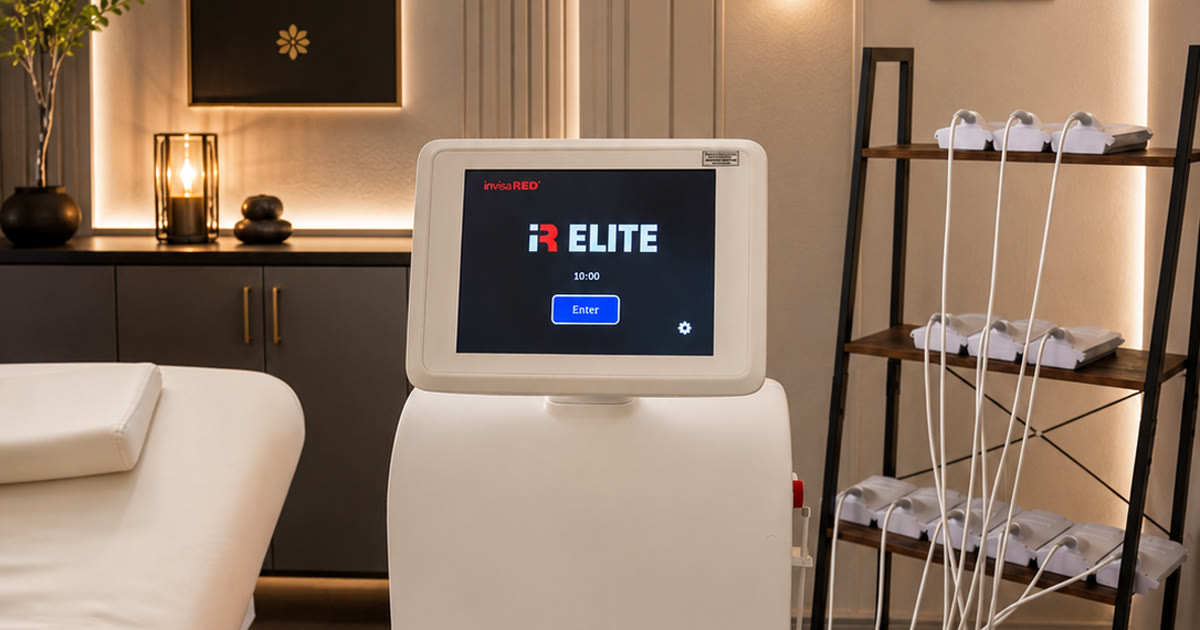
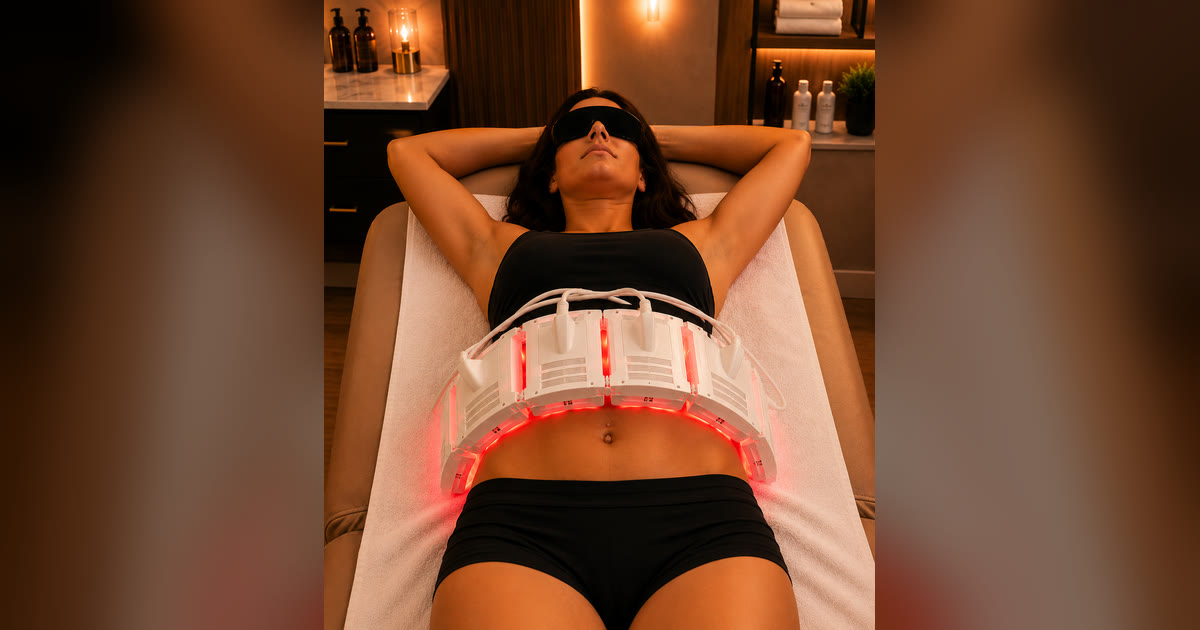
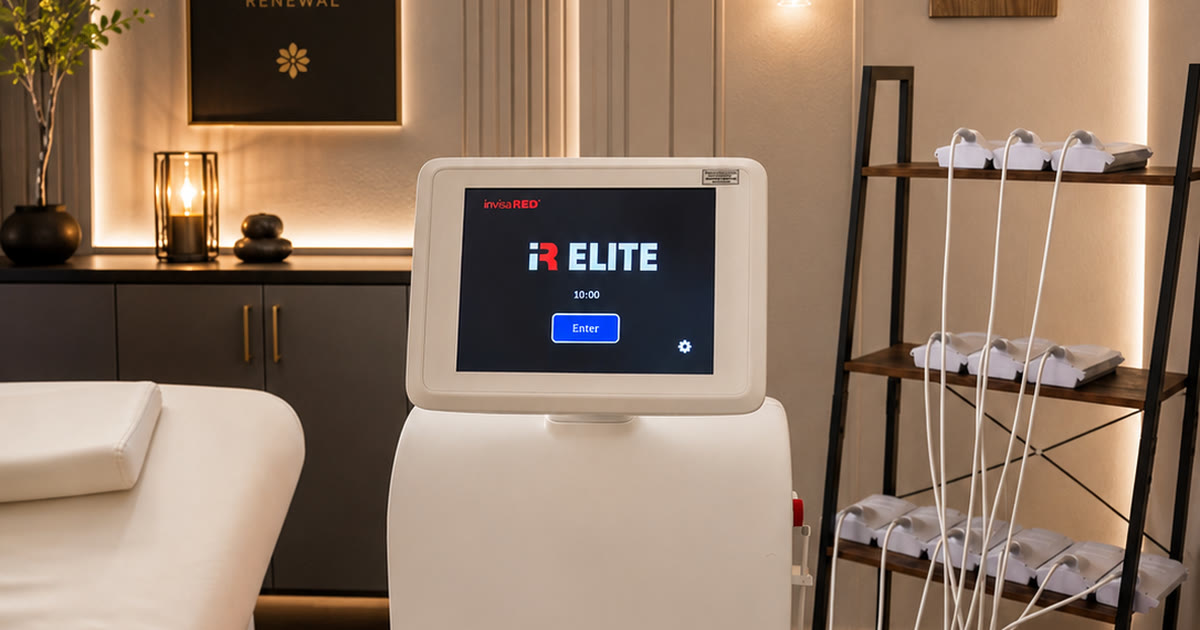
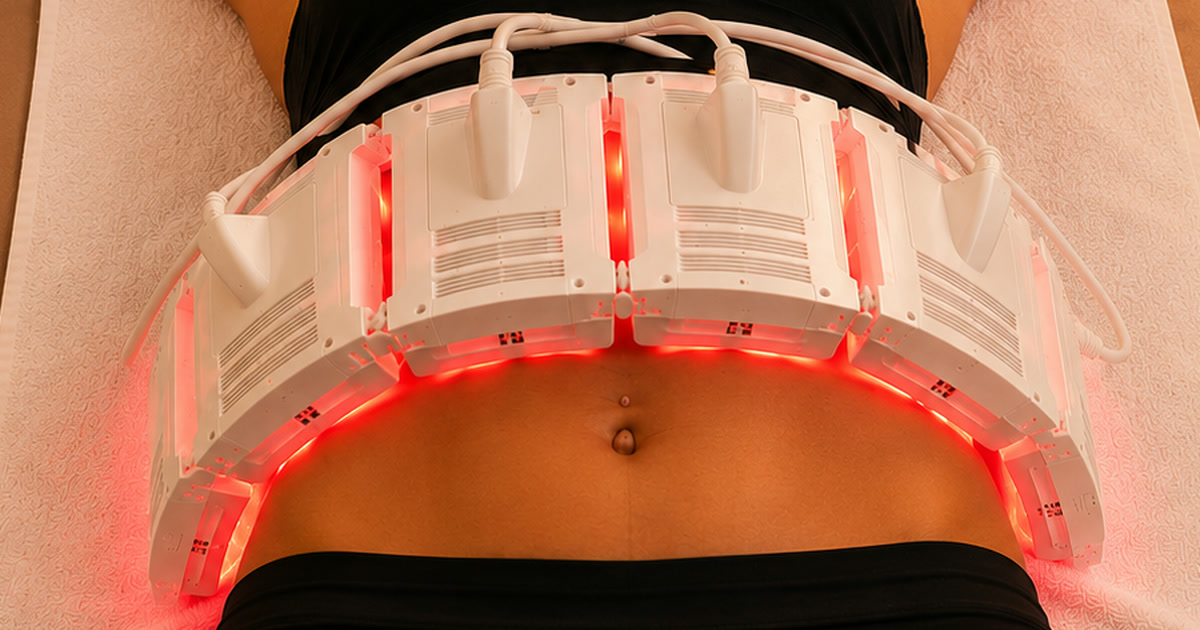
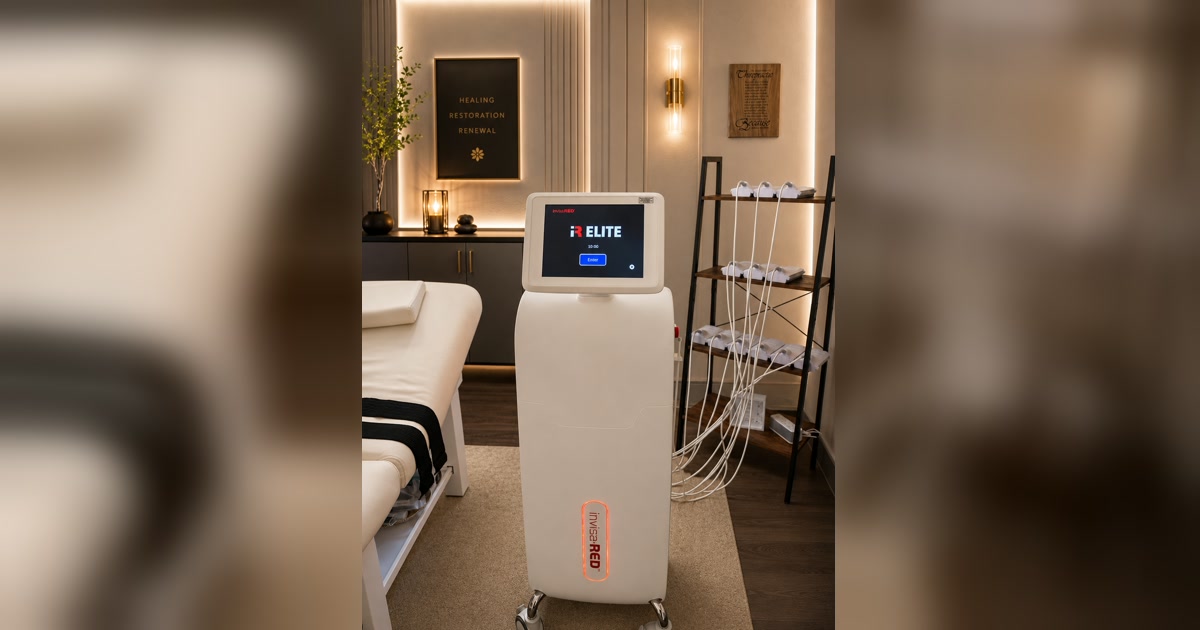
Red light body contouring uses specific wavelengths of visible red light, delivered directly against the skin, over the areas you want to address. In our office that is done with the InvisaRED iR Elite system, using flexible pads that wrap the treatment area.
The mechanism has three parts worth understanding separately.
The wavelength is the active ingredient
The important thing about this light is not that it is red. It is that it sits in a narrow band — around 635 nanometers — that human tissue happens to absorb in a particular way.
This is the field known as photobiomodulation, and it has a large research literature behind it that has nothing to do with body contouring. The best plain-language explanation of the underlying biology is in a review by Avci and colleagues on low-level laser therapy in skin, and a broader one by Hamblin on the mechanisms of photobiomodulation. The short version: light in this range is absorbed by an enzyme in the mitochondria called cytochrome c oxidase, which is part of how a cell produces energy. Light at the wrong wavelength is simply not absorbed the same way and does not produce the same cellular response.
This is why the specific device matters, and why a red bulb from a hardware store is not a smaller version of the same thing. The wavelength, the power, and the time are the whole prescription.
What the light is doing at the fat cell
Here is where I want to be precise, because this is the part that gets exaggerated.
Nothing is being destroyed, frozen, burned, or removed. In the published research, investigators describe light at 635 nm as prompting a temporary, reversible change in the membrane of the fat cell that allows some of the stored contents to pass out of the cell and into the space around it. The cell stays alive. It stays where it is. It is simply less full.
The original randomized controlled work describing this — Jackson and colleagues, published in Lasers in Surgery and Medicine in 2009 — reported transitory pores in adipocyte membranes following 635 nm irradiation. That is the honest description of the mechanism: a temporary opening, not a demolition.
Your body has to finish the job
This is the part patients most often miss, and it is the part that determines whether anyone is happy with their results.
The light does not remove anything from your body. It only moves the contents out of the cell. What happens next is entirely your lymphatic system and your metabolism — that released material either gets used as fuel or it gets reabsorbed.
Which means what you do in the hours after a session is not a wellness upsell. It is the second half of the mechanism. Movement, hydration, and not sitting still for the rest of the day are what give the process somewhere to go. A patient who does a session and then goes home to the couch and a large dinner has done half of the protocol.
What the Research Actually Shows — and What It Doesn't
I want to separate two things that get blurred together constantly: research on the general category of low-level laser body contouring, and claims about any one branded device.
The studies below were conducted on 635 nm low-level laser systems in general. They were not conducted on the InvisaRED device specifically. They tell us the category has measurable effects under controlled conditions. They do not tell us what will happen to you.
| Study | Design | What it reported |
|---|---|---|
| Jackson et al., 2009 — Lasers Surg Med | Double-blind, randomized, placebo-controlled; 67 participants, BMI 25–30; 3 sessions/week for 2 weeks | Treatment group: −3.51 combined inches across waist, hips and both thighs, vs −0.68 inches in the sham group |
| Thornfeldt et al., 2016 — J Clin Aesthet Dermatol | Six-week treatment protocol | Reductions in waist, hip, thigh and upper abdomen circumference |
| Mustafa et al., 2025 — Lasers Med Sci | Systematic review; 3 RCTs, 160 total participants | Waist circumference −2.48 cm vs −0.64 cm in controls; hip −4.09 cm vs −0.86 cm |
Now the parts that rarely make it into an advertisement.
The effect is not permanent on its own. In that same 2009 trial, when researchers re-measured participants two weeks after treatment ended, the treatment group had regained about a third of an inch across the measured sites. The fat cells were never removed — so if the lifestyle around them does not change, they refill. Anyone telling you otherwise is describing a different procedure.
The evidence base is still thin. The 2025 systematic review found only three randomized controlled trials that met its inclusion criteria, across 160 people total. Its own authors concluded that the variation in treatment protocols makes it difficult to determine optimal parameters or long-term efficacy. That is a genuine limitation, and I would rather you hear it from me than discover it later.
Individual results may vary. That sentence is a legal requirement, but it is also just true. Two people with similar measurements can respond quite differently.
Body Contouring and Weight Loss Are Not the Same Thing
This is the single most common misunderstanding I correct in a consultation.
Weight loss is a whole-body change in energy balance, and it is driven by nutrition, activity, sleep, medication and medical conditions. The NIH's National Institute of Diabetes and Digestive and Kidney Diseases is a good, non-commercial place to read about that side of it.
Body contouring is a local change in a specific area. It is measured with a tape measure, not a scale.
This is why patients sometimes come in frustrated that the scale has not moved, and then discover their waistband fits differently. Those two facts are not in conflict — they are measuring different things. If your goal is a lower number on the scale, body contouring is not the tool for that, and I will tell you so in the consultation rather than sell you a package.
Red light body contouring is designed to support a change in a specific area, alongside the work you are already doing. It is not a replacement for that work.
Why Contact Matters More Than Brightness
A reasonable question: why not just buy a red light panel?
Light loses intensity rapidly with distance, and skin reflects a meaningful portion of what reaches it. A panel mounted across the room is delivering a small fraction of its rated output to the tissue you actually care about. Pads held in direct contact against the skin remove most of that loss and keep the dose consistent across the session.
That is the practical difference between a device built for treatment and a device built for ambience. The published protocols specify a wavelength, an output, and a time — and you cannot hit a dose you cannot control.
Non-Surgical Body Contouring in Bowie, MD
Our office is in Bowie, and we see patients from across Prince George's County — a lot of people driving in from Crofton, Mitchellville, Glenn Dale, Upper Marlboro, Lanham and Largo, which is a short enough trip that a consistent session schedule is realistic. That matters more than it sounds like it does. These protocols depend on regular, repeated sessions; a clinic an hour away in traffic is a protocol you will quietly abandon by week three.
Most people searching for non-surgical body contouring near them are choosing between three very different categories: surgical procedures, procedures that destroy fat cells with cold or heat, and light-based approaches like this one. They differ enormously in cost, downtime and how they work. I have written a fuller comparison in InvisaRED vs CoolSculpting if you are weighing those two specifically.
If you want to try it before committing to anything, our InvisaRED first session is $59. You can see the room, see the equipment, and get measured properly before deciding whether the protocol is worth your time.
Total Wellness Chiropractic 6000 Laurel Bowie Road, Suite 202, Bowie, MD 20715 (301) 352-3454
What a Session Actually Looks Like
There is not much drama to it, which surprises people.
You lie down, fully clothed apart from the treatment area. The pads are positioned in direct contact with the skin over the areas being addressed and secured so they stay put. The system runs for a set time — typically in the range of 20 to 30 minutes depending on the protocol. You wear eye protection.
You will feel warmth and nothing else. There is no suction, no cold, no needles, and no recovery period. Most patients read, answer email, or fall asleep. Afterward you get up and go back to your day, ideally a day with some walking in it.
We measure with a tape at consistent landmarks before starting, because "I think it's working" is not data and neither of us should be relying on it.
Who This Is a Good Fit For — and Who Should Wait
Good candidates are generally people who are reasonably close to their goal, already active, and dealing with a specific area that has not responded proportionally to their effort. Someone doing everything right whose midsection is the last thing to move is exactly who this protocol was designed around.
You should talk to your physician before starting if you are pregnant or nursing, have an active cancer diagnosis, have a pacemaker or implanted electronic device, have significant liver or kidney impairment, are photosensitive or taking a photosensitizing medication, or have an active skin infection over the treatment area. This is not an exhaustive list, which is exactly why we do a consultation first.
And if your actual goal is significant weight loss, start there instead. This protocol works alongside that effort, not in place of it.
Frequently Asked Questions
How does red light body contouring work?
Red light at approximately 635 nm is delivered directly against the skin. Research describes this wavelength as prompting a temporary, reversible change in the fat cell membrane that allows some stored contents to move out of the cell. The cell is not destroyed or removed. Your lymphatic system and metabolism then process what was released, which is why activity and hydration after a session are part of the protocol.
Does it hurt?
No. There are no needles, no cold, and no suction. Most patients describe a mild warmth and find the session relaxing.
How soon would I see a change?
The published protocols run multiple sessions per week over two to six weeks, and measurements are taken across that window rather than after a single visit. Anyone promising you a specific result on a specific date is guessing. Individual results may vary.
Is this permanent?
Not by itself. The fat cells remain in place, so they can refill. In the 2009 controlled trial, participants had regained a portion of the measured reduction two weeks after treatment stopped. Holding a result depends on what happens around the sessions.
Will the scale move?
Possibly not, and that is not a failure. Body contouring is measured with a tape at specific sites, not on a scale. See the section above on why these are two different goals.
Can I do this alongside chiropractic care?
Yes — many of our patients are already seeing us for something else. You can review everything we offer on our services page, and we can build a schedule that stacks sensibly into one visit.
How much is it?
Your InvisaRED first session is $59. What a full protocol looks like depends on your goals and measurements, so we go over that in the consultation rather than quoting a number that may not apply to you.
Coming In
If you have been curious about this, the most useful thing you can do is come get measured and have an honest conversation about whether it fits your goal. If it does not, I will say so.
You can book a visit online, call us at (301) 352-3454, or get in touch with questions first. We are at 6000 Laurel Bowie Road, Suite 202, Bowie, MD 20715.
This article is for educational purposes and is not medical advice. Individual results may vary. InvisaRED red light body contouring is designed to support localized circumference change and is not a treatment for obesity or a substitute for medical weight management. Talk with a qualified healthcare provider about your specific condition before beginning any new protocol.