If you have been shopping for body contouring, you have run into both names: red light body contouring on one side, Emsculpt on the other. They get compared constantly, usually as if one is simply the newer, stronger version of the other. They are not. They are aimed at different tissue, they work by different mechanisms, and the right answer depends on what you are actually trying to change.
The short version is this: red light body contouring is about the fat layer, and Emsculpt is about the muscle layer. That one sentence will save you from most of the bad decisions in this category. The rest of this post explains what it means, what the published research shows for each, and why, if the thing you want to shrink is the soft layer on top, the light is the tool.
Red Light Body Contouring vs Emsculpt: The Core Difference
Picture a cross-section of your midsection. On top is skin. Under it is a layer of subcutaneous fat. Under that is muscle. Different technologies are built to act on different layers.
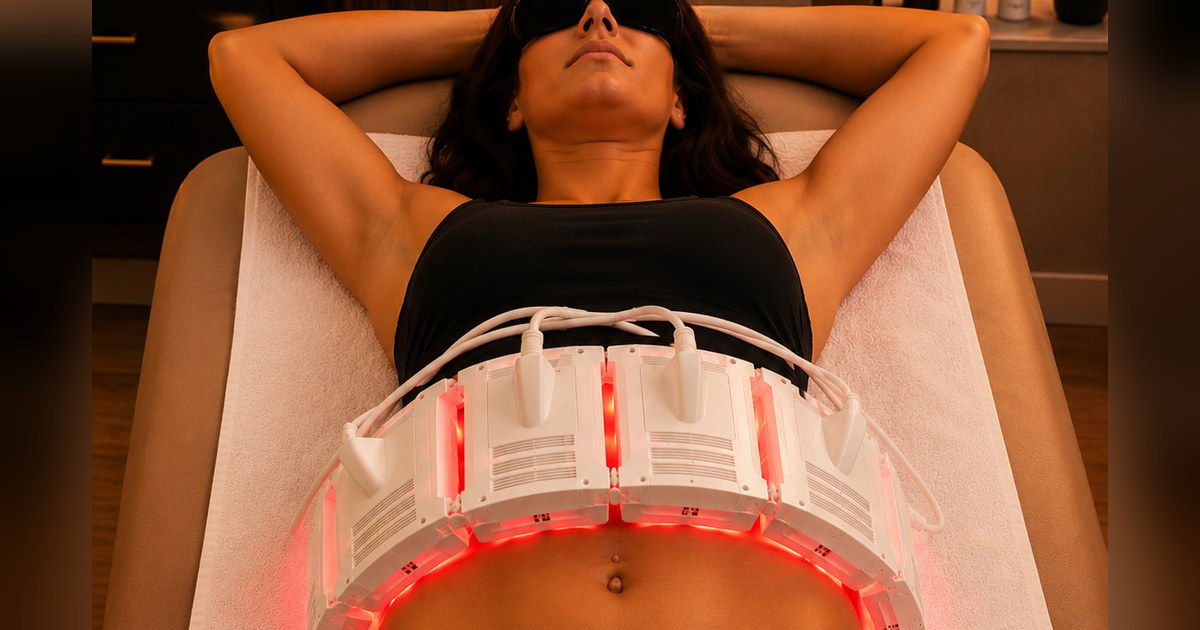
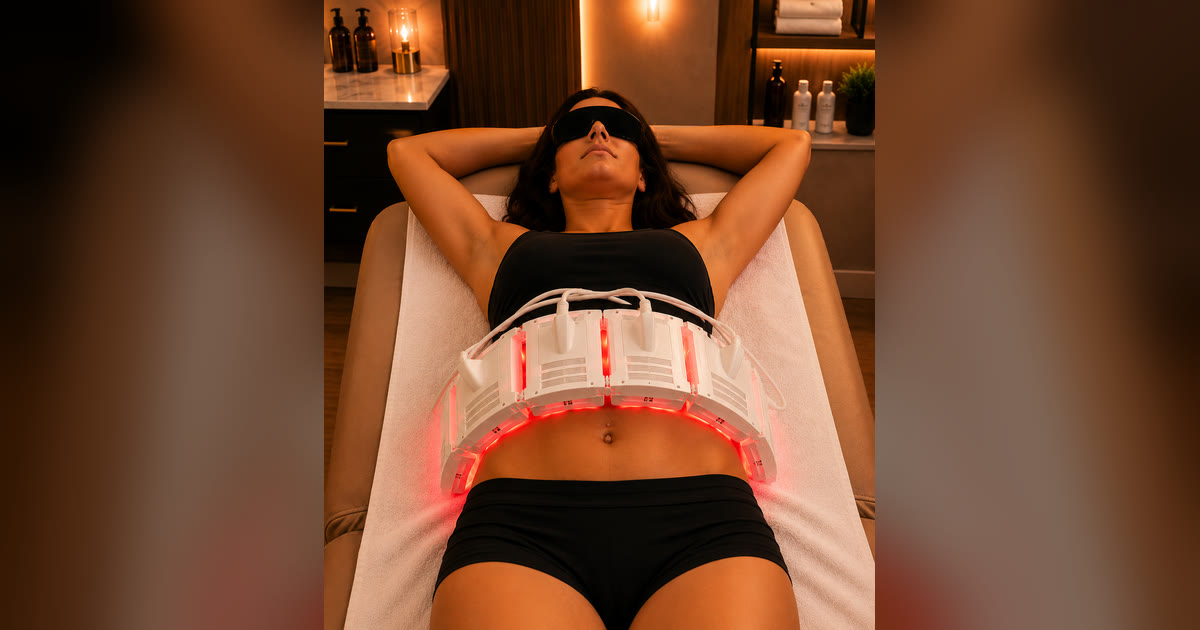
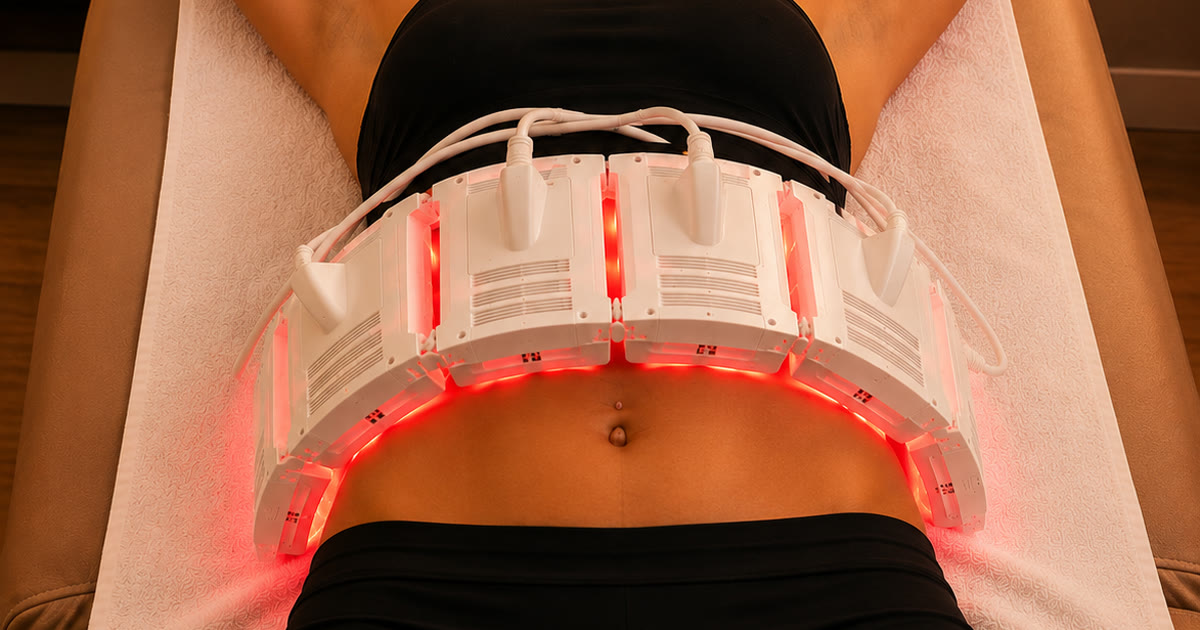
Red light body contouring (the category InvisaRED belongs to) uses low-level red and near-infrared light, typically around 635 nanometers, delivered through contact pads. It is aimed at the fat layer. The light prompts fat cells to open temporary pores in the cell membrane and release stored triglycerides, which the body then burns as fuel. The outcome researchers measured is circumference: inches around the waist, hips and thighs.
Emsculpt is a brand name for a device that uses high-intensity focused electromagnetic (HIFEM) energy. Rather than light, it uses a magnetic field to make the underlying muscle contract far more intensely than you could voluntarily. It is aimed at the muscle layer. The outcome researchers describe is muscle thickness and tone, and in some studies, changes in the fat layer above it.
If I had to put it in one line for a patient: red light is a "what is sitting on top of the muscle" technology, and Emsculpt is a "what is underneath" technology. Only one of them does anything about the fat layer, and only one has a metabolic effect that continues after you leave.
How Each Technology Works
How red light body contouring works
Without going down the full rabbit hole (I covered the mechanism in detail in how red light body contouring works), here is the version that matters for this comparison.
Here is what happens during a session. The InvisaRED pads deliver red and near-infrared light at wavelengths your fat cells absorb. That light triggers the fat cell membrane to open temporary pores, and the cell releases its stored contents, triglycerides, free fatty acids and glycerol, into the space around it. The fat cell shrinks. Your lymphatic system picks up what was released and moves it into circulation, where your body burns it as fuel. This is the same pathway your body uses when you exercise. The difference is that the light does the signaling for you, in the exact spots you want to shrink, while you lie down for 20 minutes.
A randomized, sham-controlled trial of a 635 to 680 nm low-level laser (Caruso-Davis and colleagues, Obesity Surgery, 2011) confirmed the mechanism: in the laboratory portion of the work, the light increased triglyceride release from fat cells without killing them. In the clinical portion, waist circumference moved in opposite directions for the two groups, smaller in the treated group and larger in the sham group, in people whose weight was held stable, so the light was what moved the tape. The original Jackson trial documented the same transitory pores in fat cell membranes and a 3.51-inch combined reduction versus 0.68 in the sham group. Nothing is frozen or heated until it dies, which is why sessions are comfortable and have no recovery period.
The fat your cells release does not disappear on its own. Your body has to metabolize it, and that is where the energy math gets interesting. InvisaRED reports that a single session can trigger a metabolic response equivalent to burning up to roughly 2,000 calories, and that your metabolism stays elevated for up to 72 hours afterward. That is why we tell patients to take a walk after a session and stay hydrated: you are giving your body the signal to use what was just released as fuel. Done one to three times a week over a series, that is a meaningful push toward both inch loss and weight loss. Individual results may vary.
Emsculpt makes your muscle contract. It does not release stored fat or raise your metabolism. If the layer you want to shrink is the one on top, light is the tool.
How Emsculpt (HIFEM) works
HIFEM devices place an applicator over a muscle group, such as the abdomen, and use a rapidly changing magnetic field to trigger muscle contractions. Those contractions are described as stronger than you can produce voluntarily, which is why this is marketed as thousands of "supramaximal contractions" in a short session.
The published work here includes an MRI-based abdominal study describing a dual effect on muscle and fat, a safety and efficacy study of abdominal body shaping, and a systematic review of electromagnetic treatments for body contouring. The 2023 systematic review is the most useful independent read: across the imaging studies it pooled, the average change was about 2.2 mm more muscle thickness and 5.5 mm less fat thickness, with high measurement variability and photographic results the author described as "typically modest." The muscle effect is real. The fat effect is a side note to it, and there is no reported metabolic effect after the session ends.
Fat vs Muscle: Which One Matches Your Goal?
This is the question that actually decides it. Here is how I think through it with patients.
| If your main goal is... | The layer involved | Which category is built for that |
|---|---|---|
| Fewer inches around the waist, hips or thighs | Subcutaneous fat | Red light body contouring |
| Firmer, stronger-feeling abdominal or glute muscle | Muscle | Electromagnetic muscle stimulation (Emsculpt) |
| "I eat well and exercise but one area stays soft" | Usually fat layer, sometimes both | Often red light first, or a combined plan |
| Building tone after a long stretch of inactivity | Muscle | Muscle stimulation, plus movement |
| A metabolic effect that continues after the session | Fat layer / whole body | Red light body contouring (manufacturer reports up to ~2,000 calories per session, metabolism elevated up to 72 hours) |
| Support for weight loss alongside inch loss | Fat layer / whole body | Red light body contouring, as part of a doctor-supervised weight loss program |
| A comfortable option with no recovery period | Either | Red light is painless; Emsculpt involves intense contractions and sometimes next-day soreness |
A few notes on that table.
If your frustration is softness and inches, muscle stimulation alone is a strange match. A stronger muscle sitting under the same fat layer does not make the layer on top smaller. Some HIFEM studies describe changes in the fat layer too, but that is not the technology's primary design, and it does nothing for your metabolism.
If your frustration is "I feel weak and flat in my core," red light alone is a strange match. Reducing circumference does not make the muscle underneath stronger. Strength training does, and so can muscle stimulation.
If your frustration is both, these are complementary, not competing. Shrink the fat layer with light, build the muscle underneath with training or stimulation, and the result is better than either alone. For most people the fat layer is the part that is visible, which is why it is usually where we start.
Comfort, Downtime and What a Session Feels Like
Comfort is where the two feel most different, so it is worth being concrete.
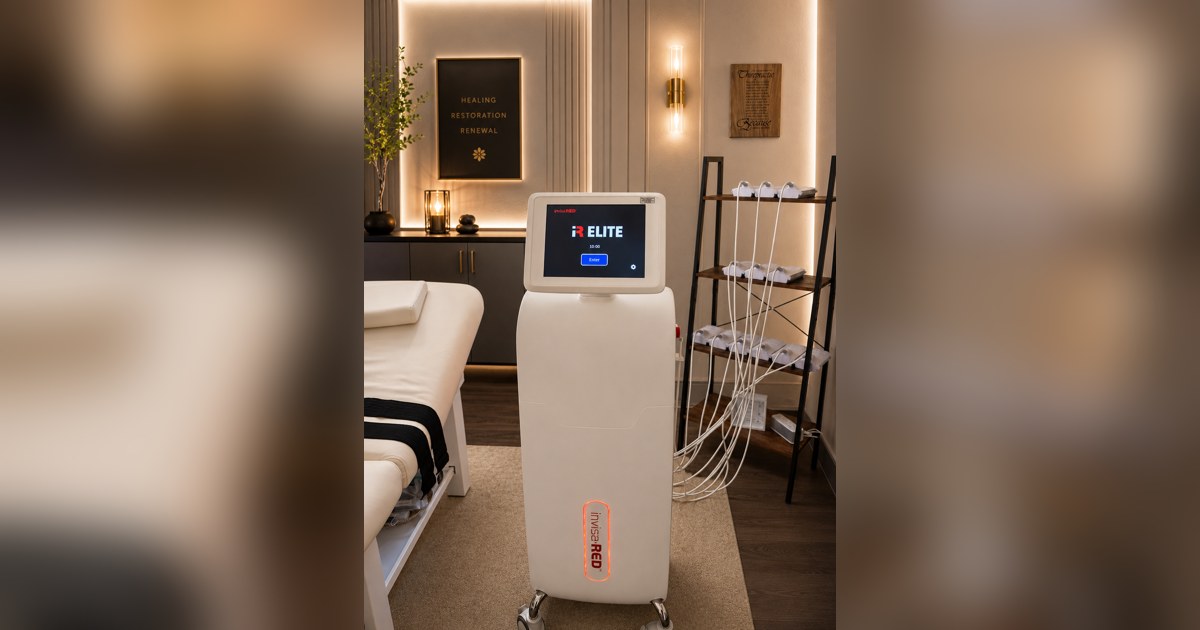
A red light session is quiet. Contact pads rest on the treatment area, you wear protective eyewear, and you lie there. In the published trials the treatments were described as painless, and there is no recovery period. I walk through the full experience in what to expect at your first InvisaRED session.
An electromagnetic muscle stimulation session is a different sensation. Because the technology is designed to make a muscle contract intensely, people commonly describe a strong, rhythmic, involuntary tightening, and some describe next-day muscle soreness similar to a hard workout. That is not a flaw; it is the mechanism. It is simply a different experience.
Safety and Who Should Not Do Either
Both categories are marketed as non-invasive, and both have screening lists.
For red light body contouring, the standard exclusions in the trials are pregnancy, active cancer or cancer treatment, photosensitivity disorders and photosensitizing medications, implanted cardiac devices, and open wounds or infection in the treatment area. I covered the full list, including the eye-protection requirement, in is red light body contouring safe.
For electromagnetic muscle stimulation, the device generates a strong magnetic field, so screening lists for these devices typically focus on metal implants, pacemakers or other implanted electronic devices, and pregnancy. If you are considering any magnetic-field treatment, bring your full medical history, not a summary, and have a licensed provider review it with you before you pay for anything.
Why Most of My Patients Pick the Light
When people come in having compared the two, here is what usually decides it.
The inches come off the areas they care about. If you have ever done everything right and still had one area that would not budge, you already understand why InvisaRED exists. The belly, the love handles, the inner and outer thighs, the back of the arms, the bra line, under the chin: these are the areas the body holds onto hardest, and they are the areas InvisaRED is designed to target directly. A nutrition plan pulls fat from everywhere at once and tends to come off those spots last. InvisaRED lets us put the light exactly where you want the change.
The tape moves first, then the scale. In a Mayo Clinic randomized pilot, Croghan and colleagues treated adults with a BMI of 25 to 29.9 twice a week and measured about 2 inches off the waist at six weeks, along with drops in body weight, BMI and fat mass. The six-week protocol in the Journal of Clinical and Aesthetic Dermatology recorded a combined 5.4 inches lost across the waist, hips, thighs and upper abdomen, with 81% of participants satisfied or very satisfied. Fat is light but bulky, so shrinking fat cells changes how your clothes fit weeks before it changes the scale. I wrote more about that pattern in how InvisaRED helps you lose inches and pounds. Individual results may vary.
The metabolic push. Every session releases stored fat your body then burns, with a metabolic effect the manufacturer estimates at up to ~2,000 calories and elevated metabolism for up to 72 hours. Emsculpt does not do that.
It is comfortable and costs $59 to try. Warm pads, a 20-minute rest, no soreness, and back to your day.
It pairs with medical weight management. Some of our best results come from combining InvisaRED with our doctor-supervised weight loss program. The medical side helps regulate appetite and supports your metabolism across the whole body. InvisaRED targets the specific areas you want to shrink and gives your metabolism an extra push after every session. Patients tell us the combination keeps them motivated, because they see their waistline changing while the scale catches up. Ask about it at your first visit.
Questions to Ask Any Clinic Before You Pay
Whichever technology you are weighing, these questions separate careful clinics from careless ones:
- What layer is this technology designed to act on, and how do you measure the outcome? If the answer is vague, that is your answer.
- Will you take baseline measurements and photos with fixed reference points? Without them, nobody can say what changed.
- What is your screening process? You should be asked about medications, implants, pregnancy and your medical history before you are asked for a credit card.
- What does the published research say? A clinic that knows the answer has done its homework.
- How many sessions do you plan, and when do we review the numbers together?
- What happens after the series? You should hear a maintenance plan, not a shrug.
Red Light Body Contouring in Bowie, MD
At Total Wellness Chiropractic in Bowie, our body contouring service is InvisaRED red light body contouring. We do not offer electromagnetic muscle stimulation, and the two do different jobs. If inches around your midsection, hips or thighs are your goal, red light is the tool built for it, and it is what we will measure and plan at your first visit. If core strength is also a goal, we will talk through training and the other options so you get both layers handled.
We see patients from across Prince George's County and the Route 50 corridor, including Bowie, Crofton, Mitchellville, Glenn Dale, Upper Marlboro, Lanham and Largo. You can see everything we offer on our services page and our body contouring and weight loss page.
Frequently Asked Questions
Is Emsculpt better than red light body contouring?
They are designed for different layers. Red light body contouring is aimed at the fat layer and measured in circumference, and it has a metabolic effect that continues after the session. Emsculpt is aimed at the muscle layer and measured in muscle thickness and tone. If inches are your goal, red light is the better fit. If muscle tone is your goal, Emsculpt is built for that.
Does red light body contouring build muscle?
No. It is designed to shrink the fat layer and support fat loss. Muscle comes from training, protein and, if you choose, muscle stimulation technology. The two are complementary.
Does Emsculpt burn fat?
Some published HIFEM studies describe changes in the fat layer above the treated muscle, but its primary design is muscle stimulation, and it has no reported metabolic effect after the session. If the fat layer is your target, red light is the tool designed for it. Individual results may vary.
Can I do red light body contouring and Emsculpt together?
Yes, they act on different layers and work well in sequence or alongside each other. Shrink the fat layer with light, build the muscle underneath with training or stimulation. Have a licensed provider review your medical history, particularly implants or devices, before combining anything.
Which one hurts more?
Red light body contouring is described as painless in the published trials. Electromagnetic muscle stimulation involves intense muscle contractions, which people commonly describe as strong and sometimes sore afterward.
How much does InvisaRED cost to try?
The InvisaRED offer is $59 first session, including consultation, baseline measurements and a full treatment.
Is red light body contouring a weight loss treatment?
InvisaRED is part of our weight loss and body contouring program. It shrinks fat cells in the areas you target and supports your metabolism after every session, so most patients see both the tape and, over time, the scale move. Emsculpt does not do either. See how red light body contouring works for the mechanism. Individual results may vary.
Ready to See the Inches Come Off?
If you are still unsure whether you are chasing fat, muscle or both, that is the most useful thing to figure out first, and we sort it out at your first visit. For most people, the soft layer on top is the part they want gone, and that is exactly what the light is built for.
Your first InvisaRED session is $59, and it includes your consultation, baseline measurements and a full treatment, so you can feel the difference before you commit to a series. Most people are in and out in about an hour, and back to their day with nothing to recover from.
Book online at wherethehealingbegins.com or call (301) 352-3454.
Total Wellness Chiropractic · 6000 Laurel Bowie Road, Suite 202, Bowie, MD 20715 · (301) 352-3454 — serving Bowie and Prince George's County.
This article is for educational purposes only and is not medical advice. InvisaRED is an FDA-cleared, non-invasive red light body contouring system used at Total Wellness Chiropractic as part of our weight loss and body contouring program. It is not intended to diagnose, treat, cure, or prevent any disease. Total Wellness Chiropractic does not offer Emsculpt; Emsculpt is a trademark of its respective owner and is referenced here for comparison only. The clinical trials cited studied 635 nm low-level laser devices; calorie and metabolism figures are reported by the manufacturer. Individual results may vary. Talk with your physician before beginning any new program, particularly if you are pregnant, have a history of cancer, take photosensitizing medications, or have an implanted medical device.