If your shoulder aches when you reach overhead, hurts at night when you roll onto it, or has been sore for months despite rest, you have probably come across shockwave therapy for rotator cuff pain. It is a fair thing to ask about. It is also a topic where the honest answer is more mixed than most clinic websites let on.
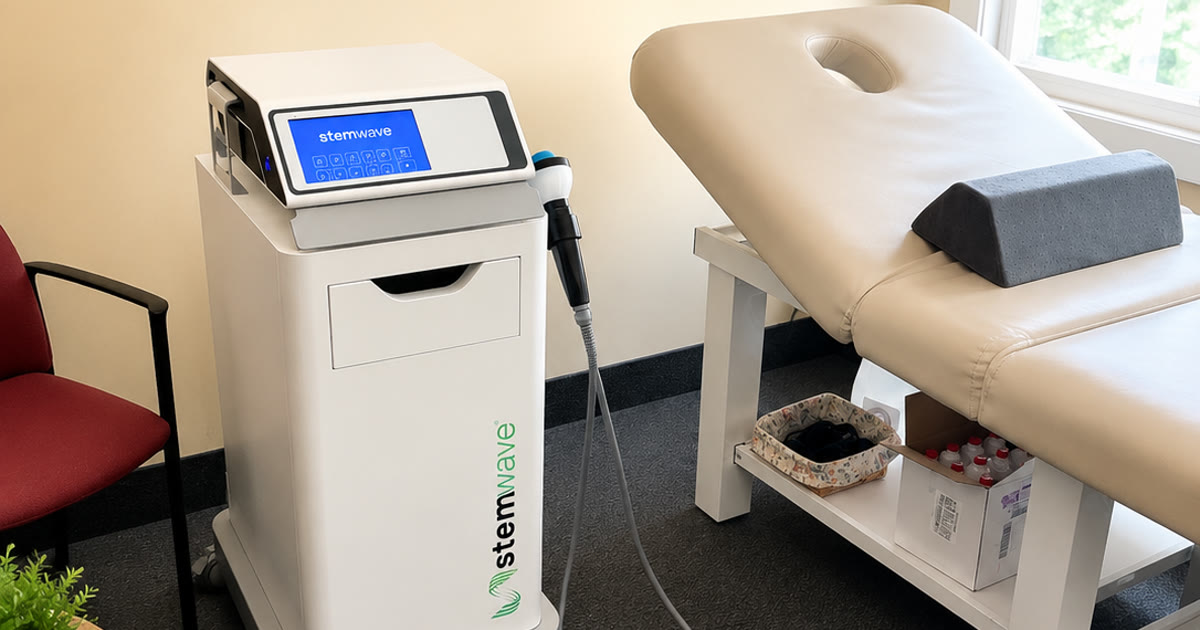
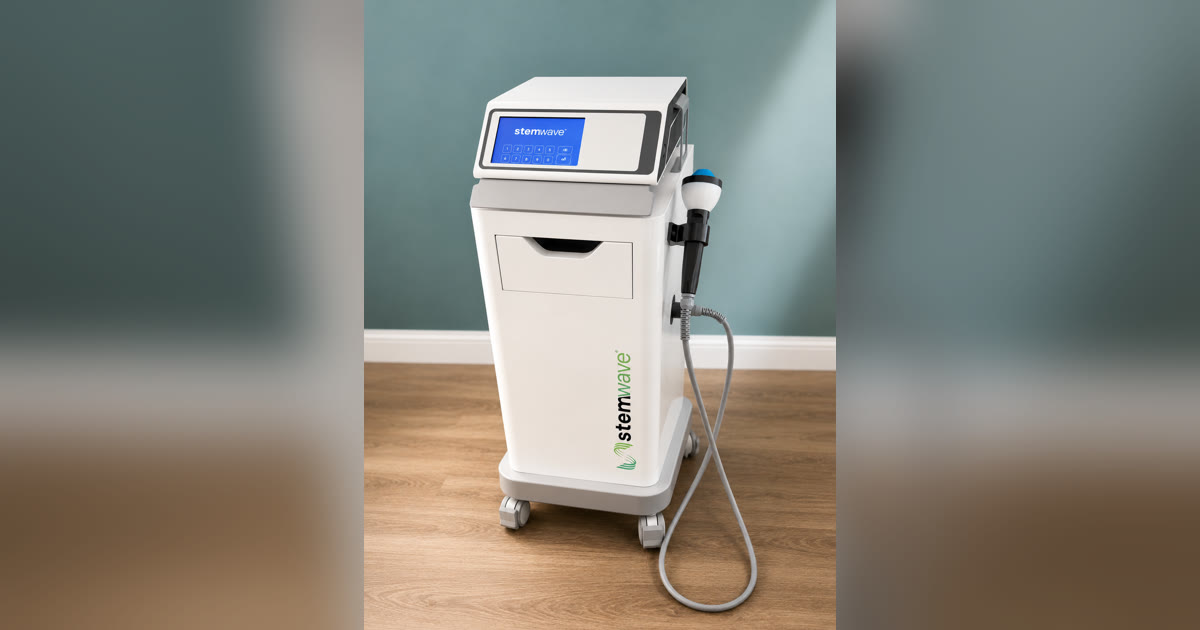
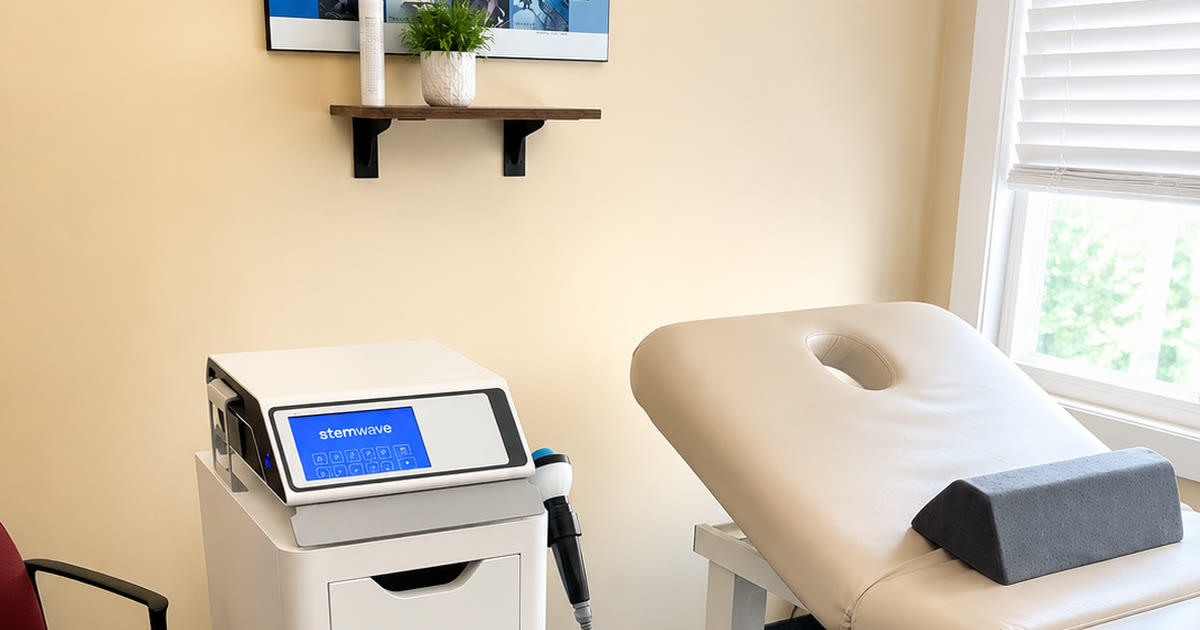
I'm Dr. Eric Schmitt, and I use StemWave acoustic wave therapy at our Bowie office. In this article I will walk through what the rotator cuff is, what the research on shockwave therapy actually shows (including the parts that are not flattering), and who may be a reasonable candidate for a trial of it.
Shockwave Therapy for Rotator Cuff Pain: The Short Answer
- The evidence is mixed. A large Cochrane review found that, on average, shockwave therapy did not produce clinically important improvements over sham treatment. An earlier, well-known randomized trial in one specific type of shoulder problem, calcific tendonitis, did favor shockwave.
- Calcific deposits are the most studied scenario. Most trials enrolled people with calcium deposits in the tendon, so those results may not apply to every shoulder.
- Side effects are usually minor and short-lived, such as soreness, bruising or skin redness.
- It is not a stand-alone answer. Shoulder care is usually built on a proper exam, activity changes and progressive strengthening. Where shockwave may fit is as an add-on for stubborn tendon pain.
- StemWave is one brand of acoustic wave device. The studies below used a range of devices and settings, so they tell us about the category, not about any single machine.
What the Rotator Cuff Is (and What "Rotator Cuff Pain" Means)
The rotator cuff is a group of four muscles and their tendons that surround the head of your upper arm bone and help keep the ball centered in the socket as you lift, rotate and reach. When people say they have a "rotator cuff problem," they can mean several different things:
- Rotator cuff tendinopathy: an irritated, overloaded tendon, often from repetitive overhead work, sports, or sudden increases in activity.
- Calcific tendinitis (calcific tendinopathy): calcium deposits within the tendon, which can be quite painful and are visible on X-ray.
- Partial or full-thickness tears: damage to the tendon fibers, which can come from injury or from gradual wear.
- Shoulder impingement or subacromial pain: pain that comes from tissues being pinched or irritated as the arm lifts.
These are not the same problem, and they do not all respond the same way to the same care. That is the first reason a careful examination matters before anyone suggests any device. The shoulder is also a place where neck problems, nerve irritation, and even issues outside the musculoskeletal system can show up as "shoulder pain," so a thorough history and exam come first.
How Acoustic Wave Therapy Is Supposed to Work
Shockwave therapy (the research term is extracorporeal shockwave therapy, or ESWT) delivers acoustic pressure waves through the skin into a painful area. StemWave is designed to stimulate the body's own tissue response: the acoustic wave technology is designed to activate your body's natural healing response by creating a mechanical stimulus in the tendon, with the aim of encouraging blood flow and tissue remodeling.
That is the theory, and it is worth being clear that theory and proof are different things. I explained the mechanism in more detail in what StemWave therapy is, and you can see the device and our approach on our StemWave page.
What the Research Shows: The Cochrane Review
The most comprehensive look at this question is a Cochrane systematic review of shock wave therapy for rotator cuff disease, with or without calcification. It included 32 trials with 2,281 participants, with searches through November 2019. Twelve of the trials compared shockwave with placebo, and eleven compared higher and lower doses. Most of the trials (25) enrolled people with calcific deposits, five enrolled people without them, and two included mixed groups.
For the comparison against placebo at three months, the reviewers reported:
- Pain was about 0.8 points better on a 0 to 10 scale with shockwave. The reviewers considered 1.5 points the threshold for a clinically important change, so this fell short.
- Function was about 8 points better on a 0 to 100 scale, below their 10-point threshold.
- Pain relief of 50% or more (one trial): 42% with shockwave versus 38% with placebo, a difference too small to be meaningful.
- Participant-reported treatment success (six trials): 41% versus 26%, although the estimate was imprecise.
Their conclusion was that, with moderate-certainty evidence, shockwave therapy "probably does not improve pain and function" compared with placebo, and that the review found "very few clinically important benefits." The same review reported side effects in about 26 of 100 people receiving shockwave versus 7 of 100 receiving placebo, mostly minor and short-lived, such as pain, bruising and bleeding.
Two details in the review deserve attention, because they are the reason this is not a simple "it doesn't work" story. First, the authors noted that the trials used very different protocols, and that some may have used doses too low to matter. They recommended that a standard dose and treatment protocol be decided on before further research. Second, the evidence on how much energy to use is low or very low certainty. In plain terms, the field has not yet settled how shockwave should be delivered to the shoulder.
I would rather you hear that from me than discover it later. If a clinic tells you shockwave therapy for the rotator cuff is guaranteed, it is not describing the research accurately.
The Case for Calcific Tendinitis: A Landmark Trial
The best-known positive trial is a multicenter randomized study by Gerdesmeyer and colleagues published in JAMA in 2003. As summarized by the American Family Physician, it enrolled 144 adults who had at least six months of pain from calcific tendonitis of the rotator cuff that had not responded to conservative care. The patients were split equally into high-energy shockwave, low-energy shockwave, and sham treatment.
At six months, both active groups did better than sham on pain and function. The high-energy group had significantly less pain than the low-energy group, and both did better than sham. The calcium deposits also changed: complete disappearance of the deposit was seen in 60% of the high-energy group at six months and 86% at twelve months, compared with 11% and 25% in the sham group. The summary notes that some patients were lost to follow-up, so the six-month results are more dependable than the twelve-month ones.
Why does a strongly positive trial sit alongside a lukewarm Cochrane review? A few reasons are likely:
- Different patients. That trial was in people with long-standing calcific tendonitis that had failed other care. Pooling it with trials of other shoulder problems can dilute the picture.
- Different dose. Higher-energy treatment performed better than low-energy in that study, and it is delivered differently than the lower-intensity approach many wellness-oriented clinics use.
- Different devices and protocols. Trials differ in pulses, pressure, number of sessions and spacing, which makes pooling difficult.
The honest takeaway: there is a reasonable scientific basis to think calcific shoulder tendon pain is the scenario where acoustic wave therapy has the most support, and the evidence across all shoulder problems is much less certain.
What Has the Most Consistent Support: Loading and Movement
For most rotator cuff problems, the first-line approach is not a device. It is a guided program that gradually restores the shoulder's ability to handle load, along with modifying whatever is aggravating it. A tendon tends to get better at handling stress by being stressed progressively and in the right dose, which is why complete rest often backfires.
In practice that means looking beyond the shoulder itself. We check posture, shoulder blade control, upper-back and neck mobility, and the way you lift, sleep and work. A stiff mid-back or a poorly controlled shoulder blade can make the rotator cuff work harder than it should. I made the same point about elbows in shockwave therapy for tennis elbow, and it applies here too. What you do between visits matters more than the number of sessions, a theme I covered in how many StemWave sessions people actually need.
Who May Be a Reasonable Candidate for a Trial
Based on the evidence above, acoustic wave therapy may be worth discussing if:
- Your shoulder pain has lasted three months or longer and is consistent with a tendon problem on examination.
- You have already given a proper strengthening and activity-modification program a fair try and have plateaued.
- You have been told you have calcific deposits on imaging and conservative care has not settled the pain.
- You want to explore options before or instead of repeated steroid injections. I went through that comparison in shockwave therapy vs cortisone injection.
- You understand the evidence is mixed and you are comfortable with a short trial rather than a large upfront commitment.
When Shockwave Is Not the Right First Step
Some situations call for a different path first:
- A recent fall, a pop, or sudden weakness where you cannot lift your arm. These can signal a significant tear and may need imaging or a referral.
- Pain with chest pressure, shortness of breath, sweating or pain spreading down the left arm. This is an emergency. Call 911. Shoulder pain can sometimes come from the heart, and chiropractic care is never a substitute for emergency evaluation.
- Fever, redness, warmth or swelling of the joint, or unexplained weight loss with night pain.
- Numbness, tingling or weakness running down the arm, which can suggest a neck or nerve source that needs a different workup.
Acoustic wave therapy also has commonly listed precautions, such as over areas with active infection or tumors, certain bleeding disorders or blood thinners, pacemakers or other implants near the treatment area, and pregnancy. We go through a full screening with you before any session. If you are curious about what sessions feel like, I covered that in does StemWave therapy hurt.
Shockwave Therapy in Bowie, MD: How We Approach Shoulder Pain
At Total Wellness Chiropractic on Laurel Bowie Road, we see shoulder pain from across Prince George's County, including Bowie, Crofton, Mitchellville, Glenn Dale, Upper Marlboro, Lanham and Largo. A lot of it is the everyday kind: desk and computer work, overhead tasks, lifting kids or groceries, gym routines, and weekend projects.
Your first visit is an examination, not a sales appointment. We look at where the pain is, what provokes it, what you have already tried, and whether the neck, upper back or shoulder blade is contributing. Then we tell you honestly whether StemWave is a reasonable add-on, whether an exercise plan alone makes more sense, or whether you should see another provider first. Many people leave with a plan and no device sessions at all. You can see the broader range of services we offer and the conditions we commonly see.
If we do decide to try it, your $50 first session lets you see how your shoulder responds before committing to anything more. As with any care, individual results vary.
Frequently Asked Questions
Does shockwave therapy work for rotator cuff pain?
The research is mixed. A Cochrane review of 32 trials found that shockwave therapy probably does not improve pain and function much more than sham treatment on average, while a well-known randomized trial in calcific tendonitis found benefit over sham. It may help some people with persistent tendon-related shoulder pain, but it is not guaranteed.
Can shockwave therapy help a rotator cuff tear?
The studies in the Cochrane review focused on rotator cuff disease, and most enrolled people with calcific deposits rather than significant tears. We do not position acoustic wave therapy as a way to repair a tear. A suspected tear needs a proper exam and sometimes imaging, and a surgical or orthopedic opinion may be appropriate.
Is shockwave therapy good for calcific tendinitis of the shoulder?
Calcific tendinitis is the shoulder condition with the most supportive trial evidence, including the 2003 JAMA study described above. Even so, results vary from person to person, and the research used higher-energy settings than some clinic devices.
How many sessions might I need?
Research protocols commonly use a few sessions spaced about a week apart, but they vary, and the best dose for the shoulder has not been settled. We reassess after the first few sessions and stop if there is no meaningful change. More detail is in how many StemWave sessions do I need.
Does it hurt?
Most people describe it as a tapping or pulsing sensation that can feel tender over a sore tendon. Reviews report mostly short-lived soreness, bruising or redness afterward. See does StemWave therapy hurt.
Is shockwave therapy for the shoulder covered by insurance?
Usually not. It is generally not an insurance-covered service, which is part of why we offer a $50 first session, so you can evaluate it without a large commitment.
Should I keep using my shoulder during treatment?
Usually yes, with modifications. Complete rest tends to leave a tendon weaker, so we generally recommend adjusting the heaviest overhead or painful tasks while building strength back gradually.
Get a Straight Answer About Your Shoulder
If your shoulder has been sore for months and you want an honest opinion on whether shockwave therapy for rotator cuff pain makes sense for you, come in and let's look at it properly.
Total Wellness Chiropractic 6000 Laurel Bowie Road, Suite 202, Bowie, MD 20715 Phone: (301) 352-3454 Book an appointment · Learn more about StemWave · wherethehealingbegins.com
This article is for educational purposes only and is not medical advice, a diagnosis, or a treatment recommendation for any individual. StemWave acoustic wave therapy is not a cure for any condition, and individual results vary. Nothing here should be used as a reason to decline or discontinue care recommended by your physician. Always consult a qualified healthcare provider about your specific situation.
Sources
- Shock wave therapy for rotator cuff disease with or without calcification. Cochrane Database of Systematic Reviews (CD008962). Searches through November 2019.
- Gerdesmeyer L, et al. Extracorporeal shock wave therapy for the treatment of chronic calcifying tendonitis of the rotator cuff: a randomized controlled trial. JAMA. 2003;290:2573-2580. Summarized in Wellbery C. Shock Wave Therapy for Rotator Cuff Tendonitis. American Family Physician. 2004;69(10):2464.