Tennis elbow is one of the most common reasons people ask about shockwave therapy. It is also one of the conditions where the research on shockwave therapy for tennis elbow is the most openly divided — which is exactly why it deserves a careful answer instead of a sales pitch.
Most people who come to our Bowie office with elbow pain have never played tennis. They lift boxes, type all day, garden, carry toddlers, swing a hammer, or grip a steering wheel for an hour each way on Route 50. The tendon on the outside of the elbow (or, for golfer's elbow, the inside) gets irritated, stays irritated, and by month three or four they are looking for something other than "rest it and wait."
Here is what the published evidence actually says, including the parts that don't flatter the technology in our treatment room.
Shockwave Therapy for Tennis Elbow: The Short Answer
- The research is split. Some large reviews found shockwave therapy did little better than a sham (fake) treatment. Other reviews found meaningful improvements in pain and grip strength. Both camps are made up of serious researchers.
- Safety is not the controversy. Across the literature, side effects are usually short-lived: temporary soreness, skin redness, occasionally bruising.
- Golfer's elbow has much less research than tennis elbow, and the older studies that exist are less encouraging.
- It is not a stand-alone solution. The approach with the most consistent support for elbow tendon pain is progressive loading exercise. Where shockwave may help is as an add-on for people whose pain has not settled with that.
- StemWave is one brand of acoustic wave device. The studies below used a range of shockwave devices and settings, so they tell us about the category, not about any single machine.
What Tennis Elbow and Golfer's Elbow Actually Are
"Tennis elbow" is the everyday name for lateral epicondylitis, or lateral elbow tendinopathy. It involves the tendons that attach the wrist-extending muscles of the forearm to the bony bump on the outside of the elbow. It typically hurts when you grip, lift a mug, shake hands, or turn a doorknob.
"Golfer's elbow" is medial epicondylitis — the same idea on the inside of the elbow, where the wrist-flexing muscles attach. It tends to hurt with gripping, carrying, and bending the wrist forward against resistance.
Despite the "-itis" in the name, long-standing cases are usually described as a tendinopathy: a tendon that has lost some of its ability to handle load, rather than an ongoing inflammatory flare. That distinction matters, because it's the reason a lot of current care focuses on rebuilding the tendon's tolerance rather than just calming it down.
One more point worth knowing before you spend money on anything: according to the Cochrane review on shock wave therapy for elbow pain, tennis elbow pain can last from six months to two years and may get better on its own. Any treatment you try is competing against that natural course, which is why placebo-controlled trials matter so much here.
How Acoustic Wave Therapy Is Supposed to Work
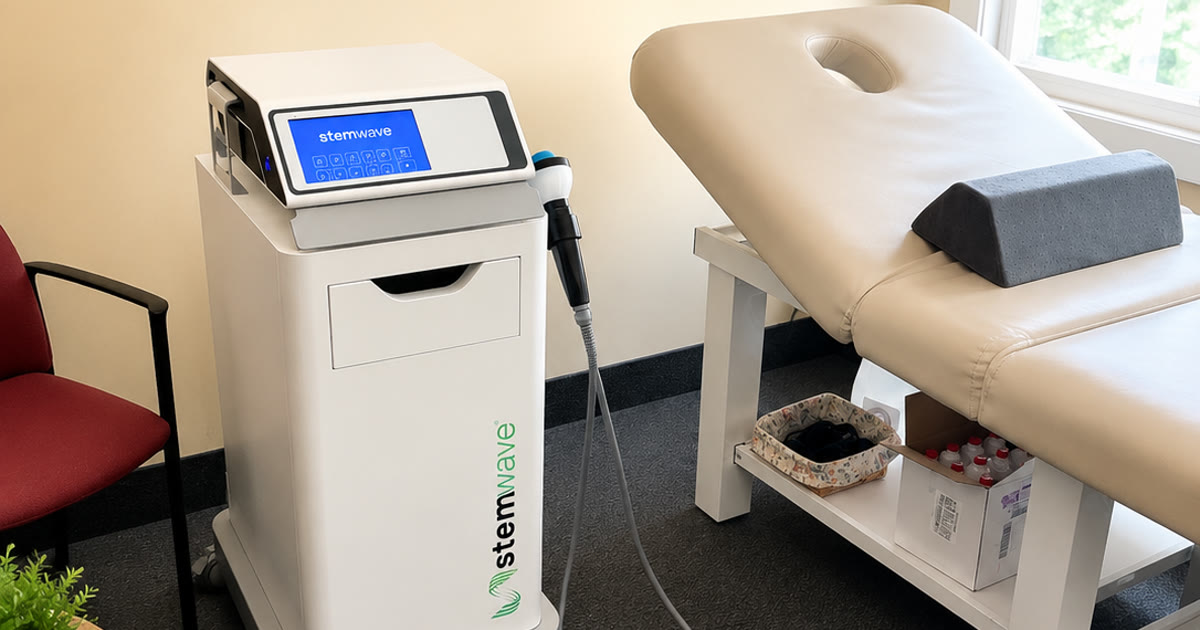
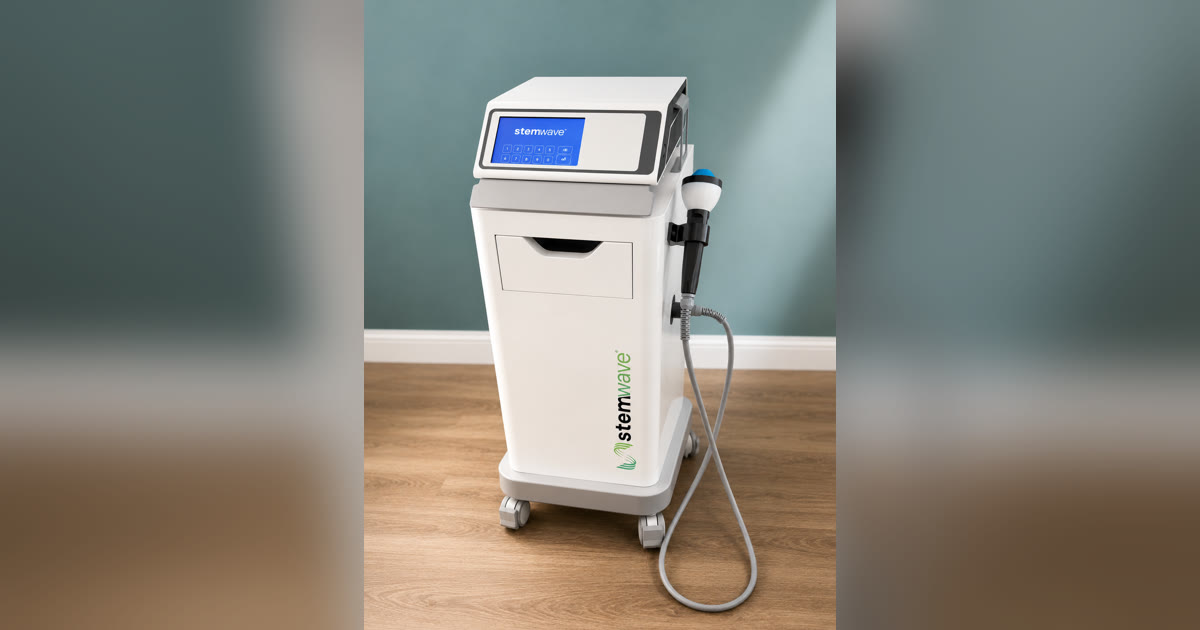
Shockwave therapy (the research term is extracorporeal shockwave therapy, or ESWT) delivers acoustic pressure waves through the skin into the painful area. StemWave is designed to stimulate the body's own tissue response: the acoustic wave technology is designed to activate your body's natural healing response by creating a mechanical stimulus in the tendon, with the aim of encouraging blood flow and tissue remodeling.
That is the theory. The Cochrane authors are candid about the gaps: it is not well known why or how shockwave might improve pain. I explained the mechanism in more detail in what StemWave therapy is, and you can see the device and our approach on our StemWave page.
The Case Against: What the Sham-Controlled Reviews Found
If you only read shockwave clinic websites, you would not know this section exists. You should.
The Cochrane review (Buchbinder et al., 2005). This is the most-cited review on the topic. It pooled nine placebo-controlled trials with 1,006 participants, most of whom had long-standing pain that had not improved with other care. Eleven of the thirteen pooled analyses found no significant benefit of shockwave over a sham treatment. Two pooled results did favor shockwave, but the authors noted those findings were not supported by four other trials. Their conclusion: shockwave therapy "provides little or no benefit" for pain and function in lateral elbow pain, and the review "does not support" its use.
Karanasios et al., 2021. A newer systematic review and meta-analysis in Clinical Rehabilitation reached a similar conclusion: compared with sham shockwave, it found no clinical benefit for elbow disability, grip strength or pain intensity.
NICE guidance (UK). The UK's National Institute for Health and Care Excellence reviewed shockwave therapy for refractory tennis elbow and found no major safety concerns but called the evidence on efficacy inconsistent — enough that it asks clinicians to make sure patients understand that uncertainty before treatment.
That is a real body of evidence, and it would be dishonest to pretend otherwise.
The Case For: What the More Positive Reviews Found
The other side of the literature is not marketing either.
Yao et al., 2020. A meta-analysis in BioMed Research International pooled 13 studies and 1,035 patients and found better pain scores and better grip strength in the shockwave groups than with the comparison treatments, with a favorable safety profile. An important caveat: many of those comparisons were against other treatments, not against sham, which is a lower bar.
A 2026 network meta-analysis. Published in the Journal of Orthopaedic Surgery and Research, this review compared different types and intensities of shockwave across 11 randomized trials and 2 cohort studies (938 patients). Several shockwave types outperformed sham and waiting, and medium-intensity radial shockwave ranked highest for pain at one month. Caveat again: rankings like this are only as good as the small trials feeding them, and one month is a short window.
Head-to-head with cortisone. Newer trials comparing shockwave with steroid injection tend to show cortisone winning early and shockwave catching up or pulling ahead at three to six months. I went through those numbers in detail — including one famous statistic that is widely misquoted — in shockwave therapy vs cortisone injection, so I won't repeat them here.
Why Do Serious Reviews Disagree?
A 2022 paper devoted entirely to this problem, Issues Related to the Effectiveness of Extracorporeal Shock Wave Therapy for the Management of Lateral Elbow Tendinopathy, starts from the fact that recent systematic reviews reached contradictory results. A few reasons come up again and again:
- Devices and doses vary enormously. Radial vs focused, low vs medium vs high energy, 500 pulses vs 2,000. Pooling them is like averaging the results of different drugs.
- Comparison groups vary. Beating ultrasound or "usual care" is not the same as beating a convincing sham.
- Timing of the follow-up varies. Some trials look at one month, others at a year, and tendon pain has a natural tendency to improve over months.
- Patient selection varies. A six-week-old sore elbow and a two-year-old elbow that failed physical therapy are not the same problem.
The practical takeaway: shockwave therapy for tennis elbow is not proven, and it is not disproven. It is a reasonable option to try for the right person, with honest expectations and a clear plan to stop if it isn't helping.
Golfer's Elbow: Thinner and Less Encouraging Evidence
If your pain is on the inside of the elbow, you should know the research base is much smaller.
The older studies that exist are not very encouraging. A prospective comparative study from the same German research group reported good or excellent outcomes in about 27% of golfer's elbow patients, compared with about 60% of tennis elbow patients, and concluded that using shockwave for golfer's elbow "must be questioned." The group's one-year follow-up in Archives of Orthopaedic and Trauma Surgery looked at both conditions over a longer window.
Those studies are decades old, small, and used equipment and protocols that differ from modern devices. But they are the evidence we have, and they are a reason for more caution — not less — before recommending acoustic wave sessions for golfer's elbow. Inside-of-the-elbow pain also deserves a careful exam, because the ulnar nerve runs right next to that tendon and nerve irritation can mimic or accompany it.
What Has the Most Consistent Support: Loading the Tendon
Across nearly every guideline and review, exercise is the first-line approach for elbow tendinopathy — not a device.
A 2021 meta-analysis of eccentric exercise (six studies, 429 participants) found that adding eccentric (slow-lowering) wrist exercises to other care significantly improved pain and strength compared with the other care alone. Isometric exercise — holding a contraction without moving — also has emerging support, and it's often the easier starting point when the elbow is very irritable.
Put simply, a tendon gets better at handling load by being loaded — progressively, and in the right dose. That is why we don't sell shockwave sessions on their own. If we use StemWave for an elbow, it's alongside a structured strengthening plan and changes to whatever is aggravating it at work or at home. I made the same point in how many StemWave sessions people actually need: what you do between sessions matters more than the session count.
Who May Be a Reasonable Candidate
Based on the evidence above, acoustic wave therapy may be worth discussing if:
- Your pain has lasted three months or longer and is clearly tendon-related on examination.
- You've already given a proper loading program a fair try and have plateaued.
- You want to avoid or delay repeated steroid injections, or you've had one and the pain came back.
- You understand that the evidence is mixed and you're comfortable with a short trial rather than a large upfront commitment.
It is usually not the right first step if the pain started last week, if there's numbness or tingling into the ring and little fingers, if there was a fall or a pop, or if the elbow is swollen, hot or locked. Those need a different workup, and sometimes imaging or a referral. Shockwave is also generally avoided over areas with active infection, tumors, or in people with certain bleeding disorders, and we'll go through the full screening list with you. If you're curious what sessions feel like, I covered that in does StemWave therapy hurt.
Shockwave Therapy in Bowie, MD: How We Approach Elbow Pain
At Total Wellness Chiropractic on Laurel Bowie Road, we see elbow pain from across Prince George's County — Bowie, Crofton, Mitchellville, Glenn Dale, Upper Marlboro, Lanham and Largo. Much of it is work-related: desk jobs, trades, warehouse work, and plenty of weekend projects.
A first visit is an examination, not a sales appointment. We'll look at where the pain is, what provokes it, what you've already tried, and whether the neck, shoulder or wrist is contributing. Then we'll tell you honestly whether StemWave is a reasonable add-on, whether a loading program alone makes more sense, or whether you should see someone else first. Plenty of people in Prince George's County with a sore elbow leave with an exercise plan and no device sessions at all. You can see the broader range of services we offer and conditions we commonly see.
If we do decide to try it, your $50 first session lets you see how your elbow responds before committing to anything more.
Frequently Asked Questions
Does shockwave therapy work for tennis elbow?
The honest answer is that the research is divided. The Cochrane review of nine sham-controlled trials found little or no benefit over placebo, while other meta-analyses found improvements in pain and grip strength. It may help some people with long-standing tendon pain, particularly as part of an exercise-based plan, but it is not guaranteed and individual results vary.
Is shockwave therapy effective for golfer's elbow?
There is much less research on golfer's elbow, and the older studies reported lower success rates than for tennis elbow. We are more cautious about recommending it for inside-of-the-elbow pain, and we check for nerve involvement first.
How many sessions would I need for tennis elbow?
Most research protocols used about three sessions spaced roughly a week apart, though some used more. We reassess after the first few sessions and stop if there's no meaningful change. There's more detail in how many StemWave sessions do I need.
Is shockwave therapy better than a cortisone shot for tennis elbow?
In head-to-head trials, cortisone tends to help faster in the first month, while shockwave has tended to look better at three to six months. It isn't strictly either/or — see our full breakdown of shockwave therapy vs cortisone injection.
Can I keep working or playing sports during StemWave sessions?
Usually yes, with some adjustments. Most people continue working, but we'll often suggest modifying the heaviest gripping or lifting tasks for a while and building strength back gradually rather than stopping activity altogether.
Is shockwave therapy for tennis elbow covered by insurance?
Usually not. Shockwave therapy is generally not an insurance-covered service, which is part of why we offer a $50 first session — so you can evaluate it without a large commitment.
What are the side effects?
Reviews report mostly short-lived effects: soreness during or after the session, skin redness, and occasionally bruising or mild nausea. NICE's review found no major safety concerns.
Get a Straight Answer About Your Elbow
If your elbow has been sore for months and you want an honest opinion on whether shockwave therapy for tennis elbow or golfer's elbow makes sense for you, come in and let's look at it properly.
Total Wellness Chiropractic 6000 Laurel Bowie Road, Suite 202, Bowie, MD 20715 Phone: (301) 352-3454 Book an appointment · Learn more about StemWave · wherethehealingbegins.com
This article is for educational purposes only and is not medical advice, a diagnosis, or a treatment recommendation for any individual. StemWave acoustic wave therapy is not a cure for any condition, and individual results vary. Nothing here should be used as a reason to decline or discontinue care recommended by your physician. Always consult a qualified healthcare provider about your specific situation.
Sources
- Buchbinder R, Green S, Youd JM, Assendelft WJJ, Barnsley L, Smidt N. Shock wave therapy for lateral elbow pain. Cochrane Database of Systematic Reviews. 2005;(4):CD003524.
- Karanasios S, Tsamasiotis GK, Michopoulos K, Sakellari V, Gioftsos G. Clinical effectiveness of shockwave therapy in lateral elbow tendinopathy: systematic review and meta-analysis. Clinical Rehabilitation. 2021.
- National Institute for Health and Care Excellence. Extracorporeal shockwave therapy for refractory tennis elbow (IPG313). 2009.
- Yao G, et al. Efficacy of Extracorporeal Shock Wave Therapy for Lateral Epicondylitis: A Systematic Review and Meta-Analysis. BioMed Research International. 2020.
- Comparison of the efficacy of different types and intensities of extracorporeal shock wave therapy for lateral epicondylitis: a systematic review and network meta-analysis. Journal of Orthopaedic Surgery and Research. 2026;21:435.
- Issues Related to the Effectiveness of Extracorporeal Shock Wave Therapy for the Management of Lateral Elbow Tendinopathy. 2022.
- Krischek O, et al. Shock-wave therapy for tennis and golfer's elbow — 1 year follow-up. Archives of Orthopaedic and Trauma Surgery. 1999.
- Extracorporeal shockwave therapy in epicondylitis humeri ulnaris or radialis — a prospective, controlled, comparative study. 1998.
- The Beneficial Effects of Eccentric Exercise in the Management of Lateral Elbow Tendinopathy: A Systematic Review and Meta-Analysis. Journal of Clinical Medicine. 2021.
- Isometric Exercise for the Management of Lateral Elbow Tendinopathy.