The first few steps out of bed are the worst. Your heel and the back of your ankle feel stiff and tight, and you walk like someone twice your age until things loosen up after ten or fifteen minutes. Then you run, play, or work a long shift, and by evening the ache is back. Weeks turn into months, and the calf stretches and ice packs have not quite done the job.
That pattern is typical of an irritated Achilles tendon, and it is one of the most common stubborn tendon problems we hear about from people around Bowie. This article is about shockwave therapy for Achilles tendonitis: what the condition really is, what the published research does and does not show, who may be a reasonable candidate for a StemWave trial, and what a visit at Total Wellness Chiropractic looks like.
I will be upfront about one thing. The research on shockwave for the Achilles is more mixed than many clinic websites admit. I would rather you hear that from me now than discover it later.
Achilles "Tendonitis" Is Usually Tendinopathy
You will hear three words used for the same sore spot: tendonitis, tendinitis, and tendinopathy. Researchers now generally prefer tendinopathy, because long-standing Achilles pain is often less about fresh inflammation and more about a tendon that has been overloaded and has changed structurally over time. That matters, because it explains why a few days of ice and ibuprofen often do not settle a problem that has been building for months.
There are two main types:
- Midportion Achilles tendinopathy is the most common. Pain sits roughly 2 to 6 centimeters above the heel bone, in the middle of the tendon, and the area may feel thickened or nodular.
- Insertional Achilles tendinopathy hurts right where the tendon attaches to the heel bone. It is often linked to a bony prominence at the back of the heel, and tight shoes that rub there can make it worse. Some exercises that help the midportion type can aggravate this one, so the two are managed differently.
Telling these apart is one reason an in-person exam matters. The right plan for one can be the wrong plan for the other.
Common Signs and Why They Develop
The Achilles is the thickest tendon in the body, and it can carry several times your body weight with every running stride. Typical signs of Achilles tendinopathy include pain, stiffness and sometimes swelling at the back of the heel or lower calf, morning stiffness that eases with walking, and pain that returns after prolonged activity or at the end of a long run.
Orthopedic references commonly list these contributors:
- A sudden jump in training volume or intensity
- Tight calf muscles
- Flat feet or overpronation
- Worn-out or unsupportive shoes
- Returning to activity too quickly after time off
- Weekend-warrior patterns: little movement all week, then a pickup game or long hike
You do not have to be an athlete. Plenty of people develop it from long days on their feet, new footwear, or a change in walking routine.
What the Research Actually Shows
Let me share the most useful evidence I found, with its limits.
A 2023 systematic review and meta-analysis in the Journal of Chiropractic Medicine (Stania and colleagues) looked at extracorporeal shock wave therapy used on its own for Achilles tendinopathy. Six randomized controlled trials met the criteria, but only two contributed to the pooled results, with about 50 patients per group. For pain and for function (measured with the VISA-A score), shockwave was not significantly different from other conservative treatments. The authors graded the certainty of the evidence as very low and called its effectiveness for Achilles tendinopathy inconclusive, noting small studies, wide variation in protocols, and some trials without blinding.
Read that carefully, because it cuts both ways. It does not show that shockwave fails. It shows that the research is thin and inconsistent, and that we cannot promise a particular result. A review of lower-limb tendon studies is similarly cautious in tone, which is a common theme in this field: shockwave is a reasonable option people explore for chronic tendon pain, but the trials are small, protocols differ, and the long-term picture is unclear.
So the honest summary is this: acoustic wave therapy for the Achilles is an option that may be worth a trial for stubborn cases, not a proven fix. Anyone promising otherwise is ahead of the evidence.
What Has the Most Consistent Support: Progressive Loading
Across Achilles research and orthopedic guidance, the approach with the most consistent support is progressive loading, meaning gradually strengthening the calf-tendon unit. Slow, controlled calf-lowering exercises (often called eccentric exercises) are the classic example, usually performed consistently over about three to six months for midportion problems, and sometimes longer for insertional problems.
That timeline frustrates people, and I understand why. But tendons adapt slowly because they have a limited blood supply. Other commonly used conservative steps include:
- Calf stretching and mobility work
- Temporarily reducing running and jumping rather than stopping all movement
- Supportive footwear or a small heel lift when appropriate
- Gradual, stepwise return to activity
Here is how I think about it: if you are not doing the loading work, a device will not carry the load for you. When acoustic wave therapy is used, it is best seen as an add-on to that plan. I made a similar point in shockwave therapy for knee pain and shockwave therapy for tennis elbow.
How StemWave Is Designed to Work
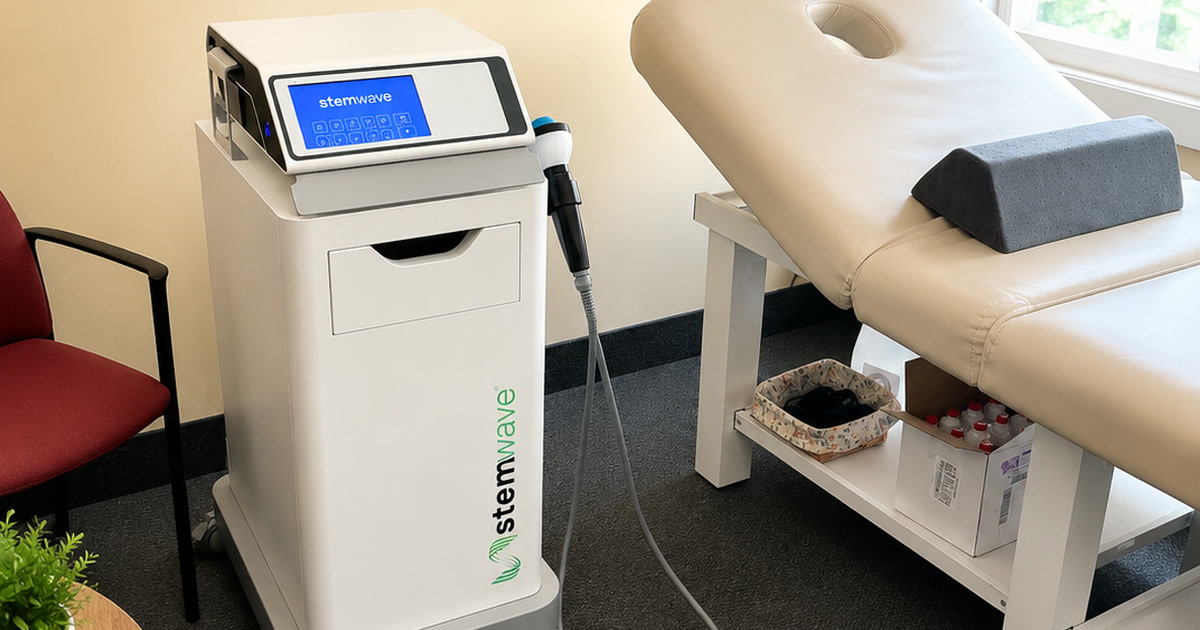
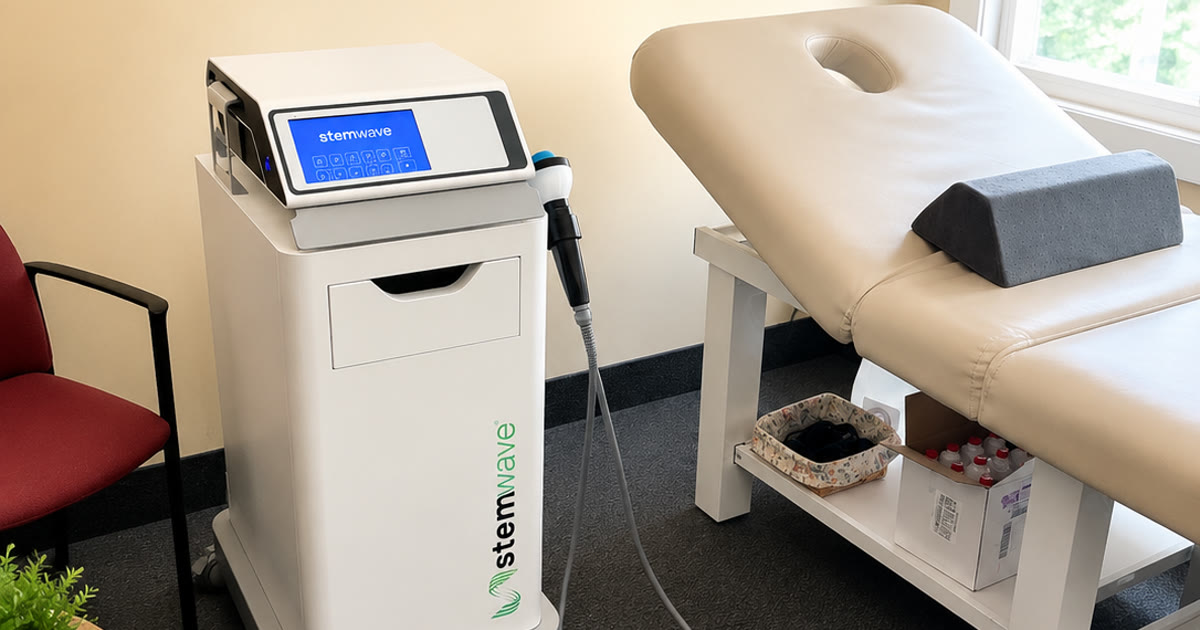
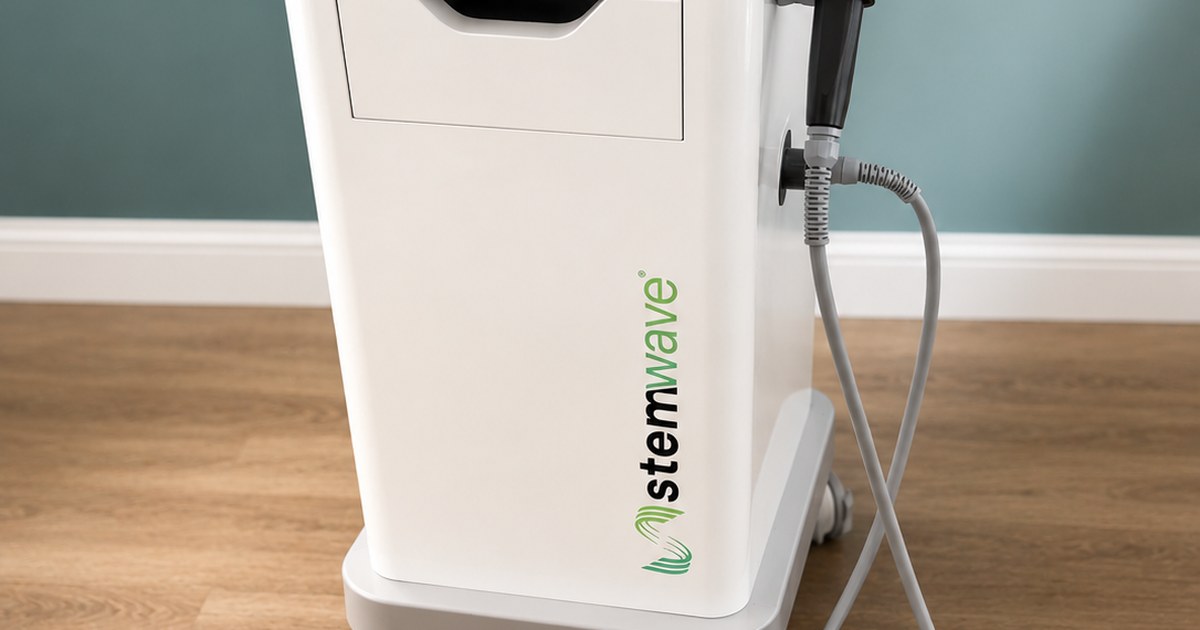
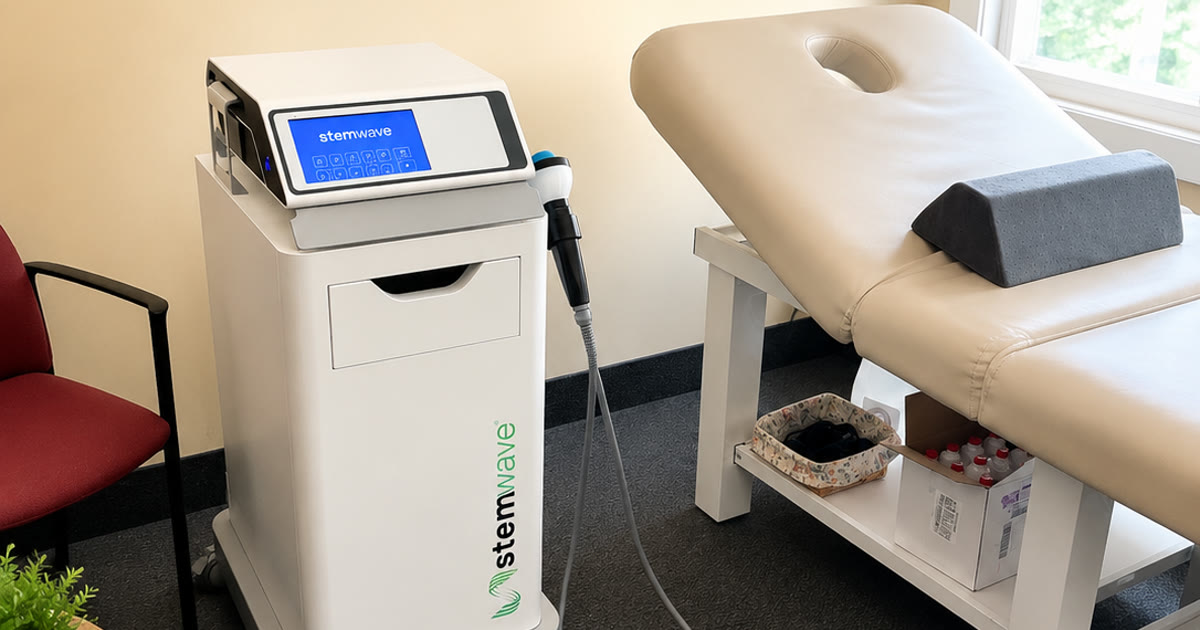
StemWave is an acoustic wave device. A handpiece placed on the skin over the sore area delivers pressure pulses into the tissue. The technology is designed to stimulate the area and may help support the body's natural healing response where recovery has stalled. In plain language, the theory is that mechanical stimulation of a chronically irritated tendon may encourage local circulation and cellular activity.
That is a plausible idea, but plausible is not proven, which is why I walked through the research above. For the full mechanism, see what StemWave therapy is, or visit our StemWave page.
Who May Be a Reasonable Candidate for a Trial
Based on how the evidence and day-to-day practice line up, an Achilles may be a reasonable candidate for a StemWave trial when:
- The pain is localized to the tendon and has lasted several weeks to months.
- You have already tried sensible rest, activity changes, and a loading program, and progress has stalled.
- Red-flag problems have been ruled out, such as a suspected tear or other injury.
- You are willing to pair sessions with a strengthening plan rather than relying on the device alone.
- You want to explore options before considering repeated steroid injections. Orthopedic sources generally advise caution with corticosteroid injections near the Achilles because of rupture risk. I compared those approaches in shockwave therapy vs cortisone injection.
When Shockwave Is Not the Right First Step
Some Achilles problems need medical attention first.
Get urgent evaluation if you felt a sudden "pop" at the back of the ankle followed by severe weakness or difficulty pushing off the foot. That can signal a rupture, which is an emergency evaluation, not a shockwave case.
Also see a physician promptly for fever, redness, warmth, or marked swelling, calf pain or swelling that could suggest a clot, or pain following a significant injury.
Acoustic wave therapy also carries commonly listed precautions, including active infection or tumor in the treatment area, certain bleeding disorders or blood-thinning medication, implants near the area, and pregnancy. We screen for these before any session. If you are curious what sessions feel like, I covered that in does StemWave therapy hurt.
If symptoms persist for many months despite structured rehabilitation, orthopedic sources note that surgical consultation may come into the conversation. We would help you get to the right specialist if that point arrives.
Shockwave Therapy for Achilles Tendonitis in Bowie, MD
At Total Wellness Chiropractic on Laurel Bowie Road, we see lower-leg and heel problems from across Prince George's County, including Bowie, Crofton, Mitchellville, Glenn Dale, Upper Marlboro, Lanham and Largo. The stories are familiar: runners on the trails, recreational league players, nurses and teachers on their feet all day, and people who bought new shoes and noticed the heel talking back a week later.
Your first visit is an examination, not a sales appointment. We look at where the pain sits, what provokes it, what you have already tried, and what your calf, ankle, foot and hip are doing. Then we tell you plainly whether StemWave is a reasonable add-on, whether an exercise plan on its own makes more sense, or whether you should see another provider first. It is entirely possible to leave with a loading plan and no device sessions at all. You can see the services we offer and the conditions we commonly see.
If you do want to try it, our $50 first session lets you evaluate StemWave without a large commitment.
Frequently Asked Questions
Does shockwave therapy work for Achilles tendonitis?
The research is inconclusive. A 2023 meta-analysis found no significant difference versus other conservative care and rated the evidence very low in certainty. Acoustic wave therapy is designed to stimulate the body's natural healing response, but individual results may vary and no outcome can be promised.
Is shockwave better than eccentric exercises for the Achilles?
Not based on what is currently known. Progressive loading has the most consistent support, and we think of acoustic wave therapy as something that may be added to that work for stubborn cases, not a substitute for it.
How many sessions might I need?
Protocols vary widely between studies. We reassess after the first few sessions and stop if there is no meaningful change. More detail is in how many StemWave sessions do I need.
Does it hurt?
Most people describe a tapping or pulsing sensation that can feel tender over a sore spot. Short-lived soreness or redness afterward is commonly reported.
Can I keep running during treatment?
Often with modifications. Complete rest tends to leave a tendon less prepared for load, so we generally recommend adjusting the most provoking activities and rebuilding gradually, guided by how the tendon responds.
Is shockwave therapy covered by insurance?
Coverage depends on your plan, and shockwave therapy is often a self-pay service. Ask us when you book and check with your insurer.
What if I think I tore my Achilles?
Seek urgent medical evaluation. A sudden pop with severe weakness or inability to push off is not something to wait on.
Get a Straight Answer About Your Achilles
If your heel and lower calf have been sore for months and you want an honest opinion on whether shockwave therapy for Achilles tendonitis makes sense for you, come in and let's look at it properly.
Total Wellness Chiropractic 6000 Laurel Bowie Road, Suite 202, Bowie, MD 20715 Phone: (301) 352-3454 Book an appointment · Learn more about StemWave · wherethehealingbegins.com
This article is for educational purposes only and is not medical advice, a diagnosis, or a treatment recommendation for any individual. StemWave acoustic wave therapy is not a cure for any condition. Individual results may vary. Nothing here should be used as a reason to decline or discontinue care recommended by your physician. Always consult a qualified healthcare provider about your specific situation.
Sources
- Stania M, Malá J, Chmielewska D. The Efficacy of Extracorporeal Shock Wave Therapy as a Monotherapy for Achilles Tendinopathy: A Systematic Review and Meta-Analysis. Journal of Chiropractic Medicine. 2023;22(4):294-301.
- The effectiveness of extracorporeal shock wave therapy in lower limb tendinopathy: a systematic review. PubMed.
- Cortho. Achilles Tendinopathy: A Comprehensive Overview.