You did what everyone told you to do. You rested the knee. You iced it, skipped the run, took the stairs one at a time, and maybe wore a sleeve or a brace. A few weeks later it felt a little better, so you went back to normal life, and the ache came right back the first time you squatted, knelt, or hiked a flight of stairs with a laundry basket.
If that sounds familiar, you are not alone, and you are not doing anything wrong. Knee pain that does not settle with rest is one of the most common reasons people walk into my office here in Bowie. This article is about shockwave therapy for knee pain: what it is, what the published research does and does not show, who may be a reasonable candidate, and what a visit at Total Wellness Chiropractic looks like.
I will be direct about one thing up front. The evidence for acoustic wave therapy in the knee is mixed, and it depends heavily on which part of the knee is the problem. I would rather you understand that than hear a sales pitch.
Why Knee Pain Sometimes Doesn't Respond to Rest
Rest is a sensible first move for a new, mild knee problem. MedlinePlus lists rest, short sessions of ice, elevation, and avoiding painful activities as standard home care for mild knee pain that has just started. But rest has a limit. When pain lingers for months, the issue is often not a fresh injury at all.
Common reasons knee pain hangs on include:
- Tendon irritation. The patellar tendon below the kneecap (sometimes called "jumper's knee") and the tendons around the knee can become sore and stubborn from repeated load. Tendons heal slowly because they have a limited blood supply.
- Wear-related joint changes. Osteoarthritis is a very common source of ongoing knee pain, especially after 45 or 50.
- Kneecap tracking and overload. Pain at the front of the knee often comes from the kneecap being loaded unevenly, which can be linked to hip and foot mechanics.
- Iliotibial band irritation. Pain on the outside of the knee is common in runners and cyclists.
- Mechanical problems. A meniscus tear or ligament injury can feel like a lingering ache but needs a different path.
MedlinePlus lists many of these causes, from tendinitis and bursitis to iliotibial band syndrome, meniscus tears, ligament injuries, and arthritis. The point is that "knee pain" is not one diagnosis. Which one you have changes everything, including whether shockwave makes sense at all.
How Acoustic Wave Therapy Is Designed to Work
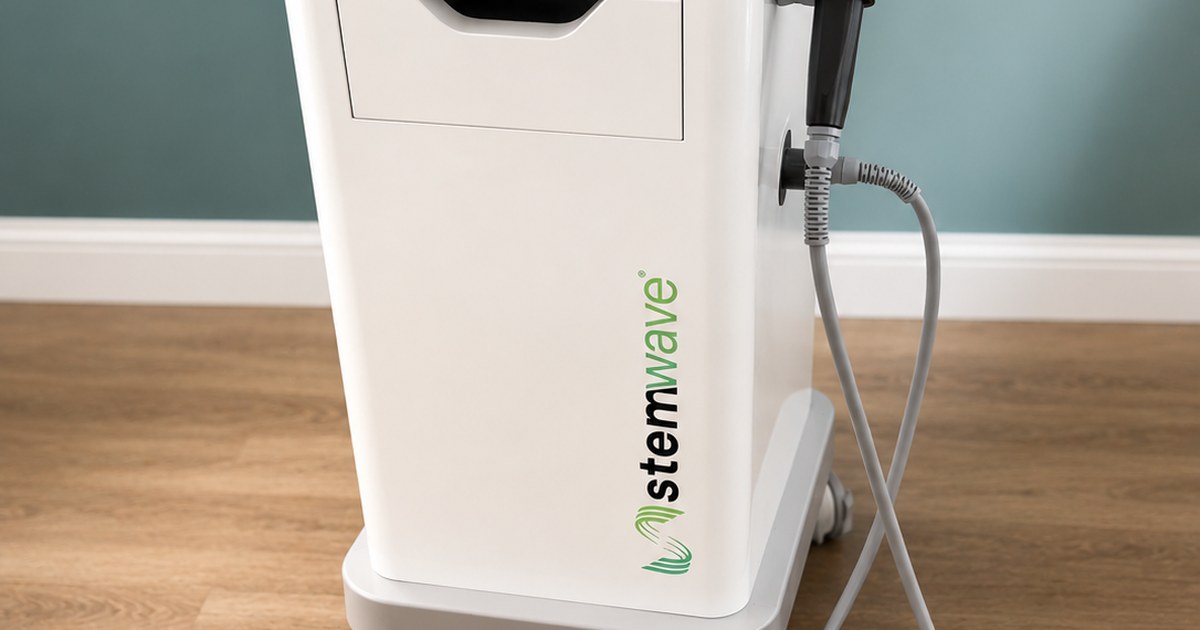
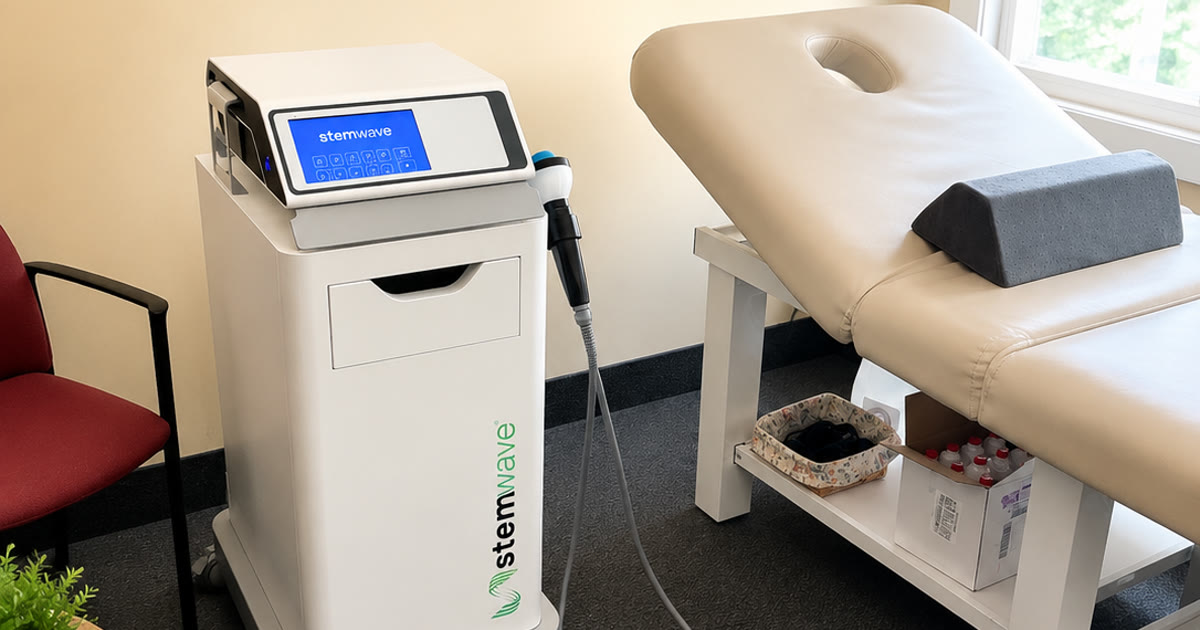
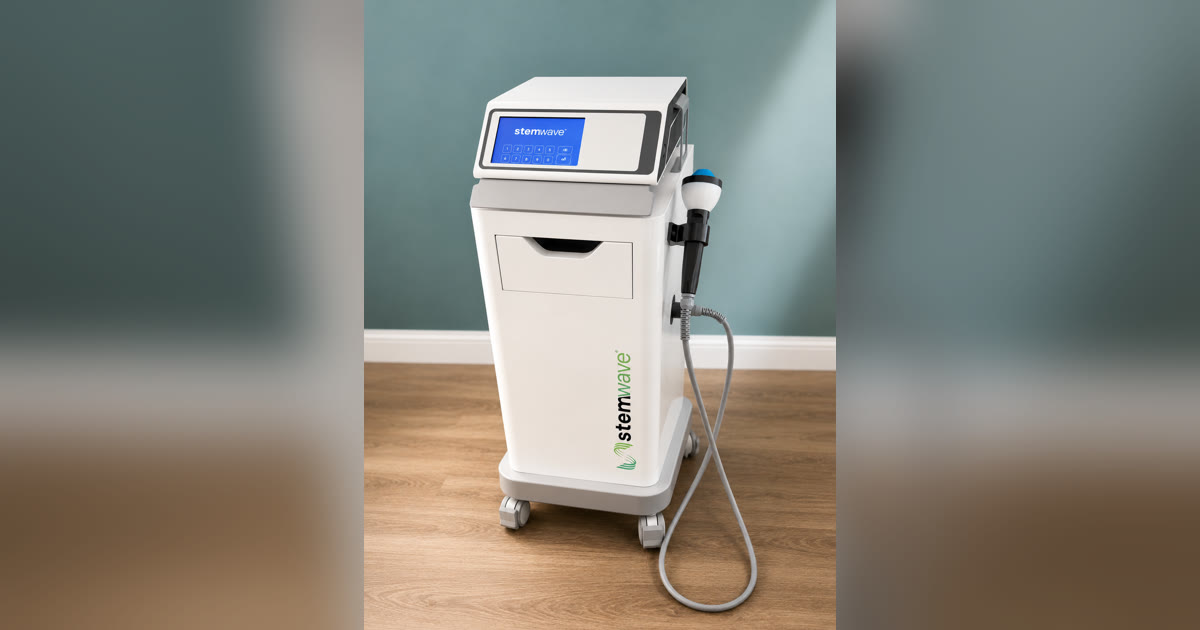
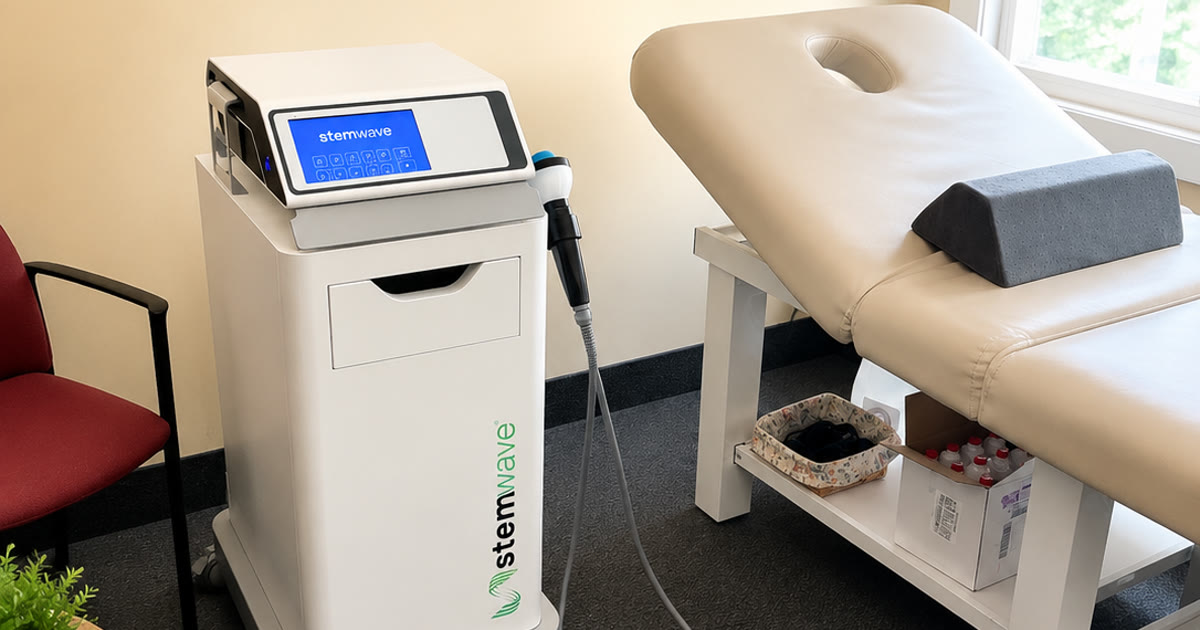
StemWave is an acoustic wave device. It delivers pressure pulses through a handpiece placed on the skin over the sore area. The technology is designed to stimulate tissue and may help encourage the body's natural healing response in areas where recovery has stalled.
The theory is that mechanical stimulation of a chronically irritated tendon or soft tissue may prompt local circulation and cellular activity. That is a plausible idea, but theory and proof are not the same thing, which is why I want to walk you through what the studies actually found. If you want the full mechanism, I explained it in what StemWave therapy is, and you can see the device on our StemWave page.
What the Research Shows for Knee Osteoarthritis
A 2019 systematic review and meta-analysis in Experimental and Therapeutic Medicine (Li and colleagues) pooled seven randomized controlled trials involving 366 patients with knee osteoarthritis. The authors reported that extracorporeal shockwave therapy was associated with lower pain scores than placebo and than physical therapy in the short term, along with better range of motion and function scores in some comparisons.
That sounds encouraging, and it is worth knowing about. But the same authors were careful about the limits. The review included few studies with small sample sizes, results varied a lot between trials, some studies were not blinded, and outcomes were measured at roughly one month. Long-term effects were not assessed. The authors called for high-quality, larger trials.
So the honest summary is this: for knee osteoarthritis, there is early research suggesting acoustic wave therapy may help with short-term pain and function, but the evidence is not strong enough to promise anything, and we do not know how long any benefit lasts.
What the Research Shows for Jumper's Knee
Patellar tendinopathy, or jumper's knee, is a tendon problem, and tendons are where shockwave research is most developed overall. Even so, the knee-specific evidence is not clear cut.
A 2022 systematic review and meta-analysis in the Journal of Human Kinetics (Stania and colleagues) analyzed seven randomized controlled trials. At six months or longer, the pooled pain and function scores for shockwave were not significantly different from control treatments, and the studies varied enormously. The authors concluded that no clear and generalized conclusions could be drawn about its effectiveness in athletes with patellar tendinopathy.
I think that is an important result, and I do not want to bury it. It does not mean shockwave never helps a sore patellar tendon. It means the research has not yet shown a consistent long-term advantage, and anyone who tells you otherwise is overstating what is known.
What Has the Most Consistent Support: Loading and Movement
Across tendon and knee problems, the approach with the most reliable support is progressive strengthening. Gradually loading the thigh, hip, and calf muscles, and returning to activity in steps, is the backbone of good knee care. Acoustic wave therapy, when it is used at all, is best thought of as an add-on to that work rather than a replacement for it.
In practice, that means we look beyond the knee. We check hip strength, ankle mobility, foot mechanics, how you squat and step down, and what your training or work week looks like. A knee that hurts is frequently a knee that is being asked to absorb forces the hip or foot should be sharing. What you do between visits matters more than the device. I covered a similar point in shockwave therapy for tennis elbow and in how many StemWave sessions people actually need.
Who May Be a Reasonable Candidate for a Trial
Based on how the research and clinical practice line up, a knee may be a reasonable candidate for a trial of StemWave when:
- The pain is localized to a tendon or soft-tissue area you can point to, such as just below the kneecap.
- It has lasted several weeks to months despite sensible rest and activity changes.
- You have been cleared of red-flag problems such as a suspected fracture, major ligament tear, or infection.
- You are willing to pair sessions with a strengthening and activity plan.
- You want to explore options before or instead of repeated steroid injections. I compared those approaches in shockwave therapy vs cortisone injection.
When Shockwave Is Not the Right First Step
Some knee problems need a different evaluation before anything else. MedlinePlus advises contacting a provider if you cannot bear weight, if the knee buckles, locks or looks deformed, if you have fever, redness, warmth or significant swelling, if there is calf pain or swelling, or if the pain follows an accident or injury. Those signs call for a medical workup first, and we will send you to the right provider if we find them.
Acoustic wave therapy also has commonly listed precautions, such as over areas with active infection or tumors, certain bleeding disorders or blood thinners, pacemakers or other implants near the treatment area, and pregnancy. We screen for all of this before any session. If you are wondering what sessions feel like, I covered that in does StemWave therapy hurt.
Shockwave Therapy for Knee Pain in Bowie, MD
At Total Wellness Chiropractic on Laurel Bowie Road, we see knee pain from across Prince George's County, including Bowie, Crofton, Mitchellville, Glenn Dale, Upper Marlboro, Lanham and Largo. Much of it is everyday stuff: weekend sports, running the trails, standing on hard floors at work, kneeling to garden, and getting older on joints that have done a lot of miles.
Your first visit is an examination, not a sales appointment. We look at where the pain is, what provokes it, what you have already tried, and what the hips, feet and back are doing. Then we tell you honestly whether StemWave is a reasonable add-on, whether an exercise plan alone makes more sense, or whether you should see another provider first. Many people leave with a plan and no device sessions at all. You can see the broader range of services we offer and the conditions we commonly see.
If you do want to try it, our $50 first session lets you evaluate StemWave without a large commitment.
Frequently Asked Questions
Does shockwave therapy work for knee pain?
It depends on the source of the pain. Research on knee osteoarthritis suggests short-term benefits in some trials, while the evidence for patellar tendinopathy is inconsistent over the long term. Acoustic wave therapy is designed to stimulate the body's natural healing response, but individual results may vary and no outcome can be promised.
Can shockwave therapy help knee arthritis?
Some small trials report lower pain scores and better function in the weeks after treatment, but studies are limited and long-term effects are unknown. We treat it as an option to explore alongside exercise and activity changes, not as a fix for arthritis.
Is shockwave good for jumper's knee?
Patellar tendinopathy is a tendon condition, and tendons are a common focus of shockwave use. A 2022 meta-analysis did not find a clear long-term advantage over control treatments, so we describe it honestly as something that may be worth a trial for stubborn cases, not a sure thing.
How many sessions might I need?
Protocols vary widely between studies. We reassess after the first few sessions and stop if there is no meaningful change. More detail is in how many StemWave sessions do I need.
Does it hurt?
Most people describe a tapping or pulsing sensation that can feel tender over a sore spot. Short-lived soreness or redness afterward is commonly reported.
Is it covered by insurance?
Coverage depends on your plan, and shockwave therapy is often a self-pay service. Ask us when you book and check with your insurer.
Should I keep moving during treatment?
Usually yes, with modifications. Complete rest tends to leave a tendon weaker, so we generally recommend adjusting the most painful activities while building strength back gradually.
Get a Straight Answer About Your Knee
If your knee has been sore for months and you want an honest opinion on whether shockwave therapy for knee pain makes sense for you, come in and let's look at it properly.
Total Wellness Chiropractic 6000 Laurel Bowie Road, Suite 202, Bowie, MD 20715 Phone: (301) 352-3454 Book an appointment · Learn more about StemWave · wherethehealingbegins.com
This article is for educational purposes only and is not medical advice, a diagnosis, or a treatment recommendation for any individual. StemWave acoustic wave therapy is not a cure for any condition. Individual results may vary. Nothing here should be used as a reason to decline or discontinue care recommended by your physician. Always consult a qualified healthcare provider about your specific situation.
Sources
- Li T, Ma J, Zhao T, Gao F, Sun W. Application and efficacy of extracorporeal shockwave treatment for knee osteoarthritis: A systematic review and meta-analysis. Experimental and Therapeutic Medicine. 2019;18(4):2843-2850.
- Stania M, Król T, Marszałek W, Michalska J, Król P. Treatment of Jumper's Knee with Extracorporeal Shockwave Therapy: A Systematic Review and Meta-Analysis. Journal of Human Kinetics. 2022;84:124-134.
- MedlinePlus. Knee pain. National Library of Medicine.