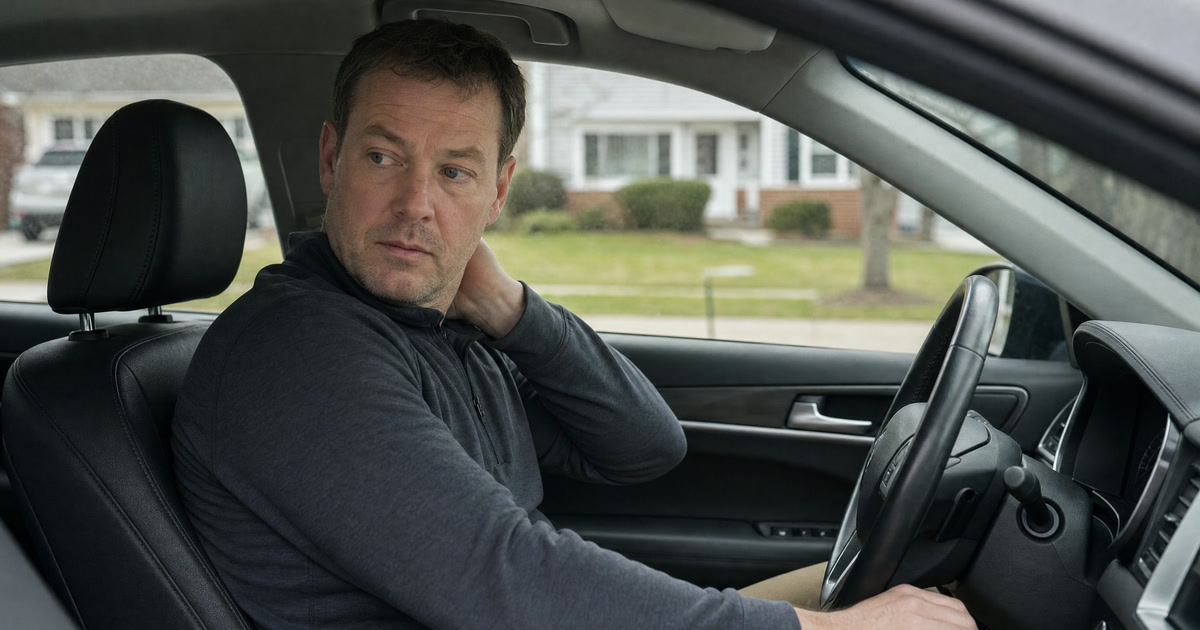
You were stopped at the light on MD-197 when the car behind you didn't stop. There was a jolt, a lot of adrenaline, and an awkward exchange of insurance cards. Then the other driver asks the question everyone asks: "Are you okay?" And you say, "I feel fine."
If that sounds familiar, you are probably searching some version of no pain after car accident, should I see a doctor? It is a fair question, and the honest answer has two sides. Many people with no pain at the scene stay fine. Some do not, and the symptoms that show up later are easy to dismiss until they are hard to ignore. This guide walks through what the evidence says, which signs mean "go to the ER now," and what an exam after a crash actually checks.
No Pain After a Car Accident: Should I See a Doctor?
For most people, a prompt check-up is a reasonable, low-cost step even when nothing hurts. Here is why.
Feeling fine right after a crash is not the same as being uninjured. Your body is flooded with stress hormones in the minutes after a collision, and that can change how pain registers. Mayo Clinic notes that whiplash symptoms most often start within days of the injury, and it advises getting a prompt diagnosis to rule out broken bones or other damage that can cause or worsen symptoms.
That does not mean every sore neck is a catastrophe. It means that "nothing hurts right now" is a poor test for "nothing is wrong." An evaluation is how you replace a guess with information.
What the research says about timing
One of the more useful studies on this question followed 210 people involved in rear-end collisions in Kaunas, Lithuania, and compared them with matched controls. In that prospective cohort study (Obelieniene et al., J Neurol Neurosurg Psychiatry, 1999), among the people who developed neck pain, onset came:
- within 30 minutes in 37%
- between 30 minutes and 24 hours in 44%
- between 1 and 3 days in 17%
In other words, in that group, roughly six in ten people who developed neck pain were not hurting within the first half hour. Waiting for pain to announce itself at the scene would have missed most of them.
We want to be fair about the rest of that study, too. In that Lithuanian group, the acute symptoms were generally short-lived, and at one year the crash group and the control group looked similar. The researchers did not see the long-term "late whiplash" pattern some people expect. Results from one country, with its own insurance and legal environment, do not automatically transfer to Prince George's County. Still, it is a good reminder that an early check-up is about information and peace of mind, not about assuming the worst.
A different study looked at people who did go to the emergency department with neck pain after a collision. In Crouch et al., Emergency Medicine Journal (2006), 170 patients were followed up, and about two thirds still had some neck disability 4 to 6 weeks after injury. The same study found no significant correlation between estimated impact speed and neck disability. (The authors report their analysis was independent, but the study was funded by the Association of British Insurers, and you deserve to know that.)
Put together, these studies say something modest but useful: symptoms often start late, they usually settle, and some people still have trouble weeks later. None of this predicts what will happen to you, which is the point of getting looked at.
Red Flags: When "I Feel Fine" Is Not the Right Plan
Everything above is about the large group of people with no obvious injury. Some symptoms are different. They call for emergency care, not a scheduled appointment, and chiropractic care is never a substitute for an emergency evaluation.
The CDC says that some concussion symptoms may appear right away, while others may not appear for hours or days after the injury. It also lists danger signs. Call 911 or go to an emergency department right away if, after a crash, you or a passenger has:
- a headache that gets worse and does not go away
- weakness, numbness, decreased coordination, convulsions, or seizures
- repeated vomiting
- slurred speech or unusual behavior
- one pupil larger than the other
- confusion, restlessness, or agitation
- loss of consciousness, extreme drowsiness, or difficulty waking up
Other symptoms that belong in the "go now" category include severe chest or abdominal pain, trouble breathing, vision changes, and loss of bowel or bladder control. If you are unsure, treat it as urgent. You can always see us afterward.
What Can Show Up Days Later
If you have been cleared of anything urgent, here are the delayed symptoms that Bowie-area patients most often describe to us after a collision:
- Neck stiffness or a "pulling" feeling when turning to check a blind spot
- Headaches, often starting at the base of the skull
- Shoulder or upper-back tightness on one side
- Low-back soreness that is worse getting out of the car or after sitting
- Tingling or heaviness in an arm or hand
- Dizziness, brain fog, or trouble concentrating
- Poor sleep, which makes everything else feel worse
None of these tells us what is going on by itself. Many of them overlap with ordinary muscle strain, and some can come from other causes entirely. That is exactly why a hands-on evaluation matters. We have covered the typical timeline in more detail in delayed whiplash symptoms after a car accident, and if you are wondering about timing, see how long after a car accident you should see a chiropractor.
"But My Car Barely Has a Scratch"
This is the most common reason people skip the check-up. It also does not hold up well. The Crouch study above found no significant link between estimated impact speed and neck disability, and the International Classification of Headache Disorders notes that whiplash-related headache can follow either high or low impact forces. Bumper damage tells you about the bumper. It does not tell you what happened to the person wearing the seat belt.
If you want to understand which injuries are most often evaluated after crashes, our guide to common car accident injuries a chiropractor evaluates is a good next read.
What an Exam After a Crash Actually Involves
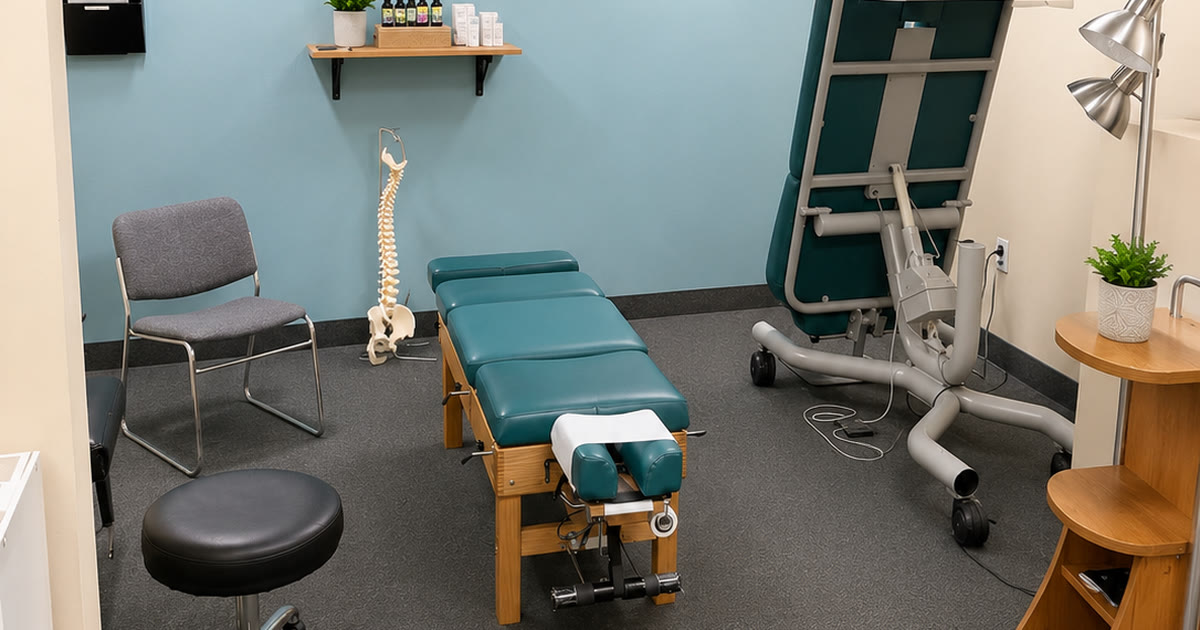
If you come to Total Wellness Chiropractic, the first visit is mostly a conversation and a careful look. A typical evaluation may include:
- A detailed history. What happened, where you were sitting, which way your head moved, and any symptoms so far, even small ones.
- Screening for red flags. If anything suggests you need the ER or imaging first, we will tell you so and send you there. That comes before anything else.
- A physical exam. Range of motion in the neck and back, palpation of the muscles and joints, posture, and basic neurological screening such as reflexes, strength, and sensation.
- A plain-language summary. What we found, what we did not find, and what to watch for over the next several days.
Sometimes the answer is simple: "You look okay today. Here are the signs that mean you should come back." That is a perfectly good outcome. And if something is found, you will have a dated record from early on, which also matters for the paperwork side of things.
Why early documentation helps
Insurance and legal questions are outside what we can advise on, and we never predict how a claim will turn out. But there is a plain, practical point here. An evaluation shortly after the accident creates a dated record of your symptoms and exam findings. If something does show up later, that record is a clearer starting point than trying to reconstruct how you felt weeks ago.
Some facts about Maryland coverage come straight from the state. The Maryland Insurance Administration's auto insurance guide says insurers must offer at least $2,500 in Personal Injury Protection (PIP) coverage, that PIP reimburses reasonable and necessary medical expenses and lost wages, and that this is paid "regardless of who caused the accident." It also warns that PIP coverage can be denied if claims are not properly and timely filed, and it advises contacting your insurer promptly after an accident to request PIP forms. The same guide says Maryland law prohibits an insurer from raising your premium because of a PIP claim, though it separately notes insurers may non-renew after three or more not-at-fault claims in three years. Your own policy and your insurer have the final word on what applies to you.
On the legal side, Maryland's general rule for civil lawsuits is that a civil action at law must be filed within three years from the date it accrues, with exceptions set elsewhere in the Code. Whether and how that applies to your situation is a question for an attorney. Three years is the outer limit for a lawsuit, not a reason to wait to get checked.
Local Care in Bowie and Prince George's County
Total Wellness Chiropractic is at 6000 Laurel Bowie Road, Suite 202, Bowie, MD 20715. We see patients from across Prince George's County, including Bowie, Crofton, Mitchellville, Glenn Dale, Upper Marlboro, Lanham, and Largo. Many crashes we hear about happen on the same stretches of road you drive every day: US-50, MD-197 (Collington Road), US-301, MD-450 (Annapolis Road), MD-3, and Route 214.
You can learn more about the kinds of concerns we evaluate on our conditions page and see everything we offer on our services page.
A Simple Plan If You Feel Fine After a Crash
- Get urgent care first if you have any red flag. See the list above.
- Exchange information and report the crash as required.
- Watch the next 72 hours. Notice neck stiffness, headaches, dizziness, or tingling. Writing a few notes on your phone helps.
- Contact your insurer promptly and ask about PIP forms and deadlines.
- Get evaluated. Even if the answer is "all clear," you leave with information instead of a question mark.
- Skip the heroics. Don't push through a stiff neck for two weeks and then try to piece together when it started.
Frequently Asked Questions
Should I see a doctor if I have no pain after a car accident?
For most people, a prompt evaluation is a reasonable step. Symptoms can start hours or days later, and an exam can screen for red flags you cannot feel. If you have any danger sign, such as a worsening headache, weakness, or confusion, go to the emergency department right away.
Is it normal to feel fine right after a crash and sore the next day?
It is common. In one prospective study of rear-end collision victims, most of those who developed neck pain were not hurting within the first 30 minutes. Soreness that starts the next morning or a day or two later is a typical pattern.
How long can I wait before getting checked?
There is no single "safe" number, and we cannot give one for your case. Earlier is generally better for catching red flags and documenting symptoms. If you are past the first few days and something has started to bother you, come in rather than wait it out.
Do I need to see a chiropractor or an ER doctor first?
If there is any chance of a serious injury, such as head trauma, chest or abdominal pain, trouble breathing, or neurological symptoms, start with the ER or urgent care. If you feel fine and want a thorough musculoskeletal check, a chiropractic evaluation is a good option.
What if the other driver's insurance is paying?
Who pays and how is a question for your insurer or an attorney. What we can say is that Maryland's PIP coverage is described by the state as paid regardless of who caused the accident, and that timely filing matters.
Will a chiropractor take X-rays after a minor accident?
It depends on your history and exam findings. Imaging is used when findings or red flags call for it, not automatically for everyone. If we think you need imaging or a medical referral first, we will tell you.
Can children have delayed symptoms too?
Yes. The CDC advises emergency care if a child who had a bump, blow, or jolt to the head or body will not stop crying, will not nurse or eat, or shows any adult danger sign. For anything else, a pediatrician is a good first call.
Book an Evaluation
If you were in a crash in or around Bowie and nothing hurts yet, you do not have to wait for it to. Book an appointment online at wherethehealingbegins.com or call us at 301-352-3454. Total Wellness Chiropractic, 6000 Laurel Bowie Road, Suite 202, Bowie, MD 20715.
Educational disclaimer: This article is for general educational purposes and is not medical, legal, or insurance advice. It does not diagnose, treat, or cure any condition, and it is not a substitute for emergency care. If you have severe or worsening symptoms after an accident, call 911 or go to the nearest emergency department. Individual outcomes vary. Insurance and legal questions should be directed to your insurer or an attorney.